

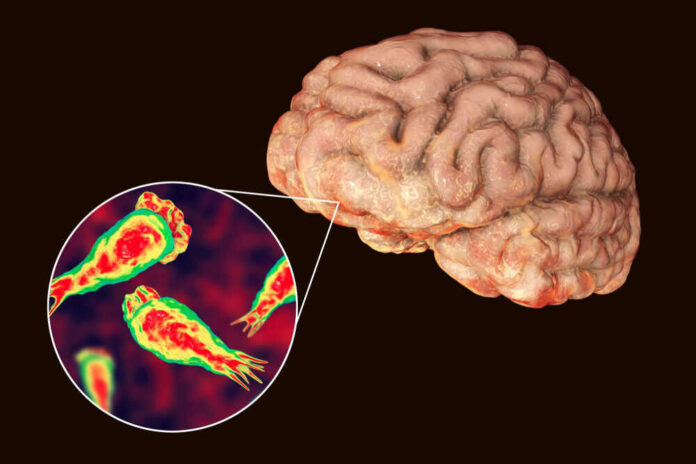
A North Carolina teenager has died from a Naegleria fowleri brain infection that strikes fast and almost always kills.
Story Snapshot
- State officials confirmed a teen died after a Naegleria fowleri infection.
- Investigators are working to pinpoint the exposure source in warm freshwater.
- Symptoms escalate quickly and are usually fatal within days once they begin.
- Such infections are rare in the United States, with fewer than 10 a year.
What Officials Confirm And What They Are Still Probing
North Carolina’s health department said a central North Carolina teenager was infected with Naegleria fowleri, the single-celled organism known as a “brain-eating amoeba,” and later died.
Officials said the organism lives in warm freshwater and that the source of exposure remained under investigation when the case was announced.
Local and regional outlets echoed that investigators had not yet named a lake, river, or splash park tied to this case. Officials warned swimmers to take simple steps to reduce risk.
Naegleria fowleri infections are rare in the United States. Federal data show fewer than 10 cases a year and 180 total diagnoses from 1937 to 2025. Nearly all are fatal.
That rarity explains why each case draws wide concern, even as officials stress that most people who swim in lakes or rivers never get sick. The Centers for Disease Control and Prevention says most infections follow exposure to warm freshwater in the summer months.
How This Infection Strikes And Why Speed Matters
Doctors call the disease primary amebic meningoencephalitis. Water forced high into the nose can carry the amoeba to the brain, where it causes swelling and rapid damage.
North Carolina health officials emphasized that once symptoms start—severe headache, fever, nausea, stiff neck, confusion—the illness moves very fast and death often follows within about five days.
That timeline leaves families and hospitals racing the clock. Early recognition and specialized treatments help, but recoveries remain rare in the medical record.
Health officials in North Carolina say a teen from the central part of the state has contracted a rare and potentially deadly brain infection caused by Naegleria fowleri, a species of amoeba commonly found in warm freshwater. https://t.co/QFZhPWgE0W pic.twitter.com/g3QkXZXgeD
— KTLA (@KTLA) August 29, 2026
North Carolina has seen tragic cases before. Federal archives describe two North Carolina children who died from this infection in 1991 after warm freshwater exposure. The pattern has held across decades: southern states, summer heat, and fresh, untreated water.
The constant thread is not panic; it is physics. Warm water fosters the amoeba, forceful water up the nose provides a path, and the brain’s swelling delivers the harm. The science is plain, and personal choices matter.
What Risk Looks Like And Guardrails
Risk lives where heat and still water meet. Lakes, ponds, slow rivers, and warm shallows are the classic setting. Public health advice aligns with personal responsibility. Keep untreated water out of your nose. Use nose clips if you dive or dunk in warm freshwater.
Avoid stirring bottom sediment in shallow, warm areas. Skip warm freshwater when recent heat waves push temperatures high. If you use a neti pot or rinse your sinuses, use boiled, then cooled, distilled, or sterile water—never straight tap water.
A North Carolina teenager has died after contracting a rare brain-eating amoeba called Naegleria fowleri that's found in warm freshwater, state health officials said. https://t.co/eaeaPWzY0Y
— ABC News (@ABC) September 1, 2026
Parents and swimmers deserve clarity, not fear. The numbers show this infection is extremely rare, but the consequences are severe. That balance argues for calm vigilance. Health departments should move fast to test likely sites, brief the public with plain steps, and avoid vague alarms.
Families should respect the risk without giving up normal life on the water. Practical habits—nose protection, smarter swim choices in heat, safe water for nasal rinses. Protect your own, act early, and do not wait for bureaucracy to catch up.
Why Source Investigations Take Time
Investigators start with a medical diagnosis, a short symptom window, and a list of recent water exposures. They sample water and sediment, then send them for specialized testing. That process can lag the news cycle. Federal surveillance for this infection is passive, so public data often trail real time.
This is not foot-dragging; it is lab work and chain-of-custody care. The goal is simple and sober: identify a likely site, inform the public, and equip people with the tools to reduce their own risk.
Sources:
newsobserver.com, abcnews.com, yahoo.com, obituario.net, cdc.gov