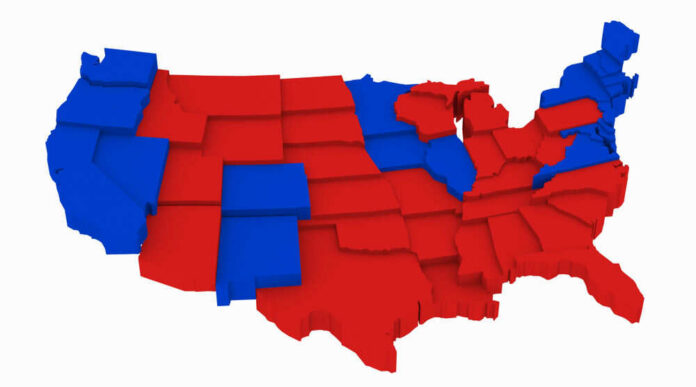
Texas flashed a warning light on the 2026 Senate dashboard, and both parties slammed the brakes.
Story Snapshot
- Democrats flipped a deep-red Texas state Senate seat, showing real crossover power.
- James Talarico secured the Texas Democratic U.S. Senate nomination, setting up a clear matchup.
- Republicans still hold a 53–47 Senate edge; Democrats need a net four-seat flip.
- Map math favors Republicans, but several GOP seats look truly competitive this fall.
Texas upset rewrites the mood, not the map
Democrat Taylor Rehmet won a special election in Texas Senate District 9, a district President Trump carried by 17 points in 2024. Rehmet’s 57% to 42% victory over Republican Leigh Wambsganss yanked a seat long seen as safe for the right and jolted party operatives statewide.
Voters in fast-growing suburbs cut across old lines. That result does not prove Texas turned blue. It proves specific candidates, messages, and local issues can flip even “safe” turf when the other side drifts.
The DDHQ Forecast now has the U.S. Senate as a pure toss-up for the first time since early June.
The average seat outcome across 1 million simulations remains a 50-50 tie, which would be a narrow win for Republicans thanks to Vice President JD Vance's tie-breaking vote. pic.twitter.com/AYVcSXEeSU
— Decision Desk HQ (@DecisionDeskHQ) September 7, 2026
Campaigns read this kind of shock like a weather alert. Republicans see a need to tighten candidate vetting, unify messages, and focus on suburban education and safety themes.
Democrats see permission to invest, recruit disciplined messengers, and test cost-of-living pitches that speak to split-ticket voters.
The lesson is simple and blunt: do the blocking and tackling in the suburbs, or bleed yards all game. Nothing about the wider Senate map changes by magic because one district popped. But strategy just got sharper.
Democrats get a clear standard-bearer in Texas
State Representative James Talarico won the Democrat U.S. Senate nomination in Texas over Representative Jasmine Crockett, as major outlets projected on primary night.
With most votes counted, Talarico led 53% to 46%. That result gives Democrats a single messenger early, a rare gift in a mega-state with costly media.
Talarico’s pitch blends a populist, faith-forward style with bread-and-butter issues. Republicans, by contrast, must square their own primary dynamics before training full fire on him, which can delay general-election consolidation.
Texas remains uphill for Democrats in federal races. The state has not elected a Democrat statewide since the 1990s, and recent presidential results still lean Republican. Yet nonpartisan analysis now lists Texas among a handful of Republican-held seats that could be competitive if candidate quality and issues align.
That means fundraising, ground game, and coalition-building matter more than ever. If Democrats keep unity and message discipline, they can force Republicans to spend heavily to hold serve. If they do not, Texas reverts to old form fast.
The 2026 Senate battlefield is narrow and unforgiving
Republicans enter November with 53 Senate seats, while Democrats sit at 47, including two independents who caucus with them. To claim a working majority, Democrats must defend all their seats and flip a net four Republican seats.
Several forecasting hubs still frame the map as tough terrain for Democrats because many competitive seats sit on Republican ground.
The scoreboard starts red and requires near-perfect execution by Democrats to change possession. That is the difference between a good night and a governing majority.
Analysts flag a short list of Republican-held targets that could decide control: Maine, parts of the industrial Midwest, and the Sun Belt seats where retirements or bruising primaries leave openings. These are not easy catches. They demand disciplined candidates who talk kitchen-table economics, public safety, energy costs, and border security in plain terms.
Voters over 40 respond to credibility and steadiness. Grand gestures and online vibes do not flip Senate seats. Clear plans, calm tone, and a ground game that finds low-turnout persuadables do.
How conservatives and moderates will judge the closing argument
Voters who lean conservative expect practical borders, stable prices, and schools that teach basics well. Candidates who meet those marks can survive national headwinds. The Texas special election showed some Republicans lost the plot and bled suburban trust.
Competent nominees and clear priorities can fix that. Democrats, for their part, win only if they match pocketbook focus with local roots and avoid culture-war overreach.
Sources:
teachthevote.atpe.org, nbcnews.com, uspollingdata.com, texastribune.org