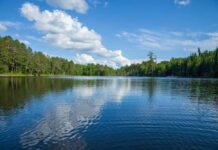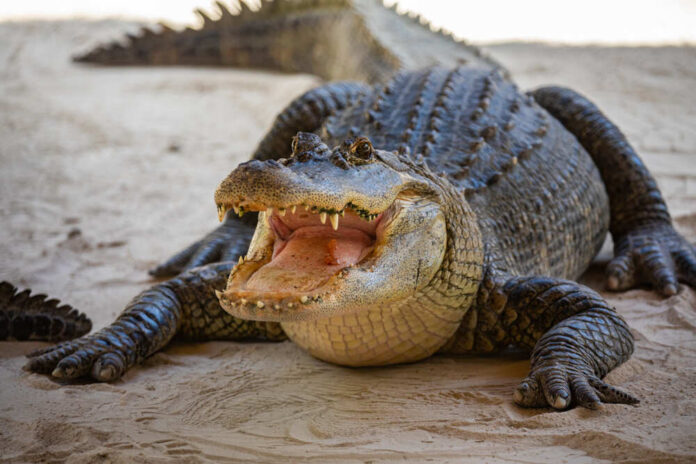
Four years of whispers on Lake Moultrie ended in one thundering haul: 844 pounds of armored muscle named Snaggletooth.
Story Snapshot
- Hunters landed an 844-pound, nearly 14-foot alligator called Snaggletooth at Lake Moultrie.
- Guide Cole Poplin and partner William Ard led the late-night capture around 11 p.m..
- The gator ranks as South Carolina’s second-largest confirmed harvest, per published reports.
- The state’s alligator season runs under strict tagging and reporting rules.
A chase that spanned seasons and a lake that keeps secrets
Renegade Bowfishing guide Cole Poplin did not stumble onto Snaggletooth. He patterned the giant over years on Lake Moultrie in Berkeley County. On the night of September 28, at about 11 p.m., Poplin and William Ard closed the gap with tag holder Chris Webb and his father, Craig, on board. The crew hauled in the 844-pound reptile, measuring close to 14 feet, ending a long pursuit that had grown into local legend around the lake.
Witness accounts describe a tense final sequence, the kind you feel in your ribs. The team spotted the wake. They moved fast, kept lines tight, and refused to rush the fight. The gator’s power punished every mistake. When they finally secured the animal, the scale confirmed what the eyes already knew. At 844 pounds, Snaggletooth stands as the second-largest confirmed alligator harvest recorded in South Carolina media reports to date.
Why this giant matters beyond the shock value
Big numbers make headlines, but the real story is the system behind them. South Carolina does not run a free-for-all. The Department of Natural Resources uses a permit lottery, area tags, hide validation, and firm deadlines to keep the season narrow and the harvest managed. After a successful hunt, the harvest report must be filed within 24 hours, and completed paperwork must be submitted within five business days. That paper trail is not busywork; it protects the resource and the hunters alike.
The program’s structure reflects decades of work. State documents and conservation groups note that South Carolina shifted from protection to managed recreational harvest as populations recovered. The result is a stable population with controlled take, rather than boom-and-bust removal. Export of hides remains a small slice of outcomes; this is not an industrial kill chain. It is a regulated season that balances public safety, tradition, and conservation goals in a transparent way.
Record talk, real limits, and what common sense says
Local coverage places Snaggletooth as the second-largest confirmed harvest in the state, based on reported weight and length. That framing is fair for readers and earned by the crew’s persistence. Claims about size and rank should live inside the state’s documented harvest process, which captures length, weight, and permit data. Keeping those numbers inside official channels keeps the sport honest and the resource strong. That respects both the animal and the rules that sustain the hunt.
GIANT GATOR: 844-Pound Alligator Dubbed “Snaggletooth” Captured In South Carolina
Cole Poplin With Renegade Bowfishing LLC Joined F&F First This Morning To Tell Us How He Caught “Snaggletooth” pic.twitter.com/S690HC4Eza— Fox & Friends First (@FoxFriendsFirst) October 6, 2026
Some critics argue that chasing giants hurts age structure. State reporting shows the hunt is recreational, limited, and monitored, with routine surveys and stable population signals. When facts line up with a clear regulatory spine, common sense says stick with it. A tight season, real tags, and quick reporting beat social-media cowboyism every time. Hunters who play by the rules, like Poplin’s crew, show how stewardship and skill can coexist on the same dark water.
Sources:
postandcourier.com, dnr.sc.gov, iucncsg.org