

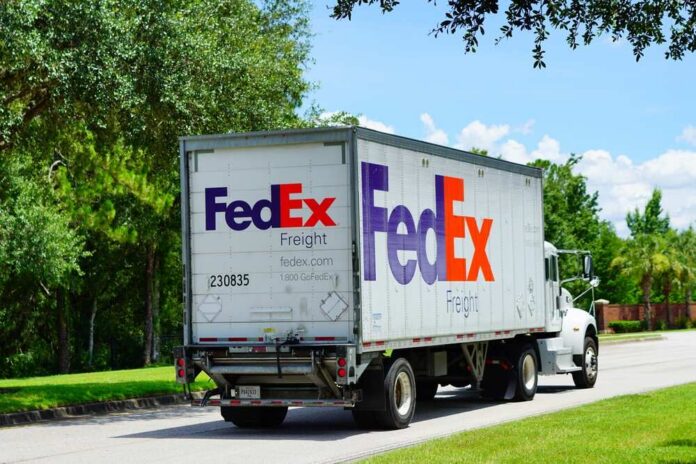
Thieves lifted nearly a million dollars in graded sports and Pokémon cards from a FedEx truck in Santa Ana, and they did it in minutes.
Story Snapshot
- Police say about $963,000 in trading cards vanished from a FedEx truck near PSA’s facility.
- Two pallets were stolen, and a third pallet was disturbed during the theft.
- Collectors report six-figure personal losses tied to the missing graded orders.
- The case highlights rising cargo theft risks for high-value shipments.
What Police Say Happened Outside PSA’s Door
Santa Ana police say the theft happened on October 13, 2026, in the 1600 block of East St. Andrew Place, close to Professional Sports Authenticator’s Southern California headquarters. Officers were called the next day after the company learned of the loss. A spokesperson put the estimate at about $963,000 in cards. The department described two pallets stolen and a third pallet disrupted, suggesting thieves worked quickly and knew what to grab. Police said no arrests had been made at the time of reporting.
Reporters later described the load as more than 200 packages that had just left PSA’s facility, which grades and certifies high-value cards. That detail matters because PSA-graded items are easier to fence if crooks move fast, but they are also easier to flag in resale markets due to serial numbers on the labels. FedEx acknowledged the investigation, while collectors began posting notices and loss estimates tied to their missing orders.
Collectors Face Personal Losses And A Hard Wait
Individual collectors say the stolen orders include rare cards and entire submissions, with some people estimating personal losses above $100,000. Posts and shared emails show PSA reached out to affected customers to confirm missing packages and to outline response steps. Several hobby outlets reported that PSA deactivated certificates for the stolen items and alerted marketplace partners to block sales of flagged serial numbers, a common-sense move to choke off quick flips. Those steps help, but they do not make victims whole overnight.
Card owners now confront a familiar, frustrating loop: file police reports, document proof of ownership, and wait on claims. This is where conservative instincts about responsibility and clear contracts come into focus. The chain of custody needs to be explicit. Who bears the loss when a third-party carrier gets hit? The clean answer should be in the service terms and the insurance limits that both the grading company and the shipper put in place before a truck rolls.
Why Thieves Target Pallets Of Plastic And Paper
Cargo theft follows value density. A pallet of slabbed cards can pack six or seven figures in a small, easy-to-move footprint. That makes it a prime score for crews that watch facilities and delivery patterns. The broader delivery ecosystem has seen staggering theft volumes. A United States Postal Service inspector-general report estimated at least 58 million packages stolen nationwide in 2024, with losses up to $16 billion. That figure spans doorsteps to depots, but it shows why criminals treat delivery networks as hunting grounds.
High-value loads also create hidden costs beyond the sticker price. Delays, customer churn, higher insurance deductibles, and security upgrades stack up fast. Watching this case, businesses should ask simple, tough questions: Who knew the truck’s route? How long did it sit? What tracking and escort rules applied to a shipment worth close to $1 million? If the answers sound vague, criminals already have an edge. Tight control beats hope every time.
Security Playbook: From Theory To The Loading Dock
Shippers and service providers can harden targets without turning every run into a motorcade. Common steps include sealed, serialized containers; direct-drive routes with no unscheduled stops; two-person crews; locked bays; and real-time geofencing alerts that ping supervisors when a truck idles too long. For collectibles, there is an extra lever: certificate networks. When serials are flagged fast, marketplaces can block listings and payments. That does not stop the theft, but it starves demand and helps police trace attempts to sell.
More than 200 packages containing nearly $1 million in PSA-graded sports and Pokémon cards were stolen from a FedEx truck outside PSA’s Santa Ana, California, headquarters. Police say the truck was unattended for 60–90 minutes and the investigation remains ongoing.
— NTC Feed (@NTC_Feed) October 20, 2026
There is also a role for simple transparency. Customers shipping high-value orders should see, in plain language, what insurance covers, what the cap is, and what the claim clock looks like. No jargon. No finger-pointing after the fact. That clarity reflects basic American conservative values: accountability, property rights, and deterrence through firm rules. Thieves do not fear soft promises. They fear systems that make stolen goods hard to move and losses swift to repay through well-defined coverage.
What To Watch Next In Santa Ana
Santa Ana police continue to investigate, and any recovery will likely start with flagged serials hitting resale channels or a tip from someone close to the crew. Collectors will track marketplace blocks and watch for suspicious listings that match their missing slabs. If the pattern from other cargo thefts holds, the next break could come from a small mistake: a rushed sale, a reused phone, or security camera video near the pickup route. One misstep can unravel a big score.
Sources:
nbcnews.com, nbcphiladelphia.com, cbsnews.com, nytimes.com, yahoo.com, heavy.com, uspsoig.gov, cardgrade.io