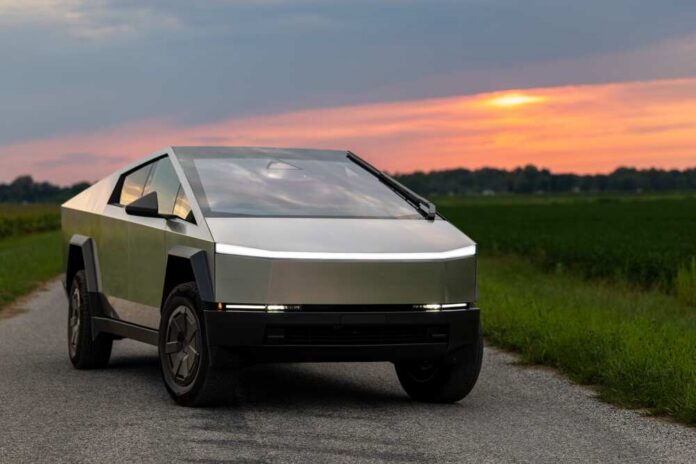
China ordered Tesla’s largest recall to date because people might not find the manual door releases after a crash.
At a Glance
- China’s regulator announced a recall of about 2.98 million Teslas for emergency egress risks.
- Officials say the manual door releases can be hard to spot after a severe crash and power loss.
- Tesla will add clear warning labels and push a software update to lower windows after crashes.
- China will ban hidden door handles starting in 2027, raising the design bar for all makers.
China’s order covers nearly every Tesla on the road there
China’s State Administration for Market Regulation directed Tesla to recall about 2.98 million cars across Model 3, Model Y, Model S, and Model X, including both imported and China-made vehicles.
The action is part of a broader record recall sweep targeting doors that may be hard to open in emergencies. The recall takes effect this fall under China’s recall rules and will proceed through service centers and software updates supervised by regulators.
Regulators identified a clear hazard: in a severe collision, the car’s low-voltage system can fail, and occupants or rescuers may not quickly find the mechanical emergency releases. That delay can mean the difference between life and death when seconds count.
Tesla described the risk in its notice and agreed that it poses a safety hazard because it can slow escape and rescue efforts when power-dependent handles fail.
The fix mixes labels you can see with code you cannot
Tesla told authorities it will install new warning labels to point out the manual releases. Service teams will perform this work at no cost to owners. At the same time, Tesla plans an over-the-air update that drops the windows after a crash signal, so the doors can open more easily if the power is out or the body is bent. The software update aims to create space and reduce sealing pressure that can trap doors shut post-impact.
The approach favors fast deployment and minimal downtime. Labels change human behavior right away. Software rolls out fleetwide without shop bottlenecks. Some analysts say hardware changes might go further, but officials accepted the plan.
The focus is practical: help people find the manual release fast and make the door easier to swing open when structure and power systems have taken a hit.
This recall sits inside a larger design reset on door handles
China already decided to ban hidden door handles starting in 2027. The rule requires a clear mechanical fallback that works when power fails, and a user interface that people can find under stress.
That is a shift from sleek, flush designs toward simple, obvious controls that first responders and families can use in smoke, darkness, or water. The result is a new safety baseline that all carmakers must meet in the world’s largest market.
Tesla is recalling around 2.98 million vehicles in China over concerns that hidden door handles could make emergency escapes and rescue efforts more difficult. The recall covers several Model 3, Model Y, Model S and Model X vehicles.
Read the full story:https://t.co/Im6HEtLRFS pic.twitter.com/ArhEDSmubM— WE News English (@WENewsEnglish) August 24, 2026
The recall also reaches beyond Tesla. China is ordering millions of vehicles from several brands to address the same emergency egress risk. Regulators are drawing a bright line: design can be modern, but not at the expense of a fast, manual exit path.
What owners should expect and why it matters now
Owners in China will receive service invitations for label installations and will automatically receive software updates if their cars support over-the-air delivery.
The change to window behavior will occur in the background, while the visual labels provide drivers with a quick mental map that can stick under stress.
The steps are not dramatic, but they target the moments that matter most: the first seconds after a hard hit when power is gone and confusion is high.
Regulators accepted this plan because it can be executed at scale and speed. This recall meets the timeline of risk, not the rhythm of model-year refreshes.
The lesson extends well beyond cars. In every complex system, the simplest manual path out must be loud, clear, and tested by people who are scared, hurt, or both. China’s 2027 rule locks that principle into law. This recall puts it to work on the road today.
Sources:
forbes.com, cnbc.com, insurancejournal.com