President Trump is pressing ExxonMobil and Chevron over a war-driven oil windfall that he says should not stay entirely in corporate hands.
Quick Take
- Trump said ExxonMobil and Chevron made “too much money” during the Iran conflict and said he did not like it.
- The comments came after both companies posted huge second-quarter profits as oil prices jumped.
- Trump said the companies should help lower retail gasoline prices and give some gains back to the public.
- The episode fits a familiar pattern: war shocks lift crude prices, and big oil earnings rise fast.
Trump Puts Big Oil on the Spot
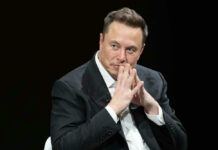
Trump made the remarks on Monday after ExxonMobil and Chevron reported strong quarterly results tied to higher crude prices during the Iran war.
He said the companies were making “too much money” because of a shortage, and he added, “I don’t like it.” The message was plain. In Trump’s view, the price shock that helped the companies should also ease pain for drivers at the pump.
Reuters reported that Trump urged the oil majors to cut retail gasoline prices and to “give some of that back to the public.” That is classic Trump politics: direct, blunt, and aimed at a simple public grievance.
He was not talking in theory. He was pointing to visible profits, visible fuel prices, and the idea that a national crisis should not become a private jackpot.
The Profit Surge Behind the Fight
The numbers explain why the comments landed hard. Chevron’s second-quarter profit climbed to about $12 billion, nearly 400 percent higher than a year earlier, while ExxonMobil’s profit topped $14.5 billion.
Reporting from several outlets said the two companies’ combined profit reached roughly $26.5 billion for the quarter. That kind of jump turns a political complaint into a headline that ordinary Americans can understand in one glance.
President Trump says that despite high oil prices, companies like Chevron and Exxon Mobil are making "too much money," amid the U.S. — Iran war: "I don't like it… They ought to give some of that back to the public." pic.twitter.com/pcYg3BlsRf
— CSPAN (@cspan) August 3, 2026
The bigger story is not just that oil companies made money. It is that war-related supply shocks can lift both crude prices and industry margins at the same time.
When the market tightens, producers often earn more even if they do not control the conflict. That is why “profiteering” becomes such a powerful charge in these moments. The public sees pain at the pump. The market sees a shortage. Both can be true at once.
Why This Hits a Raw Nerve
For many Americans, energy prices feel personal in a way that few other prices do. Gasoline touches commuters, truckers, small businesses, and families on tight budgets. So when a company reports a huge quarterly gain during a war, the optics are brutal.
Even readers who accept free markets can still see the problem. If a crisis raises costs for millions, the public expects at least some restraint, not a victory lap.
That is why Trump’s remarks matter beyond one earnings cycle. He was speaking to the long-running clash between market logic and public anger. Oil companies will say they respond to global prices, not set them alone.
Critics will say huge gains during wartime look ugly no matter how the accounting works. Trump’s complaint has force because it reflects what many voters feel: scarcity should not look like celebration.
What Comes Next
The immediate question is whether Trump’s pressure changes anything. Oil firms rarely hand back windfall profits because a president asks them to. They answer to shareholders, capital plans, and market conditions.
Still, public pressure can shape fuel politics fast. If gasoline prices stay high, this debate could spread beyond ExxonMobil and Chevron and turn into a broader fight over energy policy, drilling, and whether wartime gains should face new scrutiny.
🇺🇸⛽ BREAKING NEWS: U.S. gasoline prices have surged over 37% since the Iran war began in late February , with the national average reaching approximately $4.10 per gallon — a jump from around $2.98 before the conflict .
🏛️💰 President Trump has publicly condemned ExxonMobil… pic.twitter.com/9YzptTSssE
— The World Correspondent (@TheWorldCorresp) August 4, 2026
For now, the conflict has produced a clean and uncomfortable picture: a war has shaken oil markets, big oil has cashed in, and Trump is trying to turn that anger toward the companies themselves.
The argument is not subtle, and that is why it works. It speaks to a basic rule most Americans still understand well: when ordinary people hurt, the largest winners should expect hard questions.
Sources:
cnbc.com, thenationalnews.com, finance.yahoo.com, barrons.com, aol.com, theguardian.com, marketwatch.com, en.sedaily.com, commondreams.org, biz.chosun.com, wionews.com, ca.finance.yahoo.com