Nearly 19 million eggs just vanished from store shelves over a threat you cannot see, but absolutely do not want in your kitchen.
Story Snapshot
- Midwest Poultry Services recalled about 1.6 million dozen eggs after environmental tests raised salmonella concerns
- Major brands like Kroger, Simple Truth, Brookshire’s, Country Morning, and Sunups carry the affected cartons
- The eggs came from Texas farms and reached stores and food service in at least six Southern states
- No illnesses were reported when the recall began, but salmonella has a serious track record with eggs
Millions of eggs pulled after a lab test, not a hospital visit
Midwest Poultry Services, based in Indiana, did not wait for people to end up in the emergency room before acting. The company voluntarily recalled 1,589,577 dozen shell eggs after routine environmental testing at two Texas farms raised red flags for Salmonella Enteritidis.
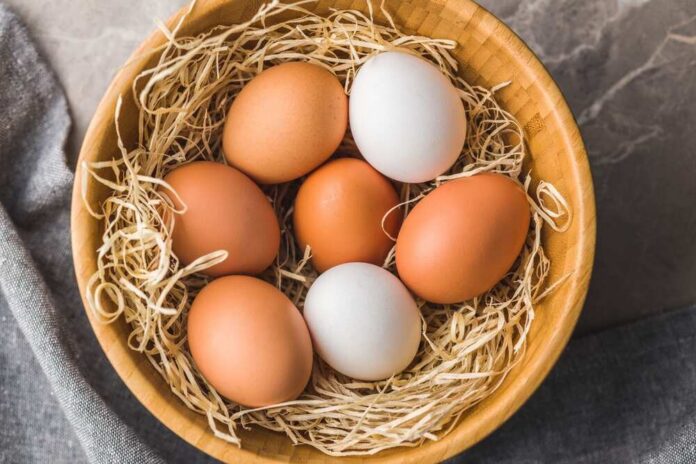
That is about 19 million individual eggs taken out of circulation. The recall covers white shell eggs and brown cage-free shell eggs, which means both budget shoppers and premium buyers were affected.
The U.S. Food and Drug Administration reported that the eggs were produced at those Texas farms and shipped into a wide retail and food service network. Cartons went to Texas, Oklahoma, Arkansas, Louisiana, New Mexico, and Mississippi, plus other smaller outlets.
That spread matters. When food moves that far, across that many brands and stores, the risk is no longer a local farm issue. It becomes a regional consumer problem, and regulators usually treat that as grounds for a broad, fast response.
How to know if the eggs in your fridge are part of the recall
Shoppers were not asked to guess. The recalled cartons carry specific plant codes and date markings. Affected eggs have plant code P-1950 or 0840962 printed on the carton, along with a Julian date between 157 and 184, and sell-by or best-by dates from July 20 through August 17.
Those strings of numbers look like clutter until a recall hits. Then they become your only way to tell a harmless omelet from a possible night in the hospital.
The recall spans several familiar brands. Reports list Kroger, Simple Truth, Brookshire’s, Country Morning, and Sunups, plus bulk Grade A and Grade AA eggs used in food service operations.
When the same physical product sits under many labels, one farm’s problem quietly turns into a multi-brand event. That confusion is one reason recall instructions were blunt: do not eat these eggs. Return them to the store for a refund or throw them out.
Salmonella is not rare, and eggs are a repeat offender
Health authorities have seen this movie before. Salmonella is one of the most common causes of food poisoning in the United States, and eggs are a regular star in outbreak reports. When people eat contaminated eggs, they can develop diarrhea, fever, and stomach cramps that last for days.
For older adults, young children, and people with weak immune systems, the infection can be severe and may require hospital care. That is why regulators treat even “possible” contamination as worth a large recall.
Recent history backs up that caution. In 2025, the Food and Drug Administration and Centers for Disease Control and Prevention investigated a multistate outbreak of Salmonella Enteritidis infections tied to brown cage-free and brown certified organic eggs from August Egg Company.
That outbreak sickened 134 people across 10 states, led to 38 hospitalizations, and caused one death.
Another federal investigation in 2025 linked shell eggs to a separate salmonella outbreak as well. Those cases show how fast a single egg supplier can seed illness across distant states.
Why a preventive recall matters more than a press release
Midwest Poultry Services says it found the problem during routine environmental monitoring and a root cause analysis at its Texas farms. That means tests of the farm environment, not just finished eggs, pointed to a possible route for salmonella.
After that, the company began diverting eggs for pasteurization instead of selling them fresh. Pasteurization uses heat to kill bacteria. That step is an admission that the risk was serious enough to change how the product was handled.
🚨 MAJOR EGG RECALL HITS OKLAHOMA
More than 1.5 million cartons of eggs produced at Texas farms are being recalled due to potential Salmonella Enteritidis contamination.
Sold under brands including Country Morning, Sun-Ups, Kroger, Simple Truth, Brookshire’s and others across… pic.twitter.com/ZW62dpLWiq— Masu Zafi 🔥🔥 (@masuzafi) July 25, 2026
Here is the tension many consumers feel. At the time of the recall, no illnesses had been reported from these specific eggs. Some people see that and assume the recall is overkill. But food safety agencies design these systems to act before human bodies supply the proof.
What this recall says about our food system and personal risk
This event shows the double edge of modern food distribution. Big producers and national chains give us steady supply and low prices, but they also create broad exposure when something goes wrong. One farm’s environmental test can reach your omelet in a state hundreds of miles away.
Brand diversity does not protect you if the source is the same. In such a system, traceability codes and clear recall rules are the only way to match responsibility with risk.
For consumers, the practical takeaway is simple and not optional. Check carton codes when recalls hit. Do not shrug off “voluntary” language as public relations spin. Those words mean the company pulled product without being dragged, but they do not mean the hazard is fake.
When environmental testing finds salmonella in the production chain, the cheap choice is to ignore it and keep selling. The right choice is to eat the lost inventory cost and protect families instead.
Sources:
foxbusiness.com, delish.com, youtube.com, fda.gov, facebook.com, cdc.gov