

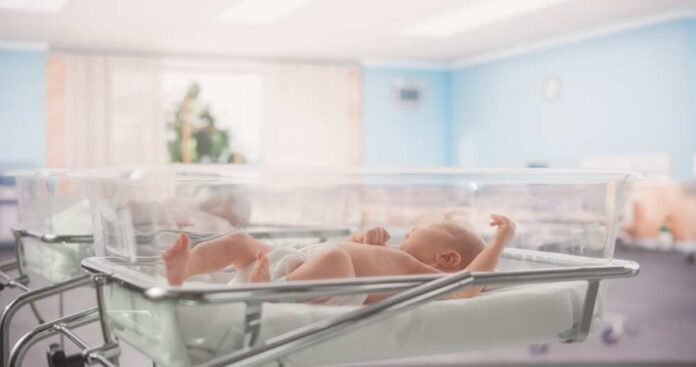
America just notched a new record low for births, and it is not a rounding error.
Story Snapshot
- The Centers for Disease Control and Prevention reported a record-low 2025 fertility rate.
- The rate fell to 53.1 births per 1,000 women ages 15–44, down 1% from 2024.
- Total births dipped to about 3.61 million, continuing a long slide since 2007.
- The data cover over 99% of registered 2025 births, not a small survey sample.
What the new record actually is
The Centers for Disease Control and Prevention reported the 2025 general fertility rate at 53.1 births per 1,000 women ages 15 to 44, down from 53.8 in 2024. The agency labeled it a record low. The statistic tracks births in a single year among women in these ages. It is not the lifetime number of children per woman. The overall birth count also slipped, landing around 3.61 million in 2025. The decline matches the long slide since 2007.
The Centers for Disease Control and Prevention later issued a data brief that kept the “record low” conclusion. It showed small numerical revisions as the final registrations came in. That is normal for vital statistics and does not change the direction or the story. The headline point holds: fewer births per woman of childbearing age, and fewer total births, than the year before. The drop was modest, but it extended a trend most families can feel.
How strong the data are
The Centers for Disease Control and Prevention based the finding on a near-complete national file of birth registrations. The agency said the analysis covered more than 99% of registered 2025 births. That matters. This is not a thin poll or a quick online panel. These are official records, processed and updated as states file them. By early 2026, the Centers for Disease Control and Prevention had processed about 99.95% of the year’s records for the provisional estimates.
Reporters framed the numbers as the latest step in a nearly two-decade slide. That is fair as a description of the chart. The Centers for Disease Control and Prevention notes the general fertility rate has generally declined since 2007. The new low adds weight to planning questions for schools, employers, and Social Security. Anyone who runs a business that hires young workers should care where this line goes next. So should state leaders mapping school seats and training programs.
What this does and does not say
The general fertility rate is simple and clear: births this year among women ages 15 to 44. It does not tell us why people had fewer babies. It also does not prove how many children today’s women will have across their lifetimes. Economists and demographers often point to delayed childbearing, housing costs, and changing preferences as factors. Those are plausible, but the Centers for Disease Control and Prevention release does not name a cause. Good policy starts by respecting that limit.
The steady decline of the U.S. fertility rate continued last year with another record low, according to a new report from the CDC. https://t.co/Z6WewHwL8P
— NBC News (@NBCNews) October 21, 2026
Some readers will ask if a one percent dip really matters. On its own, it is small. In a long line of small dips, it becomes large. Since 2007, the Centers for Disease Control and Prevention reports that the general fertility rate has fallen sharply. That slow grind reshapes the future more than a sudden shock. It touches school enrollment, the size of the workforce, and the tax base that supports seniors. Common sense says we should watch the direction, not just the last tick.
What comes next for leaders and families
Practical steps beat panic. Leaders should test which costs block family formation and act where evidence is strong. Zoning that frees more starter homes can help. Stable, predictable child care rules can help parents stay in the workforce. Clear tax policy for families can help with timing. These steps fit conservative ideas about work, family, and local control. They respect freedom while making it easier to choose marriage and children without government micromanagement.