When a sitting president tries to bill a neighbor for the weather, you are not in normal trade policy anymore.
Story Snapshot
- Trump wants Canada to pay for wildfire smoke by hiking tariffs on cars, alcohol, and cheese.
- He calls drifting smoke an “unnecessary invasion” and blames “willful negligence” in Canadian forests.
- Canada fires back with receipts: billions spent on fire prevention and years of mutual aid to the U.S.
- Legal experts say there is no clear way to tariff smoke, and a recent Supreme Court ruling weakens his hand.
Trump turns drifting smoke into a trade weapon
President Donald Trump did not just complain about hazy skies. He moved to turn them into leverage. After smoke from Canadian wildfires pushed air quality into the danger zone across much of the northern United States, he posted on Truth Social that the United States was being “unnecessarily invaded by filthy, polluted, and unhealthy air” and accused Canada of “willful negligence” in managing its forests.
He then said the “billions of dollars” in damage must be added to tariffs Canada already pays.
This is where the wildfire story jumps tracks from environment to economics. The administration has already hit Canadian goods with broad tariffs using earlier national security emergency claims, from drugs to border issues.
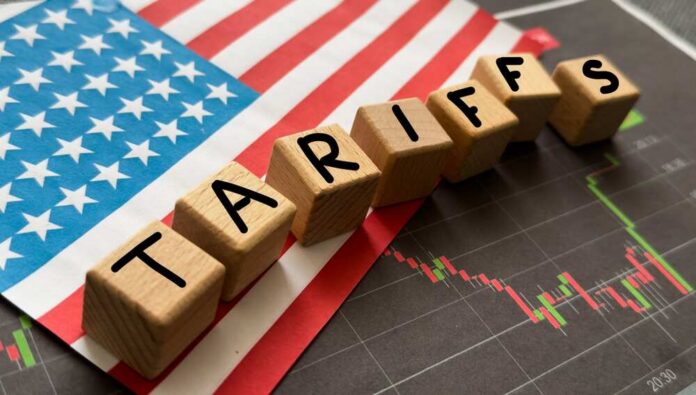
Now Trump is stacking a third “emergency” on top: smoke. Reports describe 50 percent tariffs on sensitive sectors like autos, alcohol, and cheese as the political hammer, with the smoke used to justify further hikes. For businesses on both sides of the border, that is not a metaphor — it is a price hike.
Congressional anger meets legal reality
Four Republican lawmakers from Michigan gave Trump political cover by sending an open letter to Canadian leaders saying their “patience has run out.” They blame Canada’s “chronic under-investment in forest thinning, fuel reduction, and prescribed burns” and warn the United States might even consider direct cross-border firefighting if Canada does not fix it.
Their message taps into an instinct: if your neighbor’s mess keeps blowing into your yard, at some point you say, “Enough. Clean it up or pay for it.”
.@USTradeRep Ambassador Greer explains the tariffs on a set of Canadian imports: "They banned the sale of U.S. liquor and other booze on Canadian shelves. They capped and limited the amount of autos that could be shipped [from] the United States from companies who were reshoring… pic.twitter.com/cQrySGrv1L
— Rapid Response 47 (@RapidResponse47) July 21, 2026
The problem is turning that anger into a lawful tariff. Trade lawyers point out there is no clear mechanism in U.S. law designed to tariff another country for air pollution from wildfires, especially when those fires are natural events.
Existing tools focus on goods, security threats, or balance of payments. A recent Supreme Court ruling already clipped Trump’s emergency tariff authority, making any new smoke-based tariff even more vulnerable to challenge. You can call smoke an “invasion,” but that does not mean the statute agrees.
Canada’s counterpunch: receipts, not outrage
Canada’s response has been simple: we are not negligent, and we are already helping you. Prime Minister Mark Carney’s team points to about 12 billion Canadian dollars invested in forest sustainability and fire prevention since 2020, including aerial fleets, training, and prescribed burns. That figure lands like a ledger line under Trump’s accusation.
Ontario Premier Doug Ford calls the charge “ridiculous” and “a bunch of rubbish,” while reminding Americans that Canadian crews have crossed the border for years to fight U.S. fires.
TRUMP ANNOUNCES 50% TARIFFS ON BROAD RANGE OF CANADIAN GOODS
President Trump is escalating a trade fight with Canada. WWNN's Stacy Lyn reports:: “President Trump announced new 50% tariffs on a broad range of Canadian goods including wine, hockey equipment, furniture, clothing,…
— Worldwide News Network (@WorldwideNNX) July 21, 2026
Natural Resources Minister Tim Hodgson goes even further, saying Canada will “keep helping” the United States in cross-border emergencies rather than “pointing fingers.”
That tone, calm and cooperative, undercuts the idea of a hostile or lazy neighbor. It also requires solving the problem with your ally, not with a temper tantrum. When your supposed “bad actor” keeps sending firefighters and investing billions in prevention, the claim of “willful negligence” looks weak.
Smoke, science, and blame-shifting
Scientists note that massive fires in Canada’s boreal forest are driven by a mix of fuel, lightning, and hot, dry conditions, which are getting worse as the climate warms. That forest covers hundreds of millions of hectares, much of it remote and impossible to fully manage.
Blaming one government’s “refusal” to rake every acre ignores the basic math. Even perfect thinning and burning near towns cannot stop every crown fire roaring through wilderness toward the jet stream.
Trump’s framing also dodges a key fact: his own administration weakened parts of the United States Forest Service and has been cool to climate measures at home. Critics highlight the irony of lecturing Canada on forest care while treating American forests like an afterthought.
From a common-sense standpoint, you do not win an argument about your neighbor’s yard when your own grass is knee-high and your brush pile is smoking.
Who really pays if tariffs climb again?
Every time this White House swings the tariff bat at Canada, American wallets move closer to the line of fire. Earlier emergency tariffs already pushed the average effective tariff rate on Canadian imports into notably higher territory, raising costs for manufacturers and shoppers.
A 50 percent hit on Canadian autos, alcohol, and cheese will not float down gently on the breeze. It will show up in sticker prices at car dealers, liquor stores, and grocery aisles from Detroit to Dallas.
There is also the long game to consider. Canada has ways to respond, from retaliatory tariffs to deeper partnerships with other trading partners. The two countries built a dense economic and environmental partnership over decades. Blowing that up over a summer of smoke risks turning a shared climate problem into a permanent trade war.
For those who value stable markets, strong alliances, and the rule of law, that is the real question: are we solving a problem, or just sending another costly signal with someone else’s credit card?
Sources:
apnews.com, bbc.com, youtube.com, ctvnews.ca, inkl.com, facebook.com, congress.gov, sej.org