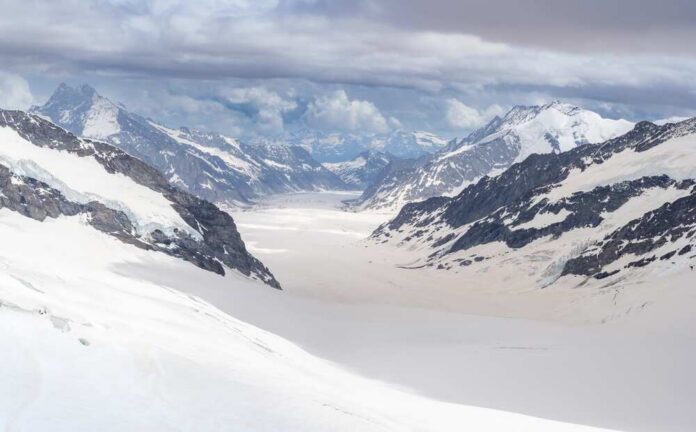
Two men lost in the Alps for 34 years just came home because a glacier let go.
Story Snapshot
- A hiker found two bodies on Switzerland’s Trift Glacier on July 26, 2026.
- Police recovered the remains and sent them for forensic identification.
- DNA confirmed they were Belgian climbers missing since 1992.
- Retreating ice has revealed other long-missing people in recent years.
What Authorities Confirmed On The Ground
Regional police in the Swiss canton of Valais said a hiker spotted two bodies on the Trift Glacier near the Italian border on July 26, 2026. Recovery teams reached the site, retrieved the remains, and transported them to the Institute of Forensic Medicine at Wallis Hospital in Sion for identification.
Police later announced that DNA testing matched the remains to two Belgian climbers who vanished in 1992, closing a decades-long missing persons case.
A thawing Swiss glacier has given up the bodies of two Belgian climbers who vanished more than three decades ago. Police in the canton of Valais on Wednesday said a hiker spotted… https://t.co/UmLKH15fou
— Newser (@Newser) August 19, 2026
Police did not speculate on exact cause of death, a wise choice when terrain, crevasses, and fast-changing weather can all turn small mistakes into fatal ones. Search teams in the early 1990s faced thin records and slow communications.
Ice then did the rest, sealing the men inside a moving, grinding river for more than three decades. Once the glacier thinned, gravity and meltwater carried the remains to the surface, where a hiker finally saw what the mountain kept.
How Glaciers Hide And Then Reveal The Missing
Glaciers do not freeze people in place like a freezer. They flow downhill and deform like thick syrup, dragging anything inside. Over years, ice can crush gear, scatter bones, and stain clothing. When heat outpaces snowfall, the surface lowers and what was buried rises.
That is why bodies, skis, and even plane parts appear far from where people were last seen. Swiss glaciers have revealed other long-missing climbers as melting accelerated in recent summers.
Forensic teams now move fast when hikers report remains. They map the site, photograph positions, and bag items before sun and warm air break down tissue and fabrics. Cold storage follows, then lab work.
DNA comparison is the gold standard when fingerprints and dental charts fall short. In the Alps, this process has turned sad mysteries into named losses more than once, giving families the facts they need to grieve and to settle legal questions without guesswork.
Why This Case Fits A Larger Alpine Pattern
Swiss officials and researchers have warned that retreating ice will keep exposing long-lost people and objects. Recent seasons brought multiple finds, from climbers near the Matterhorn to mummified remains in other valleys, each tied to a period of rapid melt and low snow.
Media reports describe a steady cadence of discoveries as summer heat strips meters from glacier surfaces and old routes shift beneath climbers’ feet. None of this is rare anymore; it is recurrent.
The remains of two Belgian climbers who vanished in 1992 have been found in Swiss Alps after a hiker in July reported finding the bodies on the Trift glacier in Switzerland https://t.co/695XjuwUzw
— TRT World (@trtworld) August 19, 2026
Common sense says two things can be true at once. First, mountaineering carries real risk. Adults who choose it accept that. Second, the state’s duty is to respond fast, document well, and return names to families when nature gives that chance.
Valais police did that here. They kept to facts, ran the tests, and spoke plainly. That is the model: no drama, no delay, and respect for both the dead and the living who waited 34 years for an answer.
What Comes Next On The Trift Glacier
Local guides will likely mark the discovery zone and review current crevasse maps. Glaciers like Trift can shed other remains as melt seasons stack up. Hikers should stay on known paths, rope up when crossing snow bridges, and report any human material to police without moving it.
Families of the two Belgians can now plan funerals and close files. The mountains will keep their other secrets—for now—but more will surface as the ice continues to drop.
Sources:
cbsnews.com, snowbrains.com, nampa.org, 20min.ch