
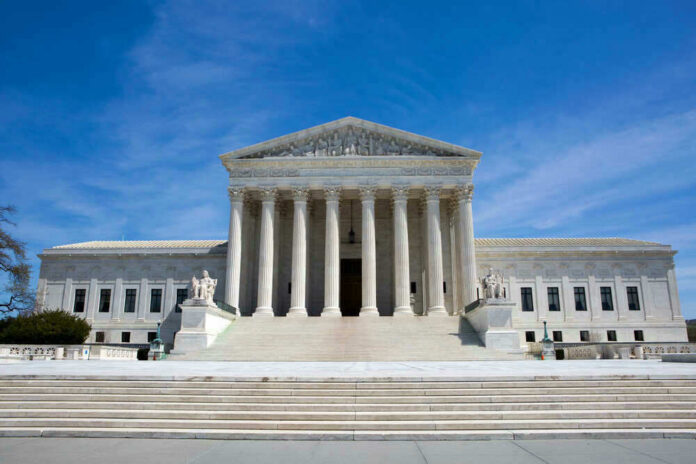
One justice just warned that Maryland’s gun-free map may be bigger than history allows—and invited the next case to prove it.
At a Glance
- The Supreme Court refused to hear a broad challenge to Maryland’s “sensitive places” gun bans.
- Justice Clarence Thomas questioned whether many of those bans fit American history.
- The law covers parks, transit, stadiums, museums, casinos, hospitals, and more.
- Thomas urged a narrower, targeted case to test what counts as “sensitive”.
What the Court Did—and Did Not Do
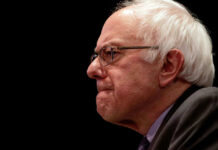
The Supreme Court denied review in Novotny v. Moore, leaving Maryland’s rules in place for now. The Court did not rule on the merits, so no national precedent changed. The case had challenged an array of locations at once, which made it hard to review in a clean way. Justice Clarence Thomas agreed with denying this particular petition but filed a statement flagging “serious doubts” about many of Maryland’s sweeping bans under the history test from recent cases.
🚨 BREAKING: Supreme Court Justice Clarence Thomas just perfectly put Maryland's sweeping gun bans ON NOTICE after SCOTUS declines, for now, to hear a challenge to the law
"I am skeptical that each of these laws 'is consistent with this Nation's historical tradition of firearm… pic.twitter.com/bjfBV6Xq6O
— Eric Daugherty (@EricLDaugh) November 16, 2026
Thomas pointed to the petition’s breadth as a practical barrier for review. He said the right case should be “narrowly focused” and aimed at the core question: which places truly count as sensitive, based on our nation’s historical tradition. That cue matters. It signals to lawyers and lower courts that the Supreme Court may take a tighter case that poses one clean question, supported by a careful historical record, and not a kitchen-sink lawsuit.
How Maryland Drew the Map
Maryland’s law restricts carry in a long list of everyday places. The list includes government buildings, schools, public transportation, state parks, stadiums, museums, amusement parks, racetracks, casinos, healthcare facilities, and places that sell alcohol. The state defends these lines by claiming support in history and by pointing to unique safety risks in crowded or confined areas. The United States Court of Appeals for the Fourth Circuit upheld most of the scheme, with one narrow exception, before the case reached the Supreme Court.
Maryland officials called the outcome a public-safety win and said the law respects responsible gun owners while targeting risky settings. They argue that bans in schools, legislative assemblies, polling places, and courthouses have long roots, and that principle can extend to modern analogues like transit hubs, bars, and entertainment venues. That view carried the day in the lower court and remains operative because the Supreme Court passed on review in this round.
The Thomas Signal and the Path Ahead
Thomas’s statement is not binding law, but it is a roadmap. He questioned whether Maryland’s far-reaching list lines up with historical practice and urged a smaller, precise case to define limits. That approach matches common sense and the rule of law. Legislatures cannot turn a narrow exception—true sensitive places—into a near blanket ban on carry in daily life. The Constitution sets the default; exceptions need solid proof drawn from real history, not vibes or fear.
Gun-rights litigants now have a clear playbook. Pick one category—say, public parks, transit, or alcohol-serving venues. Build a complete founding and Reconstruction record. Show where history supports bans and where it does not. Map the real-world effect to prove how the law blocks ordinary, lawful self-defense for permit holders. Courts prefer cases with clean facts, sharp questions, and solid evidence. Thomas’s cue makes that expectation explicit.
What This Means for Everyday Carry
The immediate effect is simple: Maryland’s sensitive-place rules remain enforceable. Lawful carriers must treat transit, state parks, casinos, museums, and many event venues as off-limits under current law. Violations invite criminal risk. That status will hold unless a new, narrower case convinces the Supreme Court to draw lines that better reflect true historical analogues. Until then, the Fourth Circuit’s reasoning will guide cases in that region and may influence other courts.
For readers who value both freedom and order, the balance question is straight. The Second Amendment protects a real right to carry in public. The law allows targeted limits in truly sensitive places with proven historical roots. Thomas’s statement suggests Maryland may have pushed past that line in several categories. The Court left the door open; it asked for the right key. The next case that brings it may reset the map, one location at a time.
Sources:
cbsnews.com, law.cornell.edu, scotusblog.com, supremecourt.gov