American employers cut 23,000 jobs in July, and the government quietly rewrote the story of the two months before it, wiping out 103,000 previously reported jobs in the process.
Story Snapshot
- Nonfarm payrolls fell by 23,000 in July, far below the roughly 85,000 gain economists expected.
- The unemployment rate slipped to 4.1% from 4.2%, but largely because more people stopped looking for work.
- May and June payroll gains were revised down by a combined 103,000 jobs, erasing much of the earlier good news.
- The report lands three months before the midterm elections, adding political pressure on President Trump.
A Report That Caught Wall Street Off Guard
The Bureau of Labor Statistics said Friday that total nonfarm payroll employment “changed little” in July, dropping by 23,000 positions. That number stunned forecasters, who had penciled in a gain near 85,000 jobs, and it marked a sharp reversal after months of modest growth.
Government payrolls took the hardest hit, falling by 53,000 jobs, much of it tied to declines in local government education staffing. Private employers added jobs, but not nearly enough to offset those public-sector losses, leaving the overall count in negative territory for the month.
Two Months of Progress Quietly Erased
Beyond the headline number, the report’s revisions did real damage to the narrative of a steady labor market. May’s job gain was slashed from 129,000 to just 63,000, and June’s figure dropped from 57,000 to 20,000, a combined loss of 103,000 jobs that had previously been counted as growth.
Those revisions matter because they change the entire trend line. What once looked like a labor market cooling gently now looks like one that has been losing steam for three straight months, with the average monthly gain over the past year sitting near just 34,000 jobs.
US job market stalled in July as employers cut 23,000 jobs, delivering political setback to Trump https://t.co/MQqD5IgqGq
— WMBF News (@wmbfnews) August 8, 2026
Unemployment Fell, But Not for a Good Reason
The unemployment rate ticked down to 4.1%, a number that on its face sounds encouraging. But economists point out the drop happened mainly because more workers left the labor force entirely, not because more people found jobs. A shrinking labor force can flatter the unemployment rate while masking real weakness underneath.
Private payroll processor ADP added its own warning sign days before the government report, showing private companies added only 44,000 jobs in July, a slowdown from 95,000 the prior month and below what analysts expected. Nearly all the gains came from healthcare, while goods-producing industries actually lost jobs.
Layoffs Are Down, Even as Hiring Slows
Confusingly, actual layoff announcements are not spiking. Outplacement firm Challenger, Gray & Christmas reported employers announced about 33,500 job cuts in July, the lowest monthly total in two years and a 27% drop from June.
That is the paradox defining this labor market: companies are not aggressively firing workers, but they have also largely stopped hiring new ones.
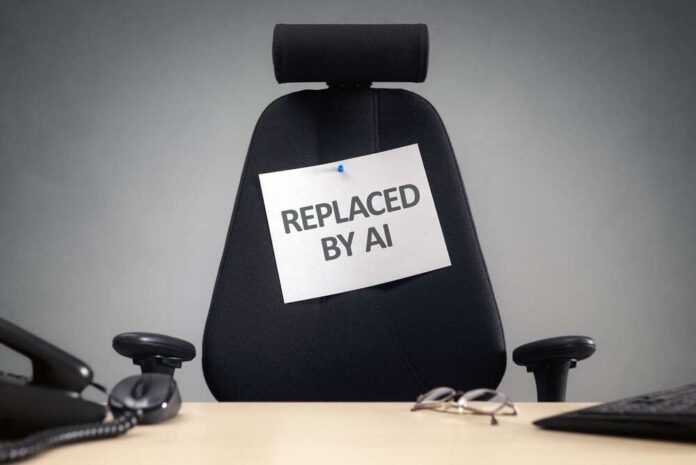
Artificial intelligence has become a recurring line item in those layoff announcements, cited as a reason for job cuts for five straight months. It is a small but growing share of total cuts, a reminder that automation is starting to reshape which jobs disappear even as overall layoff totals stay historically low.
Why This Lands as a Political Setback
The Associated Press framed the report bluntly, describing the stalled job market as delivering “a political blow” to President Trump roughly three months before the midterm elections, while also complicating decisions for Federal Reserve officials weighing interest rate moves.
A weak labor report cuts both ways for the Fed, since it raises pressure to cut rates even as inflation concerns linger.
For a White House that has leaned heavily on economic strength as a selling point, a stalled jobs picture heading into an election year is not a minor technicality. Voters tend to feel labor market wobbles in their own paychecks and job searches long before economists finish debating the data.
The coming months of jobs reports will matter enormously. If July proves to be a blip smoothed over by future revisions, the political sting fades quickly. If it marks the start of a real slowdown, both the Fed and the Trump administration will face far tougher choices with far less room to maneuver.
Sources:
tradingeconomics.com, wsj.com, bls.gov, cnbc.com, reuters.com