
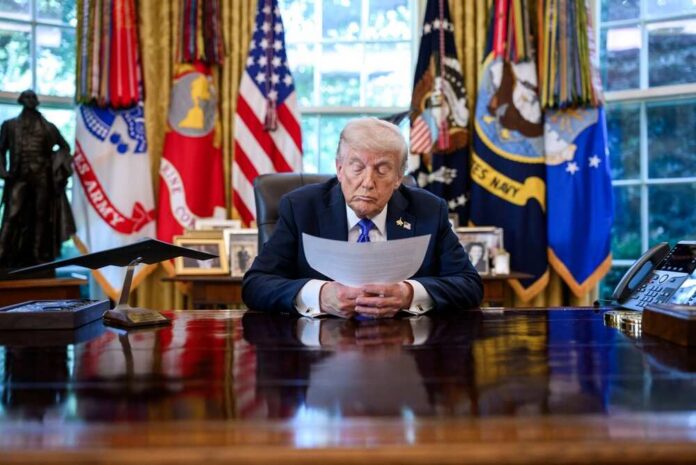
President Trump said he wants to “get Cuba done” before he leaves office, and he would consider using military force to do it.
Story Snapshot
- Trump set a clear goal: resolve the Cuba issue before his term ends.
- He said he would consider a short military operation if needed.
- He framed action as helping Cubans and Cuban-Americans who suffered under communism.
- He pointed to Secretary of State Marco Rubio as central to Cuba policy.
What Trump Said And Why It Matters
Trump made the remarks during an interview with radio host Hugh Hewitt. He said, “I want to get Cuba done before I leave,” setting a near-term objective in plain terms. When Hewitt asked if he would consider “a little bit of military force, a week campaign,” Trump said he would “certainly consider that.” That pairing of a deadline and a potential use of force raises the stakes. It also signals pressure on Havana and a promise to Cuban-Americans who want change.
PRESIDENT TRUMP: I want to get Cuba done before I leave, yeah. We have a very good, talented guy for Cuba named Marco. pic.twitter.com/BLJILtcsAl
— Department of State (@StateDept) November 12, 2026
Trump tied the goal to a humanitarian case. He said he would like to do it “for the people,” citing Cubans who fled abuse and built new lives in the United States. That argument fits a long-standing conservative view: free people do better than people trapped under dictators. The United States has backed that view with sanctions, support for dissidents, and tough talk for decades. Trump added the option of military pressure to that familiar toolbox.
How A Short Campaign Idea Lands In The Real World
Trump described a possible brief operation when prompted, not a long war. The exchange did not include targets, timetables, or post-conflict plans. That matters. Short campaigns can topple doors; they do not build houses. Cuba’s security services are loyal, and urban areas are dense. Any strike would need clear objectives and a tight end state or risk spiraling. History warns that even “limited” action can widen fast if assumptions prove wrong.
Presidents often use public threats to signal resolve and gain leverage. Political science research shows leaders sometimes pay a price if they back down, but the size of that price depends on how specific the threat was and who heard it. Trump’s words increase perceived risk for Havana and rally supporters at home. They stop short of the normal signs of imminent action, like force movements or formal orders. That leaves room for pressure, talks, or a mix of tools short of war.
Who Would Shape The Policy
Trump highlighted Secretary of State Marco Rubio as a key player. Rubio’s family roots are Cuban, and he has long pushed a hard line against the island’s communist regime. Trump said Rubio “would love to do it,” and reports said Rubio would have a central role in any plan to “get Cuba done”. That pairing matters. A president and a like-minded chief diplomat can move fast on sanctions, diplomacy, and support to civil society. It also aligns the message to allies and the Cuban diaspora.
Congress would also matter. Lawmakers control authorizations and funding for the use of force. Some members have already staked out positions on limiting unauthorized action in Cuba. Any move beyond sanctions and diplomacy would still pass through legal and political gates on Capitol Hill. The White House can signal and shape, but the system demands authority, clarity, and accountability.
What “Get Cuba Done” Could Mean In Practice
“Get Cuba done” is a broad phrase. It could mean stronger sanctions enforcement, more support to dissidents, covert disruption, or cyber and maritime pressure. It could mean a diplomatic push to free political prisoners. It could also mean a fast strike to break regime capacity if red lines are crossed. The first steps often look the same: tighten money flows, rally partners in the region, and set public lines that warn Havana about consequences for abuses and aggression.
Two facts stand out. Trump put a clock on the policy and said military force is on the table. That combination creates urgency for both sides. It invites Havana to test resolve or to seek a deal. It tells Cuban-Americans that the administration will not accept the status quo. The wiser path tracks with common sense and conservative values: peace through strength, a clear goal, and a short, lawful path to get there if push comes to shove.
Sources:
cnbc.com, nbcnews.com, politico.com, ny1.com, independent.co.uk