

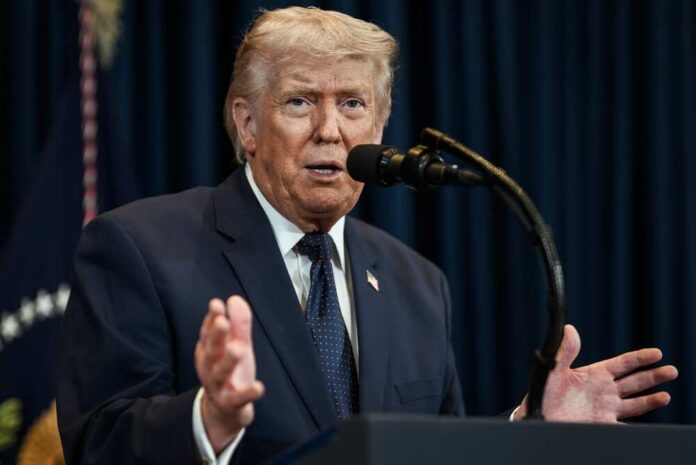
President Trump said he “can’t imagine” Democrats impeaching him a third time, and he did not hedge.
Story Snapshot
- Trump answered a direct question on impeachment in a 60 Minutes interview.
- He argued prior impeachments backfired on opponents and might again.
- He tied his confidence to his view of strong results in his first two years.
- House Democrats hold the impeachment power if they choose to use it.
What Trump Said On National Television
President Trump faced the question on air: Would Democrats try to impeach him again? He replied, “I can’t imagine it,” and added, “What have I done?” He pointed to two acquittals in the Senate after earlier House impeachments and said some believe those fights helped him. The exchange aired on 60 Minutes and was summarized by Fox News, which noted the interview followed Democratic gains in the midterms.
Does President Trump think Democrats will try to impeach him a third time?
“What have I done? I've had the best two years in the history of the presidency,” Trump responds. https://t.co/yeU4xzmmGy pic.twitter.com/VGe1Vhakj6
— 60 Minutes (@60Minutes) November 9, 2026
Trump also framed the last two years as the strongest in presidential history, in his view. That claim is his self-assessment, framed as part of his case against more impeachment talk. He then linked the politics to results, saying opponents paid a price before and could again. The message was simple: new House power does not need to mean a new impeachment, and if it did, he believes he would weather it.
What The Constitution Lets The House Do
The United States Constitution gives the House of Representatives the sole power to impeach. The Senate alone holds the trial and decides whether to convict. No legal clock or required timetable forces either chamber to act. A House majority can investigate, issue subpoenas, or draft articles of impeachment based on its judgment. A Democratic House could pursue oversight without impeaching, or impeach even if Senate conviction looks unlikely.
This structure turns impeachment into a political judgment more than a courtroom exercise. The threshold is not a criminal statute; it is “high crimes and misdemeanors,” which the House interprets. That is why presidents rarely face it, and why outcomes hinge on votes, not just facts. Trump’s answer fits that reality: he read the politics and said a third round does not make sense to him.
How Prior Impeachments Shaped The Politics
Americans have watched only a few modern impeachments. Before Trump, Andrew Johnson and Bill Clinton were impeached. Trump is the first to be impeached twice. Public support for impeachment has often been split and soft. Research shows it tends to excite partisans but lacks broad appeal. Congress has still moved ahead when it chose, even without majority support in polls during the Clinton era.
That history helps explain Trump’s calculation. He points to the political cost for those who push impeachment in a divided country. He says earlier efforts did not harm him in the end and may have helped. Whether that was cause or coincidence is debated by analysts, but the on-air claim was clear: more impeachment talk could rally his side and drain attention from kitchen-table issues.
What Could Happen Next In The House
Democrats hold tools short of impeachment and often use them first. Committees can hold hearings, demand documents, and call witnesses. That process can surface facts that either raise or lower pressure for impeachment. The House can also open a formal inquiry before any floor vote. The Constitution Annotated and the Legal Information Institute outline those steps plainly, from inquiry to articles to a final vote.
Trump’s stance sets a marker. He signals that Democrats risk backlash if they rush to the most extreme step. That warning aligns with common sense and with a conservative view of checks and balances: use impeachment rarely, as the last resort, not the first. One brief caveat is fair here: media accounts so far highlight excerpts from the interview, not a full transcript within this package. But the core quotes are not in dispute in the cited reporting.
Sources:
foxnews.com, moxie.foxnews.com