

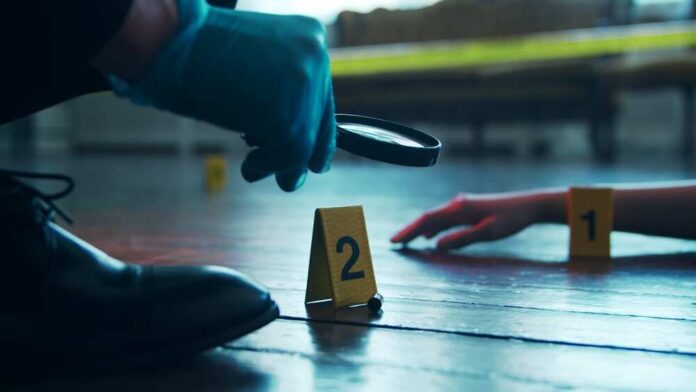
A cold-case arrest now alleges a reality TV taping set the stage for a deadly end.
Story Snapshot
- Police arrested Dale Smith Jr. in the 2011 disappearance of Michelle Parker.
- An unsealed warrant says investigators believe Parker was choked at Smith’s home.
- The episode of The People’s Court featuring the pair aired that same day.
- The case highlights risks tied to intimate-partner violence in America.
The Arrest That Revived a Vanished Mother’s Case
Orlando police charged Dale Smith Jr., 55, with second-degree murder in the disappearance of his former fiancée, Michelle Parker, nearly 15 years after she vanished, officials announced this week. Parker was 33 when she went missing in 2011, leaving behind three children. Police said she dropped the twins she shared with Smith at his home before she disappeared. Authorities described the arrest as the product of a long, methodical investigation that continued as new evidence surfaced over time.
An unsealed 46-page arrest-warrant affidavit spells out why investigators say Smith is responsible. Detectives wrote that Parker was likely choked at Smith’s residence on November 17, 2011. The document cites signs of a struggle and injuries seen on Smith soon after Parker disappeared, which investigators say fit a fight in which Parker tried to defend herself. Prosecutors often treat chokeholds as a strong indicator of intent, since they can kill in minutes and leave limited external marks.
A TV Courtroom, A Bitter Dispute, and a Narrow Window of Time
The People’s Court episode featuring Parker and Smith aired the same day as her disappearance, bringing their rocky split into public view hours before she went missing. Police say Parker stopped by Smith’s home that afternoon to drop off their 3-year-old twins and was not seen again. That timeline matters. Cases hinge on windows of opportunity. The affidavit says the last confirmed contact and her planned stop at Smith’s home line up with the period investigators believe the killing happened.
Detectives also describe behavior they found suspicious in the hours after Parker vanished, tying it to the theory that the killing happened quickly after the drop-off. Authorities did not recover Parker’s body, which raises trial hurdles. No-body cases are harder, but not rare, when built on phone data, forensics, and statements. Police say the affidavit details evidence they believe meets the probable-cause bar in this case. Smith has pleaded not guilty, and a jury will decide the facts at trial.
Authorities allege a Florida man choked his former fiancée to death shortly after they appeared in an "embarrassing" episode of "The People's Court" that aired following days of heated messages and threats from the mother to restrict access to their twins, according to a newly… pic.twitter.com/AL4qsG4RCL
— ABC News (@ABC) October 28, 2026
How Investigators Build No-Body Homicide Cases
Cold cases demand patience and precision. Detectives use cell records, home and work timelines, digital footprints, and witness statements to rebuild the final hours. They look for sudden gaps in the victim’s routine and signs that a suspect cleaned up, changed stories, or had injuries. The affidavit’s focus on a chokehold, observed abrasions on Smith, and a tight time window matches common tactics in successful prosecutions built without a recovered body. One strong, coherent case beats a pile of loose claims.
Media glare from a court TV episode can warp attention, but it does not solve a case. Investigators and jurors must zero in on what can be proven: who had motive, who had means, and who had the last clear contact. The affidavit’s account places all three with Smith, according to police, within hours of the broadcast. That alignment will likely anchor the state’s theory. The defense will press every gap in the chain, which is exactly how the system should work.
The Hard Math of Intimate-Partner Violence
This story also fits a grim national pattern. Federal data show that an intimate partner killed more than a third of female homicide victims in 2023, and women face a higher intimate-partner homicide rate than men. Researchers have found that women comprise more than three-quarters of intimate-partner homicide victims across large samples. These base rates do not decide any single case, but they explain why police move fast when former partners vanish in narrow windows of time.
Policy should follow the pattern. Families need clear custody exchanges, safe handoff locations, and court orders that mean something. Police need modern tools to track high-risk cases, and courts need swift hearings when risk spikes. American conservative values prize personal responsibility and defending innocent life. That means getting ahead of known danger signs, backing police who build careful cases, and demanding accountability when violence targets mothers and children.
Sources:
abcnews.com, apnews.com, pmc.ncbi.nlm.nih.gov, bjs.ojp.gov