

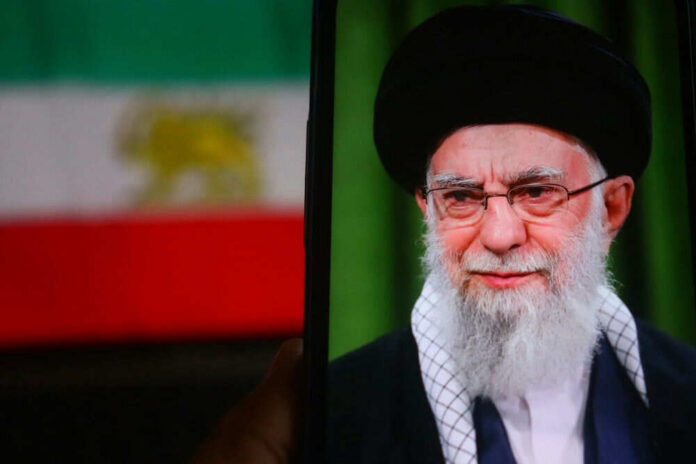
Iran has completed its first-ever dynastic succession of power, appointing the son of the deceased Supreme Leader to the nation’s highest office in a move that fundamentally transforms the Islamic Republic into a hereditary regime despite its founding principles opposing monarchy.
Story Snapshot
- Mojtaba Khamenei becomes Supreme Leader following his father’s assassination by U.S. and Israeli forces in February 2026
- First hereditary succession in Islamic Republic history breaks with theocratic selection process established in 1979
- Assembly of Experts rubber-stamps decision despite father’s prior opposition to dynastic rule and son’s thin credentials
- Islamic Revolutionary Guard Corps wielded decisive power behind closed doors, sidelining constitutional procedures
- Transition raises concerns about regime legitimacy and stability amid ongoing Middle East tensions
Historic Shift to Hereditary Rule
Mojtaba Khamenei assumed Iran’s Supreme Leader position following a secretive selection process that concluded in March 2026, marking the Islamic Republic’s first dynastic power transfer. The 88-member Assembly of Experts formally appointed the younger Khamenei after his father, Ayatollah Ali Khamenei, died in coordinated U.S.-Israeli airstrikes on February 28, 2026.
This transition contradicts the regime’s founding rejection of monarchical succession and represents a fundamental departure from Iran’s constitutional framework, which supposedly vests selection authority in clerical deliberation rather than bloodline inheritance.
Constitutional Process Bypassed by Military Power
The Islamic Revolutionary Guard Corps exercised effective veto power over the succession, with realpolitik overriding constitutional procedures according to regional security analysts. An Interim Leadership Council temporarily managed duties from March 1 through the formal appointment, but the outcome was predetermined through backroom negotiations rather than genuine Assembly deliberation.
Two reluctant clerical candidates reportedly withdrew by March 6, clearing the path for Mojtaba despite his lack of executive experience and absence of “black turban” credentials signifying descent from Prophet Muhammad—traditionally important markers of religious authority in Shia Islam.
Iran named Mojtaba Khamenei, the son of the late Ayatollah Ali Khamenei, as its next supreme leader on Sunday. https://t.co/PNQgMKHVU2
— KOKH FOX 25 (@OKCFOX) March 9, 2026
Controversial Credentials and Legitimacy Questions
Mojtaba Khamenei brings minimal governance experience to the position of controlling Iran’s military, judiciary, nuclear policy, and security apparatus. His appointment contradicts his late father’s stated opposition to hereditary succession, with Ali Khamenei having explicitly warned against creating monarchy-like perceptions that would undermine the regime’s revolutionary legitimacy.
The younger Khamenei’s primary qualification appears to be family connection rather than theological scholarship or political achievement, fueling criticism that Iran has effectively restored the monarchical system its 1979 revolution claimed to abolish. This represents a dangerous consolidation of power within a single family that concentrates authority without accountability.
IRGC Consolidation and Regional Implications
The succession strengthens the Islamic Revolutionary Guard Corps’ grip on Iranian politics and economics, as the military organization’s support proved decisive in Mojtaba’s selection. This development mirrors troubling patterns where unelected military and security forces override democratic or constitutional processes—a concern for anyone valuing limited government and separation of powers.
The timing amid heightened Middle East tensions following the Twelve-Day War creates risks of further regional instability, with potential impacts on oil markets and nuclear diplomacy. Former U.S. Ambassador John Bolton assessed the regime as vulnerable during this transition, suggesting opportunities for pressure from nations defending against Iranian aggression.
Breaking News 🚨
IRANIAN LEADERSHIP TRANSITION
Ayatollah Khamenei's son Mojtaba Khamenei has been chosen as Iran's new Supreme Leader. pic.twitter.com/DaxQRDKKPE— Global X Watch (@GlobalXWatch) March 9, 2026
The dynastic succession sets a precedent that could further erode what little legitimacy Iran’s theocratic system retains among its population. Internal opposition to hereditary rule may fuel dissent similar to past protests over rigged elections and political disqualifications, though the IRGC’s security apparatus stands ready to crush challenges.
This consolidation of power in fewer hands—combining religious authority, military command, and now family dynasty—exemplifies the dangers of unchecked government authority that our Founders understood when designing America’s constitutional republic with its essential checks and balances.
Sources:
Wikipedia: 2026 Iranian Supreme Leader Election
Stimson Center: The Curse of Succession in Iran
Britannica: Supreme Leader of Iran
MPR News: How Succession Works in Iran and Who Could Be the Country’s Next Supreme Leader