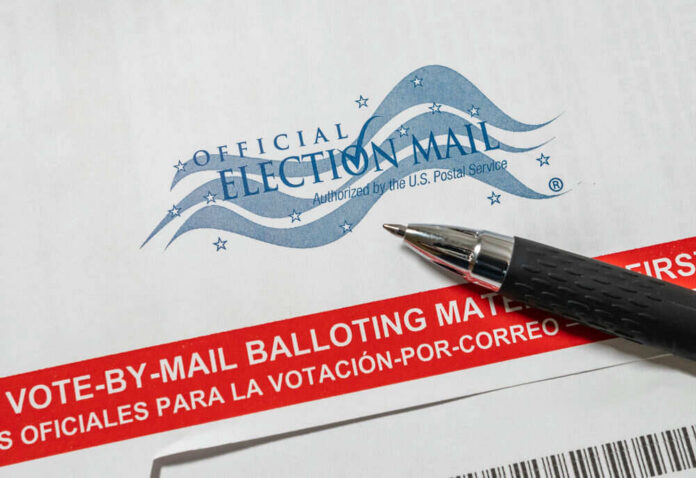
A New Jersey “software error” quietly put about 6,600 admitted noncitizens on the voter rolls and let nearly 400 cast ballots, raising fresh questions about who is guarding America’s elections.
Story Snapshot
- About 6,600 people who said they were not citizens were still registered to vote through New Jersey’s motor vehicle system.
- State officials say fewer than 400 of those noncitizens actually voted while wrongly registered.
- The governor blames a motor vehicle software vendor and is now removing the names and replacing the system.
- The case shows how one faulty government system can let ineligible voters slip onto the rolls across an entire state.
Governor admits thousands of noncitizens hit New Jersey voter rolls
New Jersey Governor Mikie Sherrill, a Democrat, has admitted that a major failure in the state’s Motor Vehicle Commission system wrongly registered about 6,600 noncitizens to vote between June 2023 and June 2024. These people were applying for driver’s licenses or state identification cards.
On the touch-screen, they answered “no” when asked if they were United States citizens, yet the system still added them to the voter rolls. State officials now call the incident a “serious software error,” but the scale alarms many election integrity advocates.
According to Sherrill’s statement and follow-up reporting, the state’s initial analysis shows that fewer than 400 of those wrongly registered noncitizens went on to vote in one or more elections. The governor says these votes were scattered across the state, with most of the affected voters registered as unaffiliated, and some listed as Democrats or Republicans.
She also insists there is no evidence so far that any race’s outcome was changed, but admits that the investigation into these votes remains ongoing.
Blame placed on motor vehicle software vendor, not on voters
Sherrill and her team say the problem came from software used by the Motor Vehicle Commission that handled voter registration prompts during license applications. The vendor, IDEMIA, built a system where applicants were asked on a keypad if they were United States citizens and if they wanted to register to vote.
In this case, thousands of people correctly said they were not citizens and therefore not eligible. Despite that answer, the system still pushed their information into the statewide voter registration database. The governor has ordered the removal of all wrongly registered names and started the process to replace the vendor.
Virginia authorities on Tuesday said they charged a Mexican man in the slaying of a 2-year-old girl this month. https://t.co/PVdpDv9GZr
— The Washington Times (@WashTimes) July 21, 2026
Sherrill claims the error began under former Democratic Governor Phil Murphy and was corrected in June 2024, before she took office. She says she only learned about the issue last week, then directed her chief counsel to launch a comprehensive investigation.
The Division of Elections is now matching records and sending letters to those impacted, warning them they were wrongly registered and may face legal risk if they vote while ineligible. Sherrill has publicly said she fears these people could face federal prosecution “through no fault of their own” and wants to protect them as they pursue legal status or citizenship.
What this glitch shows about election systems and public trust
This New Jersey case fits a troubling pattern seen in large government voter-registration systems around the country. When motor-voter programs tie license applications to voter rolls, one software mistake or poorly tested upgrade can affect tens of thousands of records at once.
California’s Department of Motor Vehicles, for example, admitted in 2018 that a series of errors in its own motor-voter rollout impacted 77,000 registrations in one batch and 23,000 in another, plus about 1,500 ineligible people in a separate data-entry error. These episodes show that technical failures, not just bad actors, can open cracks in election systems nationwide.
Who is lying?
Place your bets…Gunther Eagleman’s post highlights an alleged New Jersey DMV “software error” that registered about 6,600 noncitizens to vote between June 2023 and June 2024, claiming Gov. Mikie Sherrill blamed the vendor while the company stated it only…
— Joe Donlan, Ph.D. (@OrdaininReality) July 22, 2026
Federal and state election-security experts have long warned that voter registration databases need strict testing, strong access controls, and careful monitoring. Recommended safeguards include role-based access for staff, multi-factor sign-ins, supply chain risk checks for vendors, and regular audits that compare voter counts and precinct data to catch odd patterns early.
In New Jersey, the Motor Vehicle Commission’s system appears to have failed these basic standards, allowing a “glitch” to misclassify thousands of clearly self-identified noncitizens as eligible voters for at least a year before anyone caught it.
Why conservatives see a deeper problem behind the “error” label
For many conservatives, this incident is not just a paperwork mistake; it looks like a warning flare about how fragile election systems have become. Voter rolls are supposed to reflect only eligible citizens. When government agencies plug automatic registration tools into complex databases and then shrug off large-scale errors as mere glitches, they ask the public to trust systems they clearly do not control.
This is especially troubling in a climate where many Americans already question whether their votes are diluted by ineligible ballots or poor oversight.
At the same time, the New Jersey case shows why election integrity debates cannot be brushed aside as “conspiracy theories.” Here, the governor herself confirms that thousands of known noncitizens were placed on the rolls and that hundreds went on to vote.
There may be no proof yet that any specific race was flipped, but that is cold comfort to citizens who believe their sacred right to vote should never share the same ballot box with unlawful votes, however they happened.
The episode gives fresh momentum to calls for tighter proof-of-citizenship rules, stronger voter roll audits, and real accountability for agencies and vendors that let basic safeguards fail.
Sources:
washingtontimes.com, nytimes.com, fox29.com, facebook.com, cbsnews.com, apps.dtic.mil, aceproject.org, brennancenter.org, electionsgroup.com