
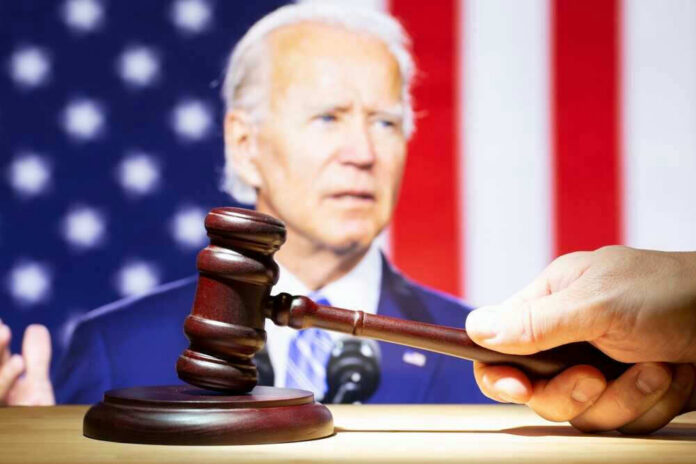
A federal appeals court has delivered a crushing blow to over 8 million Americans enrolled in Biden’s controversial student loan forgiveness scheme, ordering an immediate end to the SAVE plan that Republican-led states successfully challenged as executive overreach.
Story Highlights
- Eighth Circuit Court of Appeals ruled the Biden Administration’s SAVE plan exceeded federal authority, halting implementation entirely
- Over 8 million borrowers now face interest-free forbearance with no credit toward loan forgiveness during litigation
- Republican-led states successfully argued that the program represented illegal executive overreach and fiscal irresponsibility
- Trump Administration inherits the decision on whether to defend, modify, or permanently end the program
- Borrowers must consider switching to alternative repayment plans to continue earning forgiveness credits
Court Strikes Down Biden’s Student Debt Giveaway
The Eighth Circuit Court of Appeals issued a decisive ruling on July 18, 2024, ordering the Department of Education to cease all implementation of the Saving on a Valuable Education plan. This represents another major defeat for the Biden-Harris Administration’s attempts to circumvent Congressional authority on spending.
Republican-led states filed separate lawsuits arguing the Education Department exceeded its statutory authority under the Higher Education Act by fundamentally altering repayment terms without proper legislative approval.
The SAVE plan promised borrowers monthly payments as low as 5% of discretionary income and aggressive forgiveness timelines, creating what critics rightfully called an unsustainable taxpayer-funded bailout for student debt.
ICYMI: Federal appeals court kills the SAVE plan for good.https://t.co/vqCWjXcE8f
— The College Investor (@CollegeInvestin) March 10, 2026
Millions Left in Limbo by Federal Overreach
Secretary Miguel Cardona announced that affected borrowers would enter interest-free forbearance while litigation continues, but this temporary relief comes with serious consequences.
Borrowers enrolled in SAVE cannot earn credit toward Public Service Loan Forgiveness or standard income-driven repayment forgiveness during forbearance periods.
The Department of Education halted processing new SAVE applications and recertifications, leaving millions uncertain about their repayment future.
Experts estimate forbearance could extend through September 2025 at a minimum, with regular payments potentially resuming around December 2025. This chaos exemplifies the dangers of executive actions that bypass constitutional checks and balances.
Constitutional Concerns Over Presidential Authority
The legal challenge centers on fundamental questions of executive power and fiscal responsibility that should resonate with every American concerned about government overreach.
The SAVE plan originated from a Biden Administration rebranding of the existing REPAYE program, but dramatically expanded benefits beyond statutory limits.
States argued successfully that the Education Department manipulated existing regulations to create what essentially amounted to blanket forgiveness without Congressional authorization.
This follows the Supreme Court’s 2023 decision in Biden v. Nebraska, which struck down the Administration’s broader loan forgiveness scheme. The pattern reveals a disturbing willingness to ignore constitutional boundaries and saddle taxpayers with obligations they never approved through their elected representatives.
Financial Impact on Taxpayers and Borrowers
The SAVE plan’s generous terms would have cost American taxpayers billions while creating a moral hazard in higher-education financing. The program offered faster forgiveness after just 10 years for small balances and 20-25 years for larger loans, compared to traditional 25-year timelines.
It also provided unprecedented interest subsidies, preventing interest accrual even when payments didn’t cover it. While borrowers face uncertainty, the forbearance period provides temporary cash-flow relief without interest accruing.
Conservative financial experts recommend that affected borrowers consult with loan servicers about switching to Income-Based Repayment plans, which allow continued progress toward forgiveness under established legal frameworks rather than politically-motivated giveaways.
Federal appeals court orders end to SAVE plan used by millions of student loan borrowers https://t.co/CzVSnz4Gvz
— CNBC (@CNBC) March 10, 2026
The Trump Administration now holds authority over the Education Department’s response to this litigation. President Trump can choose to abandon defense of this legally questionable program, negotiate modifications that respect taxpayer interests, or pursue complete termination.
Borrowers seeking alternatives should explore Income-Based Repayment, which maintains legitimacy and allows forgiveness of credit accumulation. The PSLF Buyback program may eventually restore lost forbearance time for public servants, though this remains uncertain.
This situation demonstrates why constitutional governance matters—when administrations ignore legal limits on executive power, ordinary Americans suffer the consequences of inevitable judicial corrections.
Sources:
The SAVE Student Loan Plan Is Officially Dead — Here’s What That Means for Your Loans
SAVE Plan Lawsuits: What to Know and How to Help
Income-Driven Repayment Court Actions