

Federal appeals court slams the door on President Trump’s request for a 90-day delay, forcing immediate tariff refunds that could drain billions from the Treasury amid ongoing trade battles.
Story Snapshot
- U.S. Court of Appeals for the Federal Circuit denies the Trump administration’s plea, clearing the path for the U.S. Court of International Trade to process refunds on invalidated IEEPA tariffs.
- The Supreme Court ruled 6-3 on February 20, 2026, that IEEPA does not authorize broad presidential tariffs, affecting importers hit by the 2025 escalations.
- Small businesses like V.O.S. Selections and Learning Resources lead the charge for refunds with interest, joined by giants such as FedEx, Revlon, and Costco.
- President Trump swiftly issued executive orders ending IEEPA tariffs and imposing new 10% universal tariffs under alternative laws, maintaining America First pressure.
- Over 1,000 cases now flood CIT, signaling long-term strain but validating judicial checks on executive overreach.
Supreme Court Strikes Down IEEPA Tariffs
The U.S. Supreme Court ruled 6-3 on February 20, 2026, in Learning Resources, Inc. v. Trump and V.O.S. Selections cases, that the International Emergency Economic Powers Act (IEEPA) does not grant presidents authority for unbounded tariffs.
Chief Justice Roberts authored the majority opinion, affirming Federal Circuit’s en banc decision that labeled the tariffs excessive in scope, amount, and duration.
Small businesses from 12 states challenged the duties first imposed in 2025 on Chinese goods at 10%, escalating to 145% effective rates, plus reciprocal tariffs on Canada and Mexico. These bypassed statutory limits like 50% under Section 1338(d).
The ruling remanded cases to the U.S. Court of International Trade (CIT) for relief, upholding constitutional limits on executive trade power while preserving other tariff authorities.
BREAKING: An appeals court rejects the Trump administration's bid to delay refunding tariffs after the Supreme Court's ruling. https://t.co/JWSWdFavuZ
— CBS News (@CBSNews) March 2, 2026
Federal Circuit Rejects Delay Request
On Monday, following Friday’s Trump administration request, the Federal Circuit denied a 90-day stay of its mandate. The Department of Justice argued time was needed for political branches to weigh options after the Supreme Court decision.
The court rejected this, enabling CIT to immediately oversee refund processes for importers who paid unlawful IEEPA duties. Attorney Neal Katyal, representing plaintiffs, declared they would proceed right away to secure refunds owed to Americans.
This decision prioritizes swift justice for businesses over administrative delay, despite the administration’s prior pledges to repay if ruled invalid. Legacy tariffs under Sections 232 and 301 remain intact.
Trump’s Rapid Response with New Tariffs
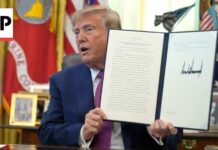
President Trump responded decisively between February 20-24, 2026, issuing executive orders terminating IEEPA tariffs effective February 24 at 12:00 a.m. ET. Simultaneously, new 10% tariffs on all countries took effect at 12:01 a.m. under authorities like Section 122, with exemptions for civil aircraft and parts.
Trump signaled potential rises to 15%, underscoring commitment to protecting American workers from unfair trade, drug trafficking, and globalist exploitation.
These moves sustain pressure on adversaries like China without relying on contested IEEPA powers, aligning with conservative priorities for national security and economic sovereignty. Steel, aluminum, and Section 301 China tariffs persist unaffected.
Customs and Border Protection (CBP) now handles implementation amid over 1,000 pending CIT cases from tag-along suits. Businesses passed tariff costs to consumers, fueling inflation conservatives blame on prior mismanagement; refunds could offer relief if forwarded. However, a multi-year process looms, straining Treasury with billions in payouts plus interest.
Impacts on Businesses and Economy
Small businesses spearheaded the lawsuits and stand to gain most from refunds, easing burdens from duties tied to emergencies like fentanyl inflows. Larger firms including FedEx, Revlon, and Costco filed in CIT, potentially recovering substantial sums.
Short-term, CIT develops mechanics for relief, accepting the principle of repayment per administration stipulations. Long-term, the ruling curbs IEEPA misuse but leaves ample tools for future tariffs, minimizing disruption to Trump’s America First agenda.
Experts at Holland & Knight note refunds recoverable via suits or contracts, while Thompson Hine emphasizes CIT’s judicial oversight role. This judicial check reinforces separation of powers without halting trade defenses.
Sources:
Supreme Court opinion on Learning Resources, Inc. v. Trump and V.O.S. Selections
Holland & Knight: Supreme Court IEEPA ruling and new US tariffs implications
Thompson Hine: Federal Circuit clears path for CIT to oversee IEEPA tariff refund process