The most revealing thing about the U.S. “self‑defense” strikes in Iran is not what the Pentagon said—it is what it refused to show.
Story Snapshot
- U.S. Central Command said it hit missile launch sites and mine‑laying boats in southern Iran “to protect our troops” during a fragile ceasefire.[1][2][4]
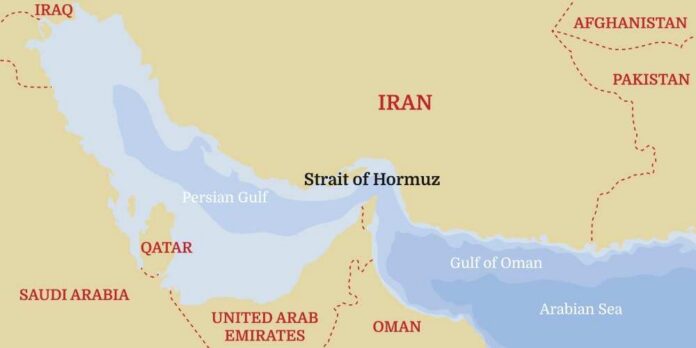
- The targets sat near Bandar Abbas and the Strait of Hormuz, where a few mines could rattle global oil markets overnight.[3][4]
- Officials called the operation restrained and defensive, but released no public proof the boats were actively laying mines at that moment.[1][2][4]
- The clash exposes a familiar gap: Americans are asked to trust classified “imminent threat” claims they will never be allowed to verify.[1][3][4]
How Washington Sold “Self‑Defense” Strikes Inside Iran
U.S. Central Command’s story was crisp: on Monday, American forces carried out “self-defense strikes in southern Iran” against missile launch sites and Iranian boats “attempting to emplace mines.”[1][2][4] The spokesman, Captain Tim Hawkins, said the goal was simple—protect U.S. troops from threats posed by Iranian forces while “using restraint during the ongoing ceasefire.”[1][2] That phrasing was no accident; it framed the strikes as narrow, necessary, and legally tidy, not a step toward another open‑ended Middle East war.
BREAKING: US military says it carried out ‘self-defense’ strikes in Iran
https://t.co/xCKasilZR9— FOX5 Las Vegas (@FOX5Vegas) May 26, 2026
News broadcasts repeated that framing almost word for word. Reports described explosions near the port city of Bandar Abbas, home to Iran’s main naval base, and said the United States hit missile positions and boats thought to be planting mines off the coast in the Strait of Hormuz.[3][4] This chokepoint carries a large share of the world’s seaborne oil; a handful of mines there can send prices soaring and spook nervous investors, which is exactly what market observers started warning about after the strikes.[4]
The Ceasefire, The Threat, And What We Are Allowed To See
The timing is what makes people over forty sit up and squint. These strikes landed during a “fragile ceasefire,” while negotiators talked about a possible peace deal and the president insisted talks were “proceeding nicely.”[2][3][4] Central Command insisted this was force protection, not punishment. Yet in public, officials released no imagery of the boats deploying mines, no intercepted communications, no radar plots—nothing that would let an ordinary citizen judge whether this was imminent danger or a preemptive message.[1][2][4]
Reporters, to their credit, flashed some skepticism. Several outlets described the vessels as “allegedly” preparing mines or “thought to be planting mines,” careful qualifiers that signal uncertainty, not ironclad proof.[3][4] One widely aired segment acknowledged that “Iran is yet to respond to the U.S. attack,” meaning the first news cycle leaned almost entirely on the American version of events.[4]
That imbalance is not new; it is structural. Iran does not have the same instant access to Western media, and U.S. military public affairs shops move fast when they want a label like “self-defense” welded into the headlines.[1][3]
The Question: What Does Self‑Defense Really Require?
Americans typically prize three things in foreign policy: clear threats, limited objectives, and constitutional accountability. The official account checks some of those boxes. Defending deployed troops against mines and missiles is plainly legitimate. No serious person wants American sailors or soldiers mutilated because politicians were afraid of a tough headline about “escalation.” A commander who ignores a real, immediate threat near a vital sea lane is not prudent; he is negligent.[1][3][4]
The problem is not the concept of self‑defense; it is the standard for proving it. Nothing in the public record so far shows when U.S. forces detected the alleged mine‑laying, how close those mines were to U.S. ships, or what alternatives were considered short of airstrikes inside Iranian territory.[1][2][4]
Those who remember “weapons of mass destruction” and years of classified assurances that later collapsed should demand more than a carefully worded press release before accepting another claim of imminent danger, especially when a ceasefire is in play.
Strait Of Hormuz: Where Narratives Move Oil Prices
Events near the Strait of Hormuz have always been narrative battlegrounds. A small tactical event there can trigger strategic consequences because global energy flows run through that narrow strip of water.[3] That reality encourages both Washington and Tehran to spin first and fill in details later.
Central Command stresses restraint and precision. Iranian officials, when they eventually respond, will almost certainly focus on sovereignty, ceasefire violations, and American aggression. Each side plays to its audience; neither rushes to hand over raw data that could poke holes in its story.
This is where common‑sense skepticism serves citizens well. Self‑defense may be entirely justified. Iranian forces may truly have been laying mines that would have endangered U.S. ships within hours. But as long as the evidence remains classified and reporters rely on phrases like “reportedly targeted” and “thought to be planting mines,” the public is not evaluating facts; it is choosing which institution to trust.[3][4] That is a dangerous way to run a republic that keeps sending young Americans into harm’s way.
What A Serious Accountability Standard Would Look Like
A more honest approach would not broadcast sensitive sources and methods to the world, but it would create a clear path for after‑action transparency.
Declassified imagery with key details redacted, a formal legal memo explaining how these strikes fit both American law and the ceasefire terms, and testimony from the operational commanders—these steps would let Congress and citizens test whether “imminent threat” meant minutes, hours, or something squishier.[1][3] If officials know that level of scrutiny is coming, they will think harder before stretching the self‑defense label.
For now, what we know is narrow and revealing all at once: U.S. forces hit Iranian missile sites and suspected mine‑laying boats near a vital chokepoint, during a ceasefire, under a banner of self‑defense.[1][2][3][4] Whether that banner reflects a necessary shield or a convenient fig leaf will depend on evidence the public has not yet seen—and on whether voters insist that “trust us, it was self‑defense” is no longer good enough.
Sources:
[1] YouTube – US Strikes Iran Missile Sites & Boats Amid Shaky Ceasefire …
[2] YouTube – US launches new strikes on Iran, targeting missile sites …
[3] YouTube – US Military Strikes Iranian Boats, Missile Launch Sites
[4] Web – 2025 United States strikes on Iranian nuclear sites