

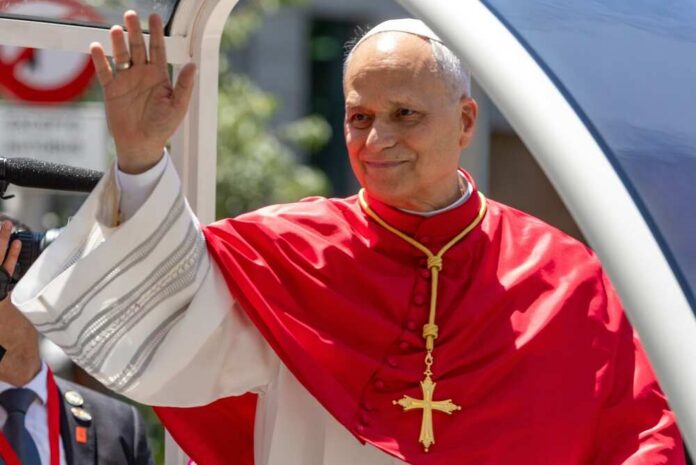
The Vatican says Pope Leo XIV mailed his Illinois ballot—making modern papal history while keeping his vote secret.
Story Snapshot
- The Holy See Press Office said the pope submitted a mail-in ballot in Chicago.
- Will County officials listed him as a voter who requested a mail ballot in Illinois.
- Vatican News framed the act as a citizen’s right and duty, consistent with his past voting when eligible.
- Major outlets reported the same core event on October 30, 2026.
A first-of-its-kind act grounded in simple paperwork
Vatican officials said Pope Leo XIV exercised his right as a United States citizen and submitted a mail-in ballot tied to a Chicago return route. The Holy See Press Office used clear language: the pope mailed his Illinois ballot, and he believes citizens have both a right and a duty to vote. County records cited by national reporting placed him on the list of voters who requested a mail ballot, registered in New Lenox, Illinois. Together, those points anchor the story in documented civic steps.
Multiple outlets mirrored the same core facts on the same day, which is what you expect when a single institution makes a formal statement. The common spine is simple: a pope with United States citizenship sent in his ballot ahead of the midterms; the Vatican confirmed it; election officials had him on the request list. That is not pomp and incense. That is an application, a mailing address, and a returned envelope.
How a pope votes by mail without leaving Rome
The legal channel for United States citizens who live overseas is long-standing and routine. Americans who move abroad keep ties to a home jurisdiction. They register there and request ballots for each election. Illinois law, like other states, allows qualified overseas voters to receive and return ballots by mail. That is how a worker in Dubai, a soldier in Germany, or a pastor in Vatican City can vote in Will County. The pope’s case looks like that process in action.
Mail voting runs on clear verbs that matter: request, send, receive, accept, and count. National data show most returned mail ballots get counted, but a small share are rejected for reasons like signature problems or late arrival. The United States Election Assistance Commission reported that 98.8 percent of returned mail ballots were counted in 2024. Rejections were 1.2 percent, with mismatched signatures the top issue. That baseline helps frame what “submitted” means in practice.
Why the Vatican framed it as duty, not drama
The Holy See Press Office said the pope has voted whenever eligible, including during his years living in Peru, and cast this ballot as part of that same habit. Vatican News quoted the belief that citizens should take part in democratic life. That is more civics than spectacle. It also matches American conservative instincts about personal responsibility. If you care about your community, you show up. If you live abroad, you still show up—by mail.
Reporters highlighted that this appears to be a first for a sitting pope in a United States election. The symbolism is obvious, but the paperwork is not mysterious. A citizen registered at a home address requested a ballot, filled it out, and mailed it back. That simple act sparked attention because a head of a microstate rarely intersects with a county clerk in Illinois. Yet, as with any mail ballot, the choices remain private, and that is the point.
The pocket guide to what counts and what does not
Three facts carry the weight here. First, the Vatican said the ballot was submitted in Chicago’s mail stream. That is a direct, on-record claim. Second, county records cited in major outlets show the pope requested a mail ballot at a New Lenox address. That puts him in the system like any other voter. Third, newsrooms across the map reported the same confirmation on the same date, which tightens confidence in the basic event.
History at the ballot box! Pope Leo XIV became the first sitting pope to vote in a U.S. general election, casting a mail-in ballot ahead of November 3’s midterms. The Chicago-born pontiff says voting is both a right and a civic duty. Who knew the Pope was making his voice heard… pic.twitter.com/6rJv2azc0K
— Toasted Tv News (@ToastedTvNews) November 2, 2026
One narrow caveat belongs in every honest mail-ballot story: “submitted” does not automatically mean “accepted and counted,” because election offices confirm signatures and deadlines before they add a vote to the tally. Still, the national count rate for returned mail ballots suggests the typical path ends with a counted vote, not a rejection. The big picture remains straightforward. A citizen pope used a standard absentee process. The ballot stayed secret. The message was civic, not partisan.
Sources:
cbsnews.com, vaticannews.va, chicago.suntimes.com