

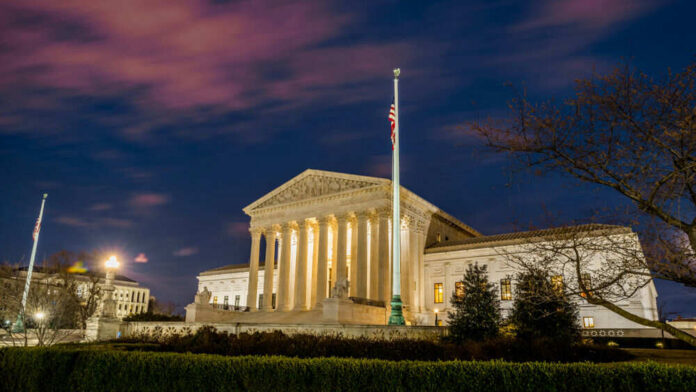
The Supreme Court will decide whether Colorado can make faith-based preschools choose between public funds and church doctrine on family and identity.
Story Snapshot
- Colorado’s universal preschool funds come with a nondiscrimination pledge that includes sexual orientation and gender identity.
- Catholic preschools say the pledge conflicts with their faith-based enrollment policies and violates the First Amendment.
- The Tenth Circuit said Colorado’s rule is neutral and applies to all providers, religious and secular.
- The Supreme Court agreed to hear the case, setting up a major church-state ruling.
What Colorado Requires And Why It Matters
Colorado’s Universal Preschool Program pays providers that agree to treat all eligible children the same at enrollment. The state requires a signed pledge that bars exclusion based on sexual orientation, gender identity, religion, race, disability, or income. The Department of Early Childhood says this keeps the program fair for families across the state. The rule applies to every participating preschool, public or private, religious or secular.
State officials add that faith-based preschools can still teach their beliefs and shape their curriculum. They just cannot turn away a child because of who the child is or who the parents are. The agency’s leader, Lisa Roy, told lawyers she cannot waive a nondiscrimination rule that state law sets in place. The Tenth Circuit agreed with the state’s view and upheld the rule as lawful and evenhanded.
What Catholic Preschools Say Is At Stake
The Archdiocese of Denver and parish schools say the pledge clashes with Catholic teaching on marriage, gender, and family. They argue the state is not neutral because the rule forces them to change how they select families, which is part of how they live their faith. They also say the Constitution protects religious groups from being cut off from benefits when they hold to their doctrine. Their filing asks the Supreme Court to step in and block the pledge as unconstitutional.
The schools point to past Supreme Court cases on equal access to public benefits for religious groups. They highlight decisions where the Court said the government cannot deny aid because of religious status or religious use, such as the church-playground and tuition cases. Those rulings built a strong line against penalties on religion when public funds are open to all qualified providers. The question now is whether Colorado’s condition looks neutral or acts like a penalty on faith.
How The Lower Courts Framed The Clash
A federal district judge let religious schools prefer co-religionists in limited ways but still barred exclusion based on sexual orientation, gender identity, race, or disability. The judge treated the equal-opportunity rule as a core feature of a public program. The Tenth Circuit then upheld Colorado’s position in full. The appeals court said faith-based schools are welcome, many join the program, and no one gets a carve-out from the equal-enrollment rule.
Religious liberty is back at the Supreme Court. On Tuesday the justices will hear Catholic preschools in Colorado that say the state shut them out of its free preschool program because of their faith.
Colorado offers every 4 year old up to 15 hours of free preschool a week,… pic.twitter.com/51NPcTAUeu
— Words Have Meaning | Word Files (@dlcampbell05) October 30, 2026
Colorado underscores that dozens of faith-based providers already take part and accept the pledge. To the state, this proves the rule does not target religion and works in practice. The Department publicized the Tenth Circuit’s ruling, calling the requirement neutral and in harmony with the First Amendment. The agency says one standard protects families and keeps the doors open to every child who qualifies.
What The Supreme Court Will Likely Probe
The justices will test whether the rule is truly neutral or if it burdens religious exercise in a special way. They will ask if the state is forcing a choice between funds and faith, or just enforcing a basic civil-rights standard. They will explore whether past cases on religious status and use apply here, where the sticking point is enrollment, not classroom prayer. They will also press the state on whether any exceptions exist that undercut “equal for all” claims.
From a common-sense, conservative view, the core concern is government power over conscience. If the state may condition funds on surrendering key parts of a faith’s rules for family life, then public benefits become leverage. On the other hand, if providers take taxpayer money but exclude families based on identity, equal citizenship takes a hit. The Court’s answer will draw a line that shapes school choice, social services, and church-state fights for years.
Why This Case Reaches Beyond Preschool
The outcome will ripple into vouchers, foster care, homeless services, and any grant that touches faith-based partners. If the Court favors Colorado, expect states to harden nondiscrimination terms around gender identity and sexual orientation across programs. If it sides with the Catholic preschools, expect broader protections for faith-shaped admissions and conduct codes when public money flows through neutral programs. Either way, administrators and religious groups will rewrite their playbooks fast.
Sources:
law.cornell.edu, supremecourt.gov, nepc.colorado.edu, scotusblog.com, abajournal.com, cpr.org, cdec.colorado.gov