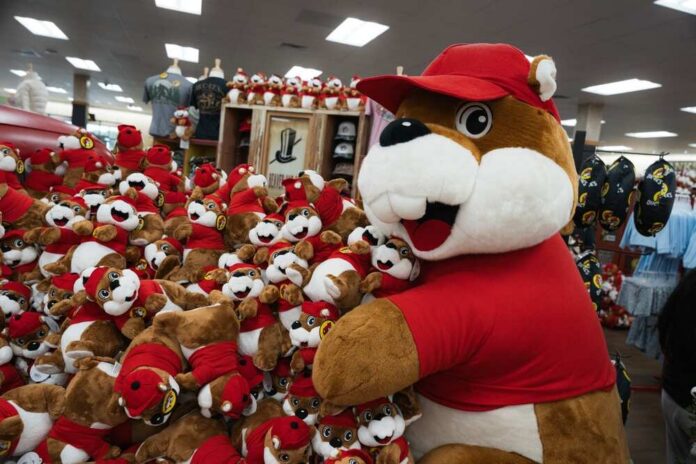
Buc-ee’s isn’t just adding dots on a map—it’s exporting a Texas-sized standard for road travel that could embarrass every “good enough” gas stop in America.
Story Snapshot
- Buc-ee’s plans to enter at least six new states—some reporting puts it at seven—pushing beyond its 12-state footprint.
- Openings cluster in 2026 and 2027, with early attention on Goodyear, Arizona and Benton, Arkansas.
- New sites follow a repeatable formula: massive buildings, 100+ pumps, and a brand promise built on cleanliness and speed.
- Host towns chase jobs and tax base, while bracing for traffic, infrastructure strain, and culture shock.
- Expansion momentum collides with the hard reality of scaling service quality across a national workforce.
From Texas Icon to Interstate Power: Why This Expansion Matters
Buc-ee’s started in 1982 as a single Texas store and turned a humble necessity—fuel and a restroom—into a destination. That’s the real trick: people plan their stops around it, not merely tolerate it. With 55 locations across 12 states by 2024, the company now aims for a broader national footprint, with new states lined up from the Southwest to the Midwest and South.
Most convenience chains sell time: get in, get out, don’t think about it. Buc-ee’s sells relief. Clean restrooms, wide aisles, hot food, and the oddly effective beaver-branded merchandise turn a road-trip chore into a ritual.
That emotional hook matters because it creates loyalty strong enough to travel across state lines. Plenty of brands expand; fewer bring a culture that customers actively recruit for free.
The 6 vs. 7 State Confusion Reveals a Faster Reality
Headlines disagree on whether Buc-ee’s is debuting in six new states or seven, and the disagreement actually signals speed. Ohio muddies the count because its first store opens earlier in the timeline, while other announcements focus on the next wave.
What stays consistent is the direction: Arizona, Arkansas, Wisconsin, Kansas, North Carolina, and Louisiana appear in the core list, with Ohio frequently included alongside them.
Locations for new Buc-ee's locations have been unveiled as the popular gas station chain expands into several new U.S. states. https://t.co/Lylb9W73JI
— FOX 9 (@FOX9) May 11, 2026
The dates read like a campaign calendar. Goodyear, Arizona is slated for June 22, 2026, with Benton, Arkansas following in early-to-mid August 2026.
Early 2027 points to Oak Creek, Wisconsin, while 2027 also includes Kansas City, Kansas; Ruston, Louisiana in mid-year; and Mebane, North Carolina in the fourth quarter. Additional builds in existing states—plus projects like Murfreesboro, Tennessee—underline that this is not a one-off splash.
The Buc-ee’s Blueprint: Big Boxes, Bigger Expectations
Each new Buc-ee’s looks less like a corner station and more like a private highway rest area built to outclass the public version. Plans cited for upcoming locations hover around 70,000 to 74,000 square feet, often with 100-plus fuel pumps—Oak Creek’s figures run even higher.
That scale does two things at once: it reduces the “no thanks, too crowded” problem, and it creates a physical spectacle that makes people stop even when they don’t need to.
The strategy targets high-traffic interstate corridors and nodes where travelers already slow down—interchanges, exits, and commuter funnels. That’s practical, not glamorous. Buc-ee’s doesn’t need dense urban foot traffic; it needs reliable wheels.
Post-pandemic road travel trends helped, and competitive pressure from established convenience and travel-center brands raises the stakes. Buc-ee’s answers with an offering that feels less like retail and more like a controlled, well-lit promise: you’ll be safe, clean, fed, and back on the road.
Local Governments Love the Jobs, Then Meet the Traffic
Town leaders and county officials tend to greet Buc-ee’s with the same sentence: jobs. Reports around the expansion describe hundreds of permanent positions per site, plus construction work and a spillover of traveler spending.
For communities near interstates—often overlooked by big employers—this kind of project looks like a plug-and-play economic engine. Permits, zoning, and incentives become the price of admission to capture that flow.
Traffic becomes the bill that arrives later. A destination-sized travel center pulls vehicles like a magnet, and the surrounding roads, turn lanes, and signals must handle it.
The cultural shift can surprise locals too: small towns suddenly host a constant parade of out-of-state plates and busier weekends. Common sense says communities should insist on infrastructure plans up front, because once the crowds arrive, the bargaining power flips.
Scaling Pains: Clean Bathrooms Are Easy, Consistent Service Is Not
Buc-ee’s brand stands on service execution—restrooms, speed, friendliness, stocked shelves—yet scaling that standard across a widening map tests any operator. Coverage of the expansion points to customer service criticism and labor-related scrutiny that can follow rapid growth.
That doesn’t prove the model is broken; it proves the model demands discipline. A company can build a huge box quickly. Training thousands of employees to deliver the same experience is harder.
If Buc-ee’s keeps winning, it will be because it runs clean operations, pays competitively enough to attract reliable workers, and doesn’t hide behind corporate excuses when a store slips.
If it stumbles, it won’t be from lack of branding. It will be from tolerating mediocrity—the same disease that has plagued too many American institutions that once took pride in doing basics well.
This is what real winning looks like.
Buc-ee's set to debut in 6 new states in major expansion push across US https://t.co/2pEEyArX2e— Sir Veillance (@SVeillance) May 11, 2026
The punchline is simple: Buc-ee’s is betting that Americans still crave standards—clean, orderly, stocked, and predictable—on the road. The expansion into new states tests whether that craving is national, not just Texan.
If the beaver sign keeps drawing crowds in places like Wisconsin and Arizona, competitors won’t just copy the food menu; they’ll have to copy the seriousness. That’s the kind of market pressure that actually improves everyday life.
Sources:
location-reveal-new-buc-ees-locations-opening-major-expansion
buc-ees-set-debut-6-new-states-major-expansion-push-us