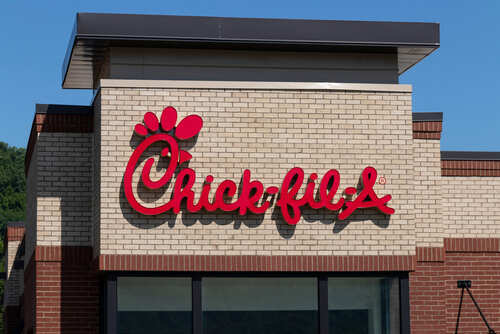
A company famous for honoring Sunday as a day of rest now faces a federal lawsuit for allegedly refusing to honor Saturday as a day of rest — and the irony is impossible to ignore.
Story Snapshot
- A Texas Chick-fil-A franchisee faces a federal Equal Employment Opportunity Commission (EEOC) lawsuit for allegedly firing an employee who refused to work on her Saturday Sabbath.
- The employee disclosed her Sabbath observance during hiring, and management initially agreed to the accommodation before later reversing course.
- When she declined to work Saturdays, the franchisee reportedly offered her a demotion to delivery driver with reduced pay, fewer hours, and diminished benefits.
- After she refused the demotion, she was fired — a sequence the EEOC found credible enough to take to federal court in Austin.
The Brand That Closes Sundays Is Now in a Saturday Sabbath Fight
Chick-fil-A built its entire corporate identity around religious conviction. The chain has closed every Sunday since its founding, a policy rooted in founder Truett Cathy’s Christian faith. That backstory makes this lawsuit against Austin-area franchisee Hatch Trick particularly striking.
The EEOC filed the federal complaint after attempts to resolve the dispute outside of court failed, signaling the agency found sufficient factual basis to pursue a Title VII religious-accommodation claim. [1]
Title VII of the Civil Rights Act of 1964 requires employers to reasonably accommodate an employee’s sincerely held religious beliefs unless doing so creates an undue hardship on the business.
The legal question in cases like this is rarely whether the belief is genuine. It almost always comes down to timing, what alternatives existed, and whether the employer made a good-faith effort to find a workable solution before pulling the plug on the employee’s job. [1]
What the EEOC Complaint Actually Alleges
According to the complaint as reported by Fox Business, the employee informed management of her Saturday Sabbath observance during the hiring process and requested Saturdays off. Management initially agreed. Then, in early February 2024, the franchisee told her that going forward she would be required to work Saturdays, including during her Sabbath hours.
When she declined to comply, the company offered her a delivery driver position with lower pay, fewer hours, and reduced benefits as the only path to avoiding Saturday shifts. She refused the demotion, and the company fired her. [1]
Texas Chick-fil-A franchisee sued over alleged Sabbath discrimination #Austin https://t.co/7eGuOp2EeJ
— Texas Business (@TexBusiness) May 19, 2026
That sequence, if proven, is a textbook religious-accommodation violation. The employee gave notice upfront. The employer agreed, then reversed without documented justification. The alternative offered was not a comparable accommodation — it was a financial penalty dressed up as a solution. The EEOC clearly saw it the same way, since the agency took the case to federal court in Austin only after conciliation efforts broke down. [1]
What Is Still Missing From the Public Record
The available evidence is entirely one-sided at this stage, and that matters. The public record currently consists of EEOC allegations as summarized by media outlets — not the actual filed complaint, not scheduling records, not termination paperwork, and not a single sworn statement from any manager or human resources personnel involved. [1]
Neither Hatch Trick nor Chick-fil-A corporate issued a public comment in response to the coverage, which means the first durable narrative in the public sphere belongs entirely to the EEOC’s version of events. [2]
The franchisee may have a legitimate defense. Undue hardship is a real legal standard, and a restaurant operator running weekend shifts with limited staff could potentially argue that a permanent Saturday exemption created genuine operational problems.
But that argument requires evidence — staffing analyses, scheduling data, documented attempts to find swap coverage. None of that is visible yet, because the defense has not surfaced its case publicly. Until it does, the court of public opinion is working with one hand tied behind its back.
Why This Case Deserves More Than Symbolic Outrage
The irony angle — a Sunday-closing company in a Sabbath firing case — is real and worth noting, but it should not crowd out the legal substance. Chick-fil-A corporate and its franchisees are legally separate entities. The brand’s Sunday policy does not automatically bind every franchisee’s accommodation decisions, and it certainly does not prove liability in this case.
What matters is what Hatch Trick knew, when it knew it, what alternatives it genuinely explored, and whether the termination was connected to the Sabbath refusal or to something else entirely. [1]
Religious freedom in the workplace cuts in every direction. An employee’s right to observe the Sabbath without losing her job is exactly the kind of protection Title VII was designed to provide. If the EEOC’s account holds up under discovery, this case represents a straightforward failure to honor a commitment made at the hiring table.
The facts will eventually surface through depositions, document production, and court filings. Until then, the most honest read of this story is that the government found enough smoke to justify looking hard for the fire. [1] [2]
Sources:
[1] Web – Texas Chick-fil-A franchisee sued over alleged Sabbath discrimination
[2] YouTube – EEOC sues Austin Chick-fil-A operator over Saturday Sabbath …