Florida’s latest redistricting fight could lock in a lopsided 24–4 House delegation—fueling fresh distrust that elections are being engineered instead of earned.
Quick Take
- Gov. Ron DeSantis released a proposed congressional map designed to create four additional GOP-leaning seats in Florida.
- The proposal would shift the state’s delegation from a current 20–8 Republican advantage to a potential 24–4 split.
- Democrats and voting-rights groups are signaling legal and political challenges, arguing the plan violates Florida’s constitution and fairness standards.
- Some Republicans are also cautious, warning that aggressively “unpacking” safe districts can backfire in competitive election years.
DeSantis puts a 24–4 map on the table
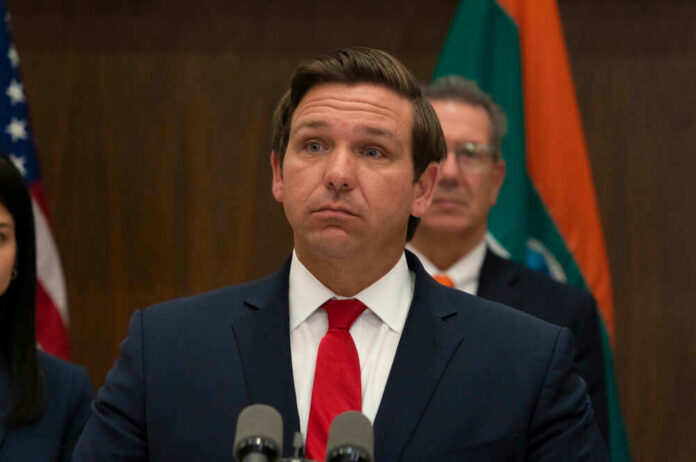
Gov. Ron DeSantis released a proposed congressional map that would reshape Florida’s 28 U.S. House districts and, by multiple reports, produce four more Republican-leaning seats. The change would move Florida from its current 20 Republicans and 8 Democrats to a potential 24–4 split.
The map was first provided to Fox News before lawmakers received it, and it arrives as Florida’s Legislature convenes to consider redistricting options.
State officials have not yet enacted the map, so the immediate question is process: the Legislature must review and approve any new lines, and courts could later evaluate challenges. Reporting also notes at least some uncertainty inside the GOP about how members will react once district-by-district details and political tradeoffs become clearer.
That matters because redistricting isn’t just about maximizing seats—it’s also about avoiding unintended vulnerability if turnout or national mood shifts.
Why the stakes are national, not just Floridian
Speaker Mike Johnson and national Republicans have encouraged Florida’s GOP to pursue additional seats as part of a broader chess match for House control. The strategy reflects a familiar Washington reality: both parties look for structural advantages wherever they govern, especially heading into midterms.
Supporters frame Florida’s push as a counterweight to Democrat advances in other states, while critics call it a partisan power grab. Either way, Florida’s size makes its map changes reverberate beyond Tallahassee.
Florida to consider new congressional map with 4 more GOP-leaning seats, for potential 24-4 advantage https://t.co/tblV4zkFOQ
— CBS Mornings (@CBSMornings) April 28, 2026
Florida’s current lines date to the post-2020 census cycle, when the state’s Republican trifecta had the power to draw maps without Democrat votes. Federal courts previously upheld Florida’s existing map even as critics labeled it an “extreme” partisan gerrymander, with challenges failing absent sufficient evidence of an unlawful racial gerrymander.
That history shapes today’s legal terrain: opponents can still sue, but they must persuade judges that the new plan crosses lines the courts will actually enforce under state and federal standards.
The Tampa Bay flashpoint and the “representation” argument
One of the most politically explosive allegations is that the new proposal would effectively eliminate Democrat representation in the Tampa Bay area. Opponents argue that this is the clearest signal that the goal is not compactness or community integrity, but engineering outcomes.
Rep. Darren Soto has publicly called the proposal unlawful and has argued Democrats could win far more seats under a different configuration. Former Attorney General Eric Holder has also criticized the plan as a “gerrymander on top of a gerrymander.”
Internal GOP warnings: maximizing seats can carry risk
Karl Rove has warned that redrawing lines to chase additional seats can produce “self-inflicted” losses by shifting reliable Republican voters out of safe districts and into newly targeted seats that might not hold in a tougher cycle.
That caution reflects the downside of hardball mapmaking: districts designed to be just-winnable can become just-losable if the economy sours, a candidate underperforms, or turnout drops. Florida Republicans must weigh short-term gains against the possibility of creating more marginal seats.
Florida to consider new congressional map with 4 more GOP-leaning seats, for potential 24-4 advantage https://t.co/tblV4zkFOQ
— CBS Mornings (@CBSMornings) April 28, 2026
The larger takeaway for voters—right, left, and politically exhausted in the middle—is that redistricting keeps reinforcing a shared suspicion: too many political careers are protected by design, while everyday concerns like inflation, energy costs, and border enforcement stay stuck in permanent trench warfare.
Even when one party argues it’s “responding” to the other, the public still sees insiders manipulating rules to pick their voters. Until states adopt clearer, enforceable standards that ordinary people can understand, confidence in elections will keep eroding.
Sources:
DeSantis’ new congressional map aims to add four GOP seats
DeSantis releases new congressional map creating four more GOP-leaning seats in Florida
Florida’s congressional districts
DeSantis unveils new Florida congressional map that could add 4 GOP seats