

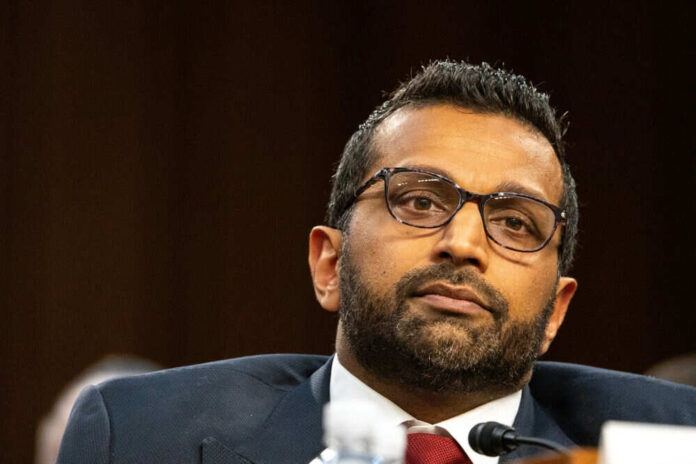
FBI Director Kash Patel faces unprecedented bipartisan fury as both Republican and Democrat senators unite in their criticism during a contentious Senate Judiciary Committee hearing that exposes deep institutional failures within America’s premier law enforcement agency.
Story Highlights
- Rare bipartisan consensus emerges as both parties slam FBI Director Kash Patel over agency mishandling.
- Senate Judiciary Committee grills Patel live on the controversial Kirk investigation and broader FBI accountability failures.
- Public trust in federal law enforcement reaches new lows amid growing concerns over FBI overreach and politicization.
- Hearing represents a critical test for the Trump administration’s ability to reform deep state institutions.
Bipartisan Revolt Against FBI Leadership
Today’s Senate Judiciary Committee hearing marked a rare moment of bipartisan unity as lawmakers from both parties unleashed scathing criticism against FBI Director Kash Patel.
The live testimony revealed the extent of institutional dysfunction plaguing the FBI, with senators demanding accountability for what many consider fundamental failures in law enforcement leadership.
This unprecedented convergence of criticism signals a broader crisis of confidence in federal agencies that have strayed far from their constitutional mandate.
The hearing’s intensity reflects years of accumulated frustration with the FBI’s overreach, political bias, and the agency’s transformation from a law enforcement body into what critics describe as a politicized weapon against American citizens.
Conservative senators pressed Patel on the agency’s targeting of patriotic Americans while progressive lawmakers voiced their own concerns about institutional accountability, creating an unusual alliance against FBI leadership.
Kirk Investigation Exposes Systematic Problems
The controversial Kirk investigation served as a lightning rod for broader concerns about FBI competence and bias during the hearing.
Senators from both parties questioned the agency’s handling of this high-profile case, with many suggesting it represents a pattern of mismanagement that extends throughout the bureau.
The investigation has become emblematic of the FBI’s departure from its core mission of protecting American citizens and upholding the rule of law.
What’s particularly concerning is how this case reflects the FBI’s troubling trend of pursuing politically motivated investigations while ignoring genuine threats to national security.
The bipartisan criticism suggests that even Democrat lawmakers recognize the agency has overstepped its bounds, though their motivations may differ from those of conservative senators who have long warned about deep state overreach.
This convergence of concern, regardless of underlying political calculations, creates an opportunity for meaningful reform.
Trump Administration’s Reform Challenge
The hearing represents a critical test for President Trump’s promise to drain the swamp and restore constitutional governance to federal agencies. Patel’s appointment was intended to signal a new direction for the FBI, but the bipartisan criticism suggests that institutional reform requires more than personnel changes.
The deep state’s resistance to accountability has proven more entrenched than many anticipated, requiring sustained pressure from both Congress and the American people.
Conservative lawmakers understand that reforming the FBI is essential to protecting constitutional rights and restoring Americans’ faith in federal law enforcement.
The agency’s transformation into a political enforcement arm during previous administrations has undermined its credibility and effectiveness.
Real reform must include strict limitations on domestic surveillance powers, clear guidelines preventing political targeting, and robust oversight mechanisms to prevent future abuse.
Constitutional Crisis and Public Trust
The FBI’s credibility crisis extends far beyond partisan politics to fundamental questions about constitutional governance and the rule of law. When federal law enforcement agencies lose public trust, the entire foundation of governance becomes unstable.
The bipartisan nature of the criticism suggests that Americans across the political spectrum recognize the danger posed by an unaccountable federal bureaucracy that operates beyond constitutional constraints.
This hearing occurs against the backdrop of declining faith in federal institutions, with the FBI’s actions serving as a particularly egregious example of government overreach.
The agency’s targeting of parents at school board meetings, persecution of January 6th defendants, and apparent double standards in law enforcement have convinced millions of Americans that the FBI no longer serves their interests.
Restoring constitutional order requires not just personnel changes but fundamental structural reforms that prevent future abuse of power.