

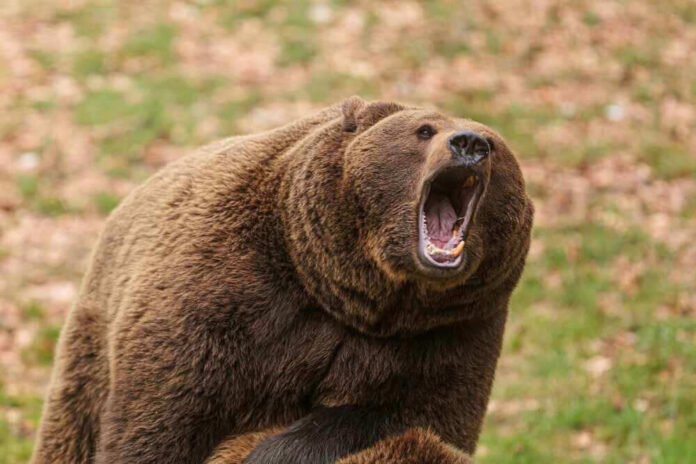
A grizzly bear emerging from its winter den turned a routine military training exercise into a fight for survival that may have been won by a single canister of spray.
Story Snapshot
- Two soldiers from the 11th Airborne Division suffered serious injuries when a brown bear attacked during land navigation training at Joint Base Elmendorf-Richardson’s Arctic Valley in Alaska
- The soldiers deployed bear spray during the Thursday attack, a move wildlife officials credit with potentially saving their lives
- Both victims are showing improvement under ongoing medical care as military and wildlife authorities investigate the defensive attack
- The incident underscores the unique hazards facing America’s Arctic-specialized forces training in one of the continent’s most wildlife-dense regions
When Training Grounds Become Hunting Grounds
Joint Base Elmendorf-Richardson sits in the heart of brown bear country, where Alaska’s estimated 30,000 grizzlies roam terrain that doubles as essential training ground for the 11th Airborne Division. On Thursday, April 16, 2026, two soldiers conducting land navigation exercises in Arctic Valley encountered a bear that had recently emerged from winter hibernation.
The timing proved critical. Spring-awakened bears, groggy and defensive after months of dormancy, represent one of Alaska’s most dangerous wildlife scenarios. What separated this encounter from tragedy was seconds of clear thinking and proper equipment deployment.
Brown bear attacks soldiers training in Alaska https://t.co/SwcPxiinhv pic.twitter.com/zzwB7ITjbM
— New York Post (@nypost) April 18, 2026
The Spray That Stopped a Grizzly
Cyndi Wardlow, Regional Supervisor for the Alaska Department of Fish and Game, didn’t mince words when assessing the soldiers’ survival. The bear spray “may have saved their lives,” she stated. Her assessment carries weight beyond this single incident.
The defensive nature of the attack, characteristic of bears freshly emerged from dens and encountering unexpected humans, typically ends one of two ways. Without deterrent, such encounters often result in severe mauling or death. With proper spray deployment, even charging grizzlies retreat. The soldiers executed protocol under pressure that would freeze most civilians.
Arctic Warriors Face Unique Hazards
The 11th Airborne Division trains for combat in Earth’s harshest environments, but enemy combatants aren’t their only concern. Arctic Valley’s alpine terrain provides ideal conditions for teaching navigation skills soldiers need for potential operations in extreme northern latitudes.
That same rugged landscape attracts brown bears seeking the solitude necessary for denning and foraging. Lt. Col. Jo Nederhoed, speaking for the division, emphasized that soldier safety remains the highest priority while coordinating with wildlife authorities.
The statement reveals an uncomfortable truth about military readiness in Alaska: training for war means coexisting with apex predators.
Previous bear encounters during military exercises in Alaska have occurred, though they remain relatively rare given the thousands of training hours logged annually in bear habitat. Statewide, Alaska records approximately one to five serious bear attacks each year, with most victims surviving when bear spray is properly deployed.
The military mandates spray for personnel operating in designated bear zones, mirroring Alaska’s broader backcounteer safety protocols. These regulations exist because standard deterrents like noise or intimidation often fail against defensive bears protecting territory or cubs.
Recovery and Reckoning
By Saturday, April 18, both soldiers showed continued improvement at an Anchorage medical facility, though they require ongoing treatment for full recovery. Their identities remain withheld pending complete notification of next of kin. The bear’s status remains unknown, and the investigation continues.
What won’t remain unknown is the lesson this attack reinforces: even America’s elite forces, trained for asymmetric warfare and Arctic survival, face legitimate danger from wildlife when operating in their domain. The incident will likely prompt policy reviews regarding spray deployment protocols and bear awareness training across all Alaska-based units.
The broader implications extend beyond military circles. This attack validates what outdoor experts and wildlife managers have long advocated: bear spray works when properly used, even against one of North America’s largest predators in full defensive mode.
For the Department of Defense, which operates multiple training facilities across Alaska’s wilderness, this incident may influence future wildlife mitigation guidelines.
The economic impact remains minimal, with medical costs covered through military channels, but the social resonance is significant. Families of soldiers stationed in Alaska now have fresh reminder of risks their loved ones face during routine training.
Sources:
2 US Army soldiers in Alaska injured in bear attack during training exercise – Fox News
2 soldiers in Alaska seriously injured in bear attack during training mission, Army says – ABC News
U.S. Army soldiers injured in bear attack during field training in Alaska – Fox Weather