

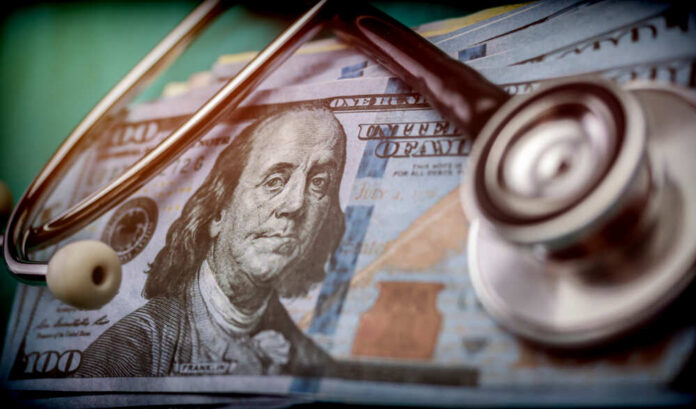
Hospitals across the country are now asking patients to pay before they ever see a doctor, and the reason comes down to one blunt fact: collecting money after treatment has become a losing bet.
Quick Take
- Hospitals increasingly demand payment before or during care, not after, as patient deductibles keep climbing.
- Roughly three in four health systems now use “point-of-service” collection, according to an industry trade group estimate.
- Hospital executives say chasing unpaid bills afterward costs too much time and money, so they collect upfront instead.
- Patients face a double hit: bigger bills and less time to plan for them before treatment even starts.
Why Hospitals Changed Their Playbook
For decades, hospitals treated patients first and billed later, trusting insurance and slow payment plans to eventually cover the cost. That trust has broken down. As deductibles rose, patients became responsible for thousands of dollars insurers used to cover, and many simply couldn’t or wouldn’t pay once the bill arrived weeks after treatment ended.
Wall Street Journal reporter Melanie Evans explained the shift plainly: collecting after the fact costs hospitals time and money, so if they can get paid upfront, they will.
That single sentence captures the entire financial logic driving this national trend, and it’s hard to argue hospitals don’t have a legitimate business reason for the change.
Richard Gundling, a senior vice president at the Healthcare Financial Management Association, estimated that about three-quarters of hospital and health systems now ask patients to pay at the time services are provided, a practice known as point-of-service collection.
That number has stayed roughly consistent in industry surveys for close to a decade, showing this isn’t a passing fad but a permanent fixture of how hospitals do business.
The trend of hospitals asking for money up front represents a double whammy for patients. https://t.co/fzo3BqGvs7
— CBS Miami (@CBSMiami) August 12, 2026
The Deductible Problem Behind the Push
High-deductible health plans exploded in popularity over the past fifteen years, shifting real financial risk onto patients who used to owe little more than a copay.
Individual deductibles now commonly range from fifteen hundred to eight thousand dollars, meaning a single surgery can leave a patient owing a huge chunk of the bill before insurance even kicks in.
Hospital finance data backs up the money story. Crowe research found that once a patient’s owed balance passes roughly seventy-five hundred dollars, the odds of ever collecting it drop sharply, a threshold researchers call the “vanishing point.”
Once a bill crosses that line, hospitals essentially write it off as bad debt, which explains why they’d rather get paid before the vanishing point ever arrives.
What This Means for Patients Walking In the Door
For patients, the upfront charge can cover part or all of a remaining deductible, or a sizable percentage of the expected total cost of treatment, often calculated well before the actual bill is final.
That estimate isn’t always accurate, and patients sometimes overpay or underpay based on guesswork about what insurance will ultimately cover.
Federal law still protects patients in true emergencies. The Emergency Medical Treatment and Labor Act requires hospitals to stabilize and treat anyone who shows up in genuine distress, regardless of ability to pay. But that protection stops at the emergency room door.
For scheduled surgeries, elective procedures, and non-urgent visits, hospitals are generally free to require payment before they’ll even put a patient on the calendar.
Hospitals push for upfront payments as patient deductibles and out-of-pocket costs rise – CBS News https://t.co/R8ADcliL6R
— lycangal29 (@lycangal29) August 12, 2026
This is where common sense should guide the conversation. Hospitals aren’t villains for wanting to get paid; nobody expects a mechanic to fix a car for free and hope for a check later. But patients deserve clear, honest estimates before they’re asked to hand over a credit card, not a guessing game dressed up as billing policy.
The Transparency Fight Still Ahead
Price transparency rules took effect in 2021, giving patients a legal right to see hospital prices before receiving care. Compliance has lagged badly, though, with one advocacy group reporting that more than three-quarters of hospitals still weren’t fully following the rule years after it took effect.
Upfront payment demands without upfront price clarity is exactly the kind of one-sided arrangement that erodes public trust in a system already stretched thin by rising costs.
Polling shows the public wants change on this front specifically. A recent survey found eighty-one percent of voters support requiring providers to disclose facility fees upfront before a patient is even seen.
That’s not a partisan number; it’s near-universal agreement that Americans want honesty before they open their wallets, and lawmakers on both sides of the aisle would be wise to listen.
Sources:
pnhp.org, wsj.com, abc15.com, patientrightsadvocate.org, healthcodex.net, fool.com, unitedstatesofcare.org, kffhealthnews.org, crowe.com, capitalpulse.com