
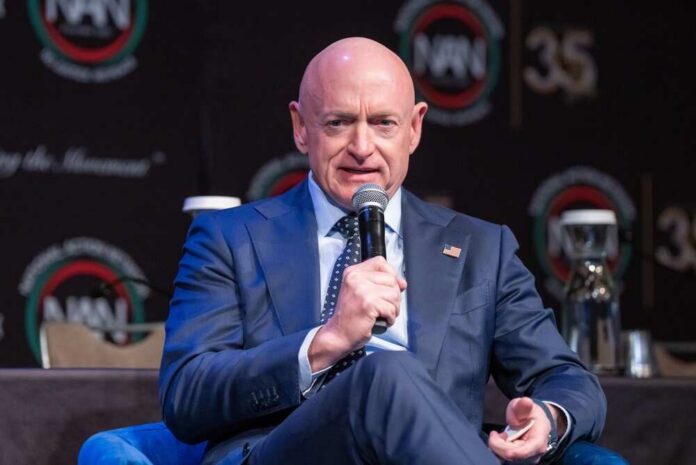
Senator Mark Kelly’s political machine just posted an eight-figure quarter and is spreading cash far beyond Arizona.
Story Snapshot
- Kelly raised about $11.3 million in the first quarter through his Senate and political action efforts.
- His team is seeding early state parties and candidates nationwide to build ties and influence.
- Recent reports place his campaign cash on hand above $22 million entering spring 2026.
- “War chest” claims often blend campaign dollars with outside groups, which can blur the true total.
Kelly’s first-quarter surge and where the money is going
Hosts on a politics program reported that Senator Mark Kelly raised $11.3 million in the first quarter through his Senate campaign and political action channels. They said his operation also sent money to early state parties and aligned candidates nationwide, signaling a plan to build a wider network ahead of the next election cycle.
That strategy maps to how national contenders shape the field. They do not just bank cash. They invest in allies who can return the favor when the calendar turns hot.
NYT: Senator Mark Kelly Amasses Nearly $25 Million Campaign War Chest
The Arizona Democrat said he had raised and given away $10 million to fellow members of his party and committees as he mulls a presidential run in 2028.https://t.co/ZAOEEb9ufZ
— Politics & Poll Tracker 📡 (@PollTracker2024) July 15, 2026
His campaign’s pace did not slow after December. A national outlet reported Kelly raised $13 million in the first three months of 2026, finishing the quarter with $22.3 million in his campaign account, large for someone not on the ballot this year.
A local report earlier in the year cited more than $12.5 million raised late in 2025 after a high-profile political clash, which helped set the stage for this cash position. The pattern shows steady inflows and a focus on runway.
Why “war chest” headlines deserve a closer look
Many readers see “war chest” and assume it means cash in a single campaign account. That is not always true. Modern fundraising often mixes figures from a candidate’s committee with allied political action committees and nonprofit groups.
Outside money has grown and can shape narratives even if its impact on outcomes is mixed. When totals blend different buckets, the number can overstate the cash a candidate directly controls for ads, field teams, and voter contact.
Kelly-world headlines now mention totals near $25 million. Some posts suggest he has “amassed” that number on hand. Reports tied to his campaign show $22.3 million cash on hand at the end of the first quarter of 2026 in the campaign account alone. That gap matters.
If a figure counts both campaign and political action arms, readers should ask for a breakdown. Clear figures help voters judge strength without hype and keep score the same way across both parties.
The national playbook: raise, seed, and signal
Kelly’s team is doing more than piling cash. They are sending checks to early states and down-ballot allies. That move buys goodwill and influence while stress-testing a donor network. It also signals future plans without a formal launch.
Campaigns that seek higher office often use this model. They bank money early, then build a bench of supporters who can rally fast. The first-quarter $11.3 million across Senate and political action activity fits that template.
Sen. Mark Kelly has raised $1 million for Arizona Democrats, his campaign said. Here's where that money is going. https://t.co/XkTHP9d1oG
— azcentral (@azcentral) July 15, 2026
The watchdog view adds needed context. Analysts track the rise of undisclosed and outside funds across federal races. These flows can expand the halo around a candidate’s “strength,” even when the dollars cannot be spent by the campaign itself or must follow strict rules.
A smart reader will separate the clean campaign cash figure from any broader network count. That habit keeps the scoreboard honest and avoids confusion that both parties sometimes exploit.
What should skeptical readers demand next
Voters should look for the next Federal Election Commission filings and campaign releases that state precise cash-on-hand, debt, and line-item receipts. Independent outlets that track money-in-politics will likely corroborate totals soon after filings post.
Until then, the most grounded facts are these: Kelly’s camp reported $22.3 million cash on hand at the end of March 2026, and allied activity helped raise about $11.3 million in the first quarter while funding partners in key states. Everything else needs a clear ledger.
The common-sense read
Numbers should mean what they say. A plain cash-on-hand figure in the campaign account is the gold standard. Any larger “war chest” claim should show receipts, sources, and rules of use. That protects donors, respects voters, and keeps the contest fair.
If a politician blends buckets to pump up a headline, call it what it is: spin. Kelly’s campaign account looks strong on its own. The rest belongs in footnotes until the paperwork matches the press.
Sources:
kjzz.org, azcentral.com, azmirror.com, brennancenter.org, en.wikipedia.org