Eighteen suspected Ebola patients vanished into the streets of eastern Congo after an angry mob torched the isolation tent holding them, and nobody knows where they went.
Story Snapshot
- A second Ebola treatment tent was burned in Mongbwalu, Congo, releasing 18 suspected patients into the surrounding community.
- The attack was triggered after family members were blocked from retrieving a loved one’s body, a conflict rooted in mandatory Ebola burial protocols.
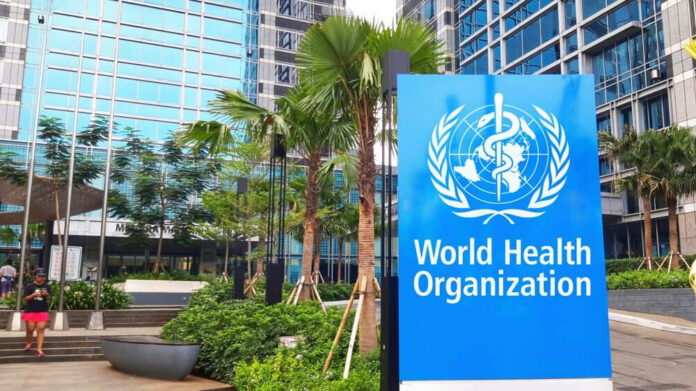
- The World Health Organization had already declared the outbreak a public health emergency of international concern, with 671 suspected cases and 160 suspected deaths reported.
- Two of three Ebola treatment centers in the region had now been destroyed by residents, with burials requiring armed escort due to escalating community resistance.
A Disease Crisis Made Worse by the People It Was Meant to Protect
Ebola spreads through direct contact with bodily fluids including blood, vomit, feces, and semen. [1] That biological fact is not in dispute. What is in dispute, violently so, is whether the Congolese residents of Mongbwalu trust the people trying to stop it.
When a grieving father arrived at the Rwampara health center to collect his son’s body and was turned away, local youth responded by throwing stones and setting fire to the isolation tents. His son’s body burned inside. [2]
That is not a story about ignorance alone. It is a story about what happens when public health infrastructure arrives in a community without first earning its trust.
Health authorities attributed the attack to young people who, in their words, “do not understand the reality of this disease.” [2] That may be accurate. But it also conveniently sidesteps the question of who failed to make that reality understood before a body was left to burn in a tent.
The Numbers Behind the Emergency Were Already Alarming
Congolese authorities reported 671 suspected cases and 160 suspected deaths across two provinces, and the World Health Organization warned the true scale was likely larger. [1] Health workers and aid organizations described dire shortages of supplies and staff. [1]
The treatment tent at the center of this attack had been equipped with eight beds specifically designated for Ebola response. [2] This was not a symbolic gesture. It was functional infrastructure in the middle of a declared international health emergency, and it is now ash.
The World Health Organization’s classification of this outbreak as a public health emergency of international concern carries real weight. It signals that the risk of spread beyond Congo’s borders is credible enough to mobilize global resources and coordination. That designation does not exist to generate headlines.
It exists because Ebola, left uncontained, does not stay local. The destruction of treatment capacity in the outbreak’s epicenter is not a protest with manageable consequences. It is a direct acceleration of the conditions that declaration was designed to prevent.
Armed Burial Escorts Signal a Response Already in Crisis Mode
By the time the second tent burned, authorities were conducting burials under armed escort because community resistance had made unprotected burial teams a target. [3]
That detail deserves more attention than it typically receives. Armed escorts at funerals are not a sign of a response functioning well.
They are a sign that the social contract between health responders and the community had already collapsed and that authorities had chosen enforcement over engagement as their primary tool. Whether that choice was necessary or counterproductive is debatable. That it reflects a fundamental breakdown is not.
🚨18 EBOLA PATIENTS ESCAPE AFTER ANGRY MOB STORMS HOSPITAL AND SETS TREATMENT TENT ON FIRE
Young men stormed Mongbwalu General Hospital in eastern DR Congo, demanding the bodies of relatives who died from Ebola.
They set a treatment tent on fire, forcing staff to evacuate… pic.twitter.com/LlHW2d5ekQ
— NewsForce (@Newsforce) May 25, 2026
The recurring pattern in Ebola outbreaks is not new. Isolation requirements, restricted movement, and controlled burials are medically essential. They are also, to families watching from outside a tent, indistinguishable from abandonment.
When a father cannot hold his son’s body, the epidemiological rationale for that restriction means nothing to him in that moment.
Outbreak responders who treat community grief as an obstacle to manage rather than a reality to address tend to find that the obstacle grows. Two burned treatment centers in one week is the evidence of that lesson being ignored. [3]
Eighteen Missing Patients Are the Real Consequence
The most urgent outcome of the Mongbwalu attack is not the destroyed tent. It is the 18 suspected Ebola patients who fled into the surrounding population. [4]
Their whereabouts were unknown following the fire. Each one of them potentially carries a virus that kills through contact with bodily fluids and has already claimed 160 suspected lives in this outbreak alone. [1]
The attack did not protect the community from Ebola. It scattered it. That is the grim arithmetic that community anger, however understandable its origin, cannot escape.
The burial protocol that blocked the family was almost certainly medically justified. Both things can be true, and both represent failures, one of procedure and communication, the other of judgment under grief.
What is not debatable is the outcome. Eighteen people with suspected Ebola are now unaccounted for in a region already overwhelmed, undersupplied, and burning its own defenses to the ground. [1][4]
Sources:
[1] Web – Residents burn an Ebola treatment center in Congo as anger grows …
[2] Web – 18 Ebola patients flee as second treatment tent is set on fire in …
[3] YouTube – Angry residents burn a second Ebola treatment center in eastern …
[4] Web – Attackers burn Ebola treatment tent in Congo; 18 suspected cases …