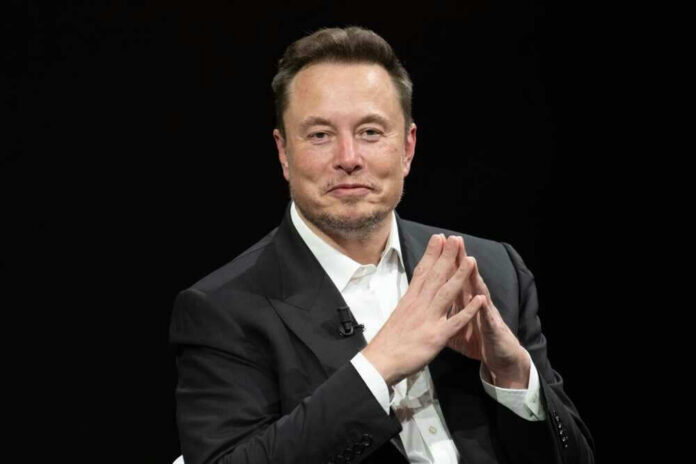
Elon Musk’s bold Terafab announcement promises American chip independence in Texas, a rare win for U.S. innovation amid skyrocketing war costs and broken promises of peace.
Story Highlights
- Musk unveils two massive chip factories in Austin, Texas, for Tesla vehicles, Optimus robots, and SpaceX satellites to end reliance on foreign suppliers.
- Terafab targets unprecedented scale: 100-200 GW for Earth computing and 1 TW for space, dwarfing current U.S. output.
- Austin gains jobs and an economic boost as Texas leads in self-reliant tech amid global shortages and endless foreign wars draining resources.
- Musk’s vertical integration challenges global giants like TSMC, aligning with conservative priorities of American manufacturing over globalism.
- Skeptics cite Musk’s history of delays, but this move bolsters U.S. strength without new government spending or overseas entanglements.
Terafab Announcement Details
Elon Musk presented Terafab plans on March 21, 2026, at an Austin event near Tesla’s gigafactory. He confirmed two facilities via X post on March 23: one produces chips for Tesla vehicles and Optimus humanoid robots, the other for AI data centers and space satellites.
Musk stated necessity stems from insufficient supply from manufacturers like Nvidia, TSMC, Samsung, and Micron. Each fab focuses on a single chip design for maximum efficiency. The sites leverage Austin’s infrastructure, including Tesla headquarters.
Musk says SpaceX and Tesla to build advanced chip factories in Austin https://t.co/NHMZsWbk4g https://t.co/NHMZsWbk4g
— Reuters (@Reuters) March 22, 2026
A photo from the event shows the proposed location adjacent to the gigafactory, emphasizing proximity for logistics. Musk continues Nvidia orders while planning AI6 chip tape-out in December. This builds on Tesla’s Dojo supercomputer chips and SpaceX’s xAI merger, addressing surging demand from Optimus robots, AI training, and Starlink satellites.
Motivations Behind Self-Reliance Push
Musk declared, “We either build the Terafab or we don’t have the chips,” highlighting supply constraints outpacing global production. Terafab aims for terawatt-scale output, including space-hardened chips enduring high temperatures and radiation.
This vertical integration secures supply for Tesla autonomy, robotics, and SpaceX’s pre-IPO goals valued at $1.75 trillion. Suppliers receive Musk’s gratitude, yet Terafab positions his companies as competitors to foreign foundries. Texas regulators and investors influence permits and funding.
The project underscores frustrations with globalism, as foreign chip dominance leaves U.S. firms vulnerable. Conservatives applaud this private-sector solution fostering jobs in red states, contrasting federal overspending on endless wars like the Iran conflict now exceeding $20 billion with no end in sight. Musk’s approach prioritizes American innovation over reliance on adversaries.
Economic Boost for Texas and U.S. Independence
Austin stands to gain thousands of high-tech jobs, strengthening Texas as a manufacturing hub. Short-term relief addresses Tesla and SpaceX chip needs; long-term, Terafab could produce 1 TW compute yearly, rivaling total U.S. capacity of about 0.5 TW.
This advances AI and robotics accessibility without taxpayer bailouts, aligning with limited government principles. Politically, it promotes chip independence amid shortages, countering threats from overseas supply chains.
Musk says Tesla, SpaceX to build advanced chip manufacturing facilityhttps://t.co/jDC7WYCvLt
— Dave Schwickerath (@DaveSchwick) March 24, 2026
Broader effects challenge foundry giants, accelerating Starlink and space AI. Socially, it equips American workers for future industries, upholding family-sustaining jobs over welfare expansions. As gasoline prices soar from Iran hostilities—up a third to $3.98—domestic energy and tech self-reliance offer stability, fulfilling promises of America First without new foreign adventures.
Challenges and Expert Skepticism
Musk lacks semiconductor fab expertise, per Bloomberg analysis, with a track record of overpromising on timelines like Full Self-Driving and Starship. No construction permits, funding details, or build schedules exist yet.
Sources note uniform facts on the announcement but uncertainties around execution. Optimists see independence gains; cautious voices warn of delays. Still, early-stage ambition reflects conservative values of bold enterprise over bureaucratic caution.
Sources:
Musk says Tesla and SpaceX to build advanced chip factories in TX
Elon Musk unveils chip manufacturing plans for SpaceX and Tesla