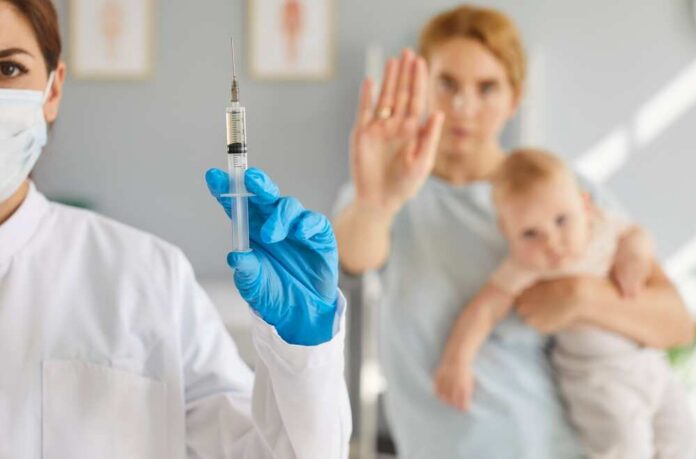
A growing number of parents are turning down a basic newborn shot that prevents catastrophic brain bleeds—an alarming sign of how badly trust in American institutions has frayed.
Quick Take
- New research reviewed for an American Academy of Neurology presentation found vitamin K shot refusals rising, even though it helps prevent dangerous vitamin K deficiency bleeding (VKDB).
- Babies who miss the shot face far higher odds of severe bleeding; reported outcomes include brain hemorrhage, long-term damage, and death.
- Refusals appear tied to “natural birth” preferences, misinformation, and broader post-COVID skepticism toward routine medical care.
- Clinicians report the sharpest resistance at birthing centers and in pockets of the country where distrust is running high.
What the vitamin K shot is—and why doctors call it non-negotiable
Hospitals have routinely given newborns a single vitamin K injection since the 1960s because infants start life with very low vitamin K, which the body needs to clot blood. Breast milk also contains too little vitamin K to prevent deficiency reliably in the first days and weeks.
The American Academy of Pediatrics and CDC recommend one intramuscular dose within six hours of birth to prevent VKDB, a condition that can cause sudden internal bleeding.
Parents are refusing routine preventative care for newborns at rising rates, study finds https://t.co/oc3sDlAFAK
— CBS News (@CBSNews) March 22, 2026
The concern is not theoretical. Reports summarized in recent coverage describe VKDB as capable of triggering brain hemorrhages, long-term neurological harm, and death, outcomes that are especially devastating because they are often preventable.
The study highlighted in February 2026 coverage found that babies who do not receive the vitamin K shot are dramatically more likely to suffer severe bleeding.
That risk profile is why pediatric clinicians emphasize that this is routine preventive care, not an optional lifestyle preference.
Refusals are still a minority—but the trend line is moving the wrong way
Data presented ahead of the American Academy of Neurology meeting suggest that refusal rates, while generally low, are rising.
One example cited in reporting showed Minnesota refusals increasing from 0.9% in 2015 to 1.6% in 2019, with other states showing lower but measurable rates.
Another national analysis, described in the March 2026 coverage, reviewed millions of births across hundreds of hospitals and found that non-administration increased substantially from 2017 through 2024.
The national dataset raises an important limitation: not every missed shot can be conclusively labeled a parental refusal because documentation varies across facilities.
Even so, the overall increase aligns with what frontline pediatricians report seeing in practice—more parents questioning or declining standard newborn interventions.
When independent reporting, hospital experience, and multi-hospital data all point in the same direction, conservatives should recognize a broader social signal: institutional credibility is weakened, and families end up navigating high-stakes choices in an information fog.
Misinformation, “natural” branding, and the post-COVID trust collapse
Coverage of the new findings ties refusals to several recurring concerns: parents cite pain, preservatives, and a desire to keep birth “natural.”
Other refusals appear to be influenced by long-standing misinformation, including a 1990s claim linking leukemia—an idea later undermined by subsequent research.
Another complicating factor is the online promotion of oral vitamin K drops. Clinicians note there is no FDA-approved oral alternative in the U.S., yet social media markets workarounds.
This is where the story intersects with the political frustration many conservative readers already feel. Americans watched public health messaging overreach during COVID, sometimes shifting guidance without humility, and too often treating reasonable questions like disobedience.
The evidence here does not prove a partisan cause, but it does show a predictable consequence: once people stop trusting “experts,” they may also reject commonsense care that has saved babies for decades. Rebuilding trust requires transparency, not coercion.
Frontline doctors describe a difficult balance: parental autonomy vs. infant safety
Physicians quoted in March 2026 reports describe counseling parents respectfully while stressing the stakes. An Idaho pediatrician described being saddened by preventable outcomes and emphasized keeping the conversation focused on the child’s welfare rather than shaming families.
Other reporting described extreme days in some locations when a startling share of parents declined routine newborn preventive care.
Those accounts align with survey findings that birthing centers can have higher refusal rates than hospitals.
The practical policy question is what comes next. The research cited calls for prenatal counseling—starting before delivery—so parents are not making rushed decisions in the recovery room while exhausted and overwhelmed.
That approach fits a limited-government, pro-family framework: families deserve accurate information early, and decisions should be informed rather than manipulated by social media fear or institutional arrogance.
The data available does not support panic, but it does support urgency and clearer communication.
Sources:
More parents are refusing a lifesaving shot for their newborns, study finds
Why a once routine newborn shot is seeing rising refusals
Doctors see rise in parents declining routine preventive care for newborns
Across the US, childhood vaccination rates continue to decline