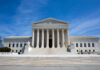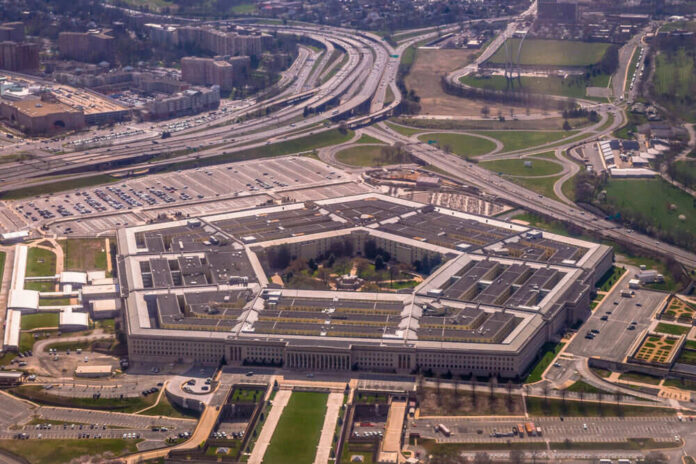
A federal judge just told the Pentagon it can’t rewrite the First Amendment to manage wartime narratives.
Quick Take
- U.S. District Judge Paul Friedman blocked key parts of the Trump administration’s Pentagon press-access policy after the New York Times challenged it.
- The court found the credentialing rules lacked fair notice and raised First and Fifth Amendment problems, halting enforcement while the case continues.
- The policy’s practical effect was to thin out legacy outlets after reporters refused to sign the new terms, shifting access toward friendlier outlets.
- The fight is unfolding during the Iran conflict, when Americans have a heightened need for accurate, independent reporting on tax-funded military action.
What the judge blocked—and why it matters during a war
U.S. District Judge Paul Friedman blocked major portions of a Pentagon policy that restricted how credentialed reporters could operate inside the building.
The New York Times sued in December 2025, alleging that journalists were effectively forced to surrender access rather than accept new rules.
The ruling emphasizes constitutional limits on vague restrictions and due-process concerns, at a moment when the public is demanding clarity about Iran’s operations, costs, and objectives.
The stakes are bigger than media infighting. During wartime, administrations naturally argue for tighter control of information, but the Constitution doesn’t allow open-ended rules that chill lawful newsgathering.
The judge’s injunction does not declare that every security-focused rule is invalid; it blocks key parts of the court that were found to be legally defective. That distinction matters for conservative readers who want both operational security and accountable government that stays inside constitutional boundaries.
How the Pentagon rules changed the press corps inside the building
The Pentagon has long operated under an access tradition spanning decades, giving credentialed journalists a baseline ability to work and build sources without prior restraints.
Under Defense Secretary Pete Hegseth, new credential terms took effect in October 2025, and dozens of reporters—including from the Times and AP—gave up their passes rather than agree.
The resulting vacuum reshaped daily coverage and briefing dynamics, especially as briefings became rare under the administration.
NEWS: Judge blocks Hegseth policy limiting Pentagon newsgathering
“…especially in light of the country’s recent incursion into Venezuela and its ongoing war with Iran, it is more important than ever that the public have access to information from a variety of perspectives…”
— Julie Tsirkin (@news_jul) March 20, 2026
Reporting on the dispute also highlighted concerns about selective enforcement. Critics pointed to examples where some activities appeared tolerated from aligned figures while similar conduct drew scrutiny from mainstream outlets.
In court and in supporting filings, press organizations and civil-liberties groups argued that viewpoint discrimination and unclear standards are exactly what the First Amendment forbids, and that arbitrary credentialing decisions raise Fifth Amendment due-process issues when the rules aren’t clearly defined.
The Times’ lawsuit and what “fair notice” means in practice
The New York Times asked to restore access for seven journalists and challenged the policy as both unconstitutional and improperly administered.
A central issue was whether the rules were so vague that journalists could not reasonably know what conduct might trigger denial or loss of credentials.
That “fair notice” concept is not a technicality; it’s a practical check on bureaucratic power. If the government can’t define prohibited behavior clearly, enforcement can become political by default.
The Pentagon has defended the policy as a “common sense” attempt to protect national security and prevent unauthorized disclosures. That argument resonates with many conservatives who have watched sensitive information leak for years with little accountability.
But the judge’s ruling signals that security goals still require precise, neutral rules—and consistent enforcement—rather than broad restrictions that sweep in normal reporting practices or punish noncompliance by quietly excluding disfavored outlets.
Why conservatives should care even if they dislike legacy media
Many Trump voters don’t trust the New York Times, and that distrust is earned in plenty of readers’ eyes. Still, a constitutional standard that protects press access today also constrains the same federal machinery tomorrow—no matter who holds power.
Conservatives have spent years warning about administrative overreach; credentialing systems that can be turned into loyalty tests are a textbook example of discretionary power that expands during conflict and rarely shrinks afterward.
Judge sides with New York Times in challenge to policy limiting reporters’ access to Pentagon https://t.co/yWNbFE9Fxz
— WOKV News (@WOKVNews) March 22, 2026
The political context is unavoidable. With America at war with Iran and parts of the MAGA base divided on intervention and on the scope of support for Israel, the public’s demand for credible information is rising, not falling.
Energy costs and “endless war” fatigue have made voters hypersensitive to spin and managed narratives. The court’s order won’t settle those debates, but it forces the Pentagon to justify restrictions with clear, constitutional rules.
Sources:
Judge sides with NY Times regarding Pentagon access
The New York Times seeks to have Pentagon press access restored
New York Times takes Pentagon to court over Hegseth-Parnell access rules