STUNNER: Tiny Dogs Pack Wolf DNA

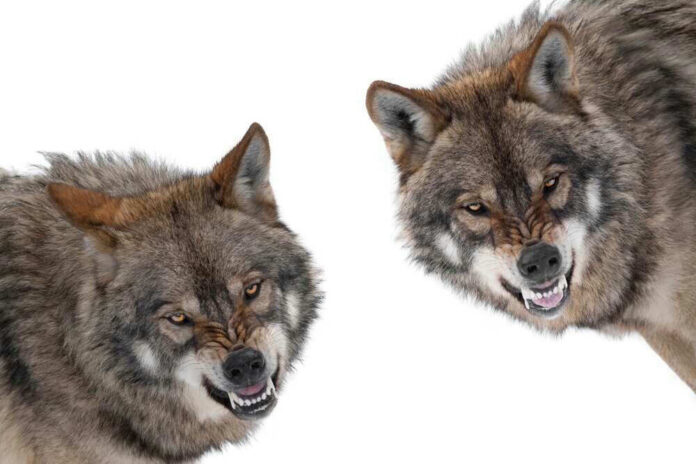
Two snarling wolves on a white background.

New scientific research reveals that nearly two-thirds of all dog breeds carry detectable wolf DNA from recent interbreeding, challenging previous assumptions about canine genetics and domestication.

Quick Take

  • Over 64% of modern dog breeds contain wolf DNA from interbreeding within the last few thousand years.
  • Even tiny Chihuahuas carry 0.2% wolf ancestry, while some breeds contain up to 40% wolf DNA.
  • Wolf ancestry influences dog size, personality traits, and survival advantages in different environments.
  • Dogs with more wolf DNA tend to be more territorial and suspicious, while low-wolf breeds are friendlier.

Scientists Challenge Previous Genetic Assumptions

U.S. scientists from the Smithsonian Museum of Natural History and the American Museum of Natural History announced groundbreaking findings that overturn established beliefs about dog genetics. Lead study author Audrey Lin noted that prior research suggested dogs could not maintain their domesticated status with significant wolf DNA present. The team analyzed thousands of dog and wolf genomes from publicly available databases, discovering widespread wolf ancestry across modern breeds that occurred through post-domestication interbreeding rather than ancient evolutionary remnants.

Breed-Specific Wolf DNA Concentrations Vary Dramatically

Czechoslovakian and Saarloos wolfdogs showed the highest wolf DNA concentrations at up to 40 percent, while among pet breeds, the Grand Anglo-Francais Tricolore hound topped the list with approximately five percent wolf ancestry. Sight hounds including Salukis and Afghans also ranked high in wolf DNA content. Surprisingly, even diminutive Chihuahuas carry detectable wolf genetics at 0.2 percent, though some larger breeds like Saint Bernards showed no wolf ancestry whatsoever.

Village Dogs Serve as Genetic Bridge Between Species

The research revealed that 100 percent of village dogs—those living on human settlements without specific ownership—possess wolf ancestry. Co-author Logan Kistler speculated these dogs serve as intermediaries in the gene pool, facilitating wolf DNA integration into domestic breeds. Female wolves displaced from their packs through human habitat destruction likely bred with stray dogs, creating this genetic pathway. Arctic sled dogs, pariah breeds, and hunting dogs demonstrated the greatest wolf ancestry levels.

Wolf Genetics Shape Modern Dog Personality Traits

The study connected wolf DNA percentages to kennel club personality descriptions, revealing clear behavioral patterns. Dogs with minimal wolf ancestry received descriptions emphasizing friendliness, trainability, and affection toward humans. Conversely, breeds with higher wolf DNA content were characterized as suspicious of strangers, independent, dignified, and territorial—traits reflecting their wild heritage. However, positive traits like intelligence, obedience, and being good with children appeared equally across both high and low wolf-content breeds.

These findings demonstrate how wolf genes provided survival advantages as humans transported dogs worldwide, allowing adaptation to diverse environments and conditions that pure domestic genetics might not have supported.