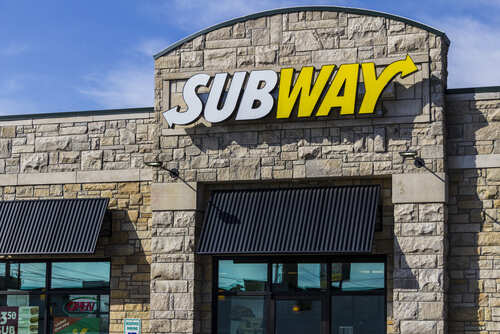
Subway just shuttered 729 American locations in a single year while corporate headquarters pocketed $688 million in profit—and the real scandal isn’t the closures, it’s who’s left holding the bag.
Story Snapshot
- Subway closed a net 729 U.S. stores in 2025, dropping below 19,000 locations for the first time in two decades
- This marks the tenth consecutive year of American store declines despite corporate net income reaching $688 million
- Franchisees struggle with average sales of roughly $500,000 per year—significantly lower than competitors—while corporate collects fees
- The chain plans only 100 new U.S. openings in 2026, mostly reactivations, while 800 locations sat temporarily closed as of December 31, 2025
The Franchise Model That Eats Its Own
Subway operates on a peculiar business structure: every single store is franchisee-owned. Corporate collects fees and royalties—$767 million in franchise revenue last year—while individual operators shoulder all the risk. When a location fails, the franchisee loses their investment and livelihood. Corporate simply moves on, often slightly richer for it.
This model worked brilliantly during the expansion years, when Subway exploded to 27,000 U.S. locations by 2015. Now, as the brand contracts for a full decade, that same structure reveals a troubling imbalance: profits flow upward while struggling small business owners absorb the losses.
Subway is continuing to shrink its U.S. footprint, closing a net 729 locations in 2025 — its steepest decline in years. https://t.co/BkK2cLi3WN
— KTVU (@KTVU) May 7, 2026
Following the Money Trail
The numbers expose a stark contradiction. Subway reported $688 million in net income even as franchise revenue dropped six percent to $767 million. How does a company lose stores, see franchise revenue decline, yet post healthy profits? The answer lies in what corporate calls “rightsizing”—closing underperforming locations to cut overhead and support costs.
Each shuttered store may represent a franchisee’s financial ruin, but for corporate accountants, it’s margin improvement. Meanwhile, those 18,733 remaining franchisees face brutal economics: average annual sales hover around $500,000 according to Circana rankings, substantially below competitors like Jersey Mike’s.
When Strategic Pruning Looks Like Retreat
Subway’s official line emphasizes operational improvements—the highest customer evaluation and Google scores in two years, a new value menu with 15 items priced at five dollars or less, and strategic focus on “right locations.” The company signed 93 new franchise agreements for roughly 100 U.S. openings in 2026.
Yet context matters: many of those openings are reactivations from the 800 locations sitting temporarily closed at year-end 2025. Contrast this with international performance, where Subway opened over 1,000 stores and secured 12,000-plus agreements. The divergence suggests the U.S. market specifically rejects the current model, not that the brand itself is universally failing.
The Decade-Long Slide Nobody Stopped
Ten straight years of contraction doesn’t happen by accident. From the 2015 peak, Subway has hemorrhaged roughly 8,000 American locations.
Multiple factors converged: the 2018 Jared Fogle scandal tarnished the brand; competitors like Chipotle and Panera captured the health-conscious demographic; value warriors like McDonald’s and KFC launched aggressive menu pricing; COVID-19 accelerated closures of low-traffic sites.
Leadership changes followed the 2023-2024 private equity buyout by Roark Capital, installing CEO Carrie Walsh to execute the turnaround. Yet each year brought hundreds more closures. The pattern resembles Quiznos’ catastrophic overexpansion and subsequent bankruptcy, though Subway’s scale provides more cushion.
Communities and Workers Pay the Real Price
Behind every closed Subway sits a hollowed-out strip mall, displaced workers, and communities losing convenient meal options. The closures concentrate in rural and suburban areas with poor visibility or declining foot traffic—precisely the locations that often lack alternatives.
Thousands of jobs vanished, predominantly low-wage positions held by workers with limited options. Franchisees who invested life savings face financial devastation when their stores close or when they’re pressured to sell distressed units.
Corporate literature speaks of optimization; affected families speak of foreclosure and bankruptcy. This disconnect between executive-suite strategy and Main Street reality epitomizes the modern franchise dilemma.
Subway closed over 700 US stores as franchise model faces strain https://t.co/brSHxwYTlQ
— FOX Business (@FoxBusiness) May 6, 2026
The value menu rollout and operational score improvements suggest Subway recognizes its credibility problem. Whether 100 new stores can reverse a decade of 700-plus annual closures remains doubtful. The franchise model itself—100 percent franchisee-owned—creates perverse incentives where corporate thrives even as operators struggle.
True reform would realign incentives so corporate only profits when franchisees genuinely succeed, not merely when weak locations get pruned. Until then, expect the contraction to continue, the profit reports to remain rosy, and more small business owners to learn the hard way that in Subway’s world, rightsizing means they were always expendable.
Sources:
Subway closed over 700 US stores as franchise model faces strain – Fox Business
Subway locations closures sandwich – The Independent
Subway closes over 700 restaurants in the United States what will happen to the chain – Merca20