

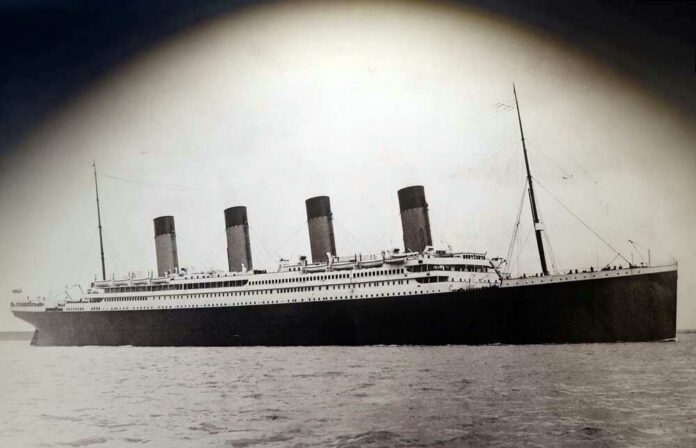
Four days before Titanic ever left port, her chief wireless operator sat down and wrote a postcard home that just sold for more than $41,000.
Quick Take
- The postcard carries an April 6, 1912 postmark, four days before Titanic sailed from Southampton on April 10.
- Chief wireless operator Jack Phillips addressed it to his sister, Elsie Phillips, and signed off “Love all, Jack.”
- Henry Aldridge and Son Ltd. sold the card at auction, with reports of a final price near £32,000 or over $41,000.
- Phillips died aboard Titanic after sending distress signals until the ship’s final minutes.
A Simple Note With Enormous Weight
The postcard itself looks ordinary. It shows a photograph of Titanic on the front, the kind of souvenir any traveler might grab before boarding a famous new ship. Jack Phillips wrote it while Titanic sat docked at Southampton on April 6, 1912, then mailed it to his sister back home. Nobody reading it that week could have known what was coming.
Phillips closed the card with three words that now carry a weight he never intended: “Love all, Jack”. It reads like any brother’s quick note to family. Four days later, he would be aboard the largest ship in the world as it left port for the last time.
Who Jack Phillips Was, And Why He Mattered
Phillips served as Titanic’s senior wireless operator, the man responsible for sending and receiving messages by radio. When the ship struck an iceberg on the night of April 14, 1912, Phillips stayed at his post, tapping out distress calls as the vessel took on water. Auctioneer Andrew Aldridge called him “one of the true heroes of the disaster”, a description that fits a man who kept working until the ship could no longer support the effort.
Phillips did not survive. He went down with the ship he had tried to save through his final transmissions. That history gives the postcard its pull. It is not just old paper. It is a last ordinary moment from a man whose next two weeks would end in tragedy, written in his own hand to the sister he loved.
How The Sale Unfolded
Henry Aldridge and Son Ltd., a British auction house that specializes in Titanic and maritime history, estimated the postcard’s value between £15,000 and £25,000 before the sale. Bidders pushed well past that number. BBC News reported a final price of £32,000, while CBS News reported a result topping $41,000. The gap likely reflects currency conversion or buyer’s fees rather than any dispute over what the card actually sold for.
The auction house has built a reputation for handling exactly this kind of material. Its founder has said plainly that “due diligence is absolutely vital, provenance is the byword with these objects”, a standard that matters more in Titanic memorabilia than almost any other collecting field. Buyers are not just purchasing paper or metal. They are purchasing a claimed connection to one of history’s most studied disasters.
A postcard from the Titanic has sold at auction for more than $41,000. The Titanic's senior wireless operator, Jack Phillips, sent the card to his sister days before setting sail. He was responsible for sending distress calls after the ship hit an iceberg – saving hundreds of… pic.twitter.com/DOYMEpNn0J
— World News Tonight (@ABCWorldNews) November 23, 2026
Why Provenance Drives Everything In This Market
Titanic collecting has a long history of items whose physical authenticity and historical connection turn out to be two separate questions. Two pocket watches once owned by passenger John Jacob Astor IV were both genuine Astor watches, yet only one came with the kind of documentation, photographs, and expert evaluation needed to firmly tie it to the sinking itself. The lesson for collectors is simple: an old object can be real while its backstory still needs careful proof.
That is exactly why auction houses like Henry Aldridge lean so heavily on paper trails, family records, and matching handwriting or postmarks to known historical facts. A postcard mailed from Southampton on April 6, 1912, addressed to Phillips’s own sister, fits neatly into a documented life story. It is the kind of item built on family custody and consistent historical detail, not a stray find with no connection to anyone.
What The Sale Says About Public Memory
More than a century later, Titanic still commands this kind of money and attention because the story never stops feeling personal. A single handwritten line, “Love all, Jack,” does more to connect modern readers to 1912 than any textbook paragraph could. That is not sentimentality getting in the way of history. That is history working exactly as it should, reminding people that the men on that ship were sons and brothers first.
Collectors and historians will keep chasing items like this one for the same reason news outlets keep covering them. A postcard mailed four days before disaster struck captures a moment nobody involved understood as historic at the time. That gap, between an ordinary Saturday note and the catastrophe that followed, is what buyers paid tens of thousands of dollars to hold onto.
Sources:
cbsnews.com, farnhamtoday.co.uk, the-independent.com, bbc.com