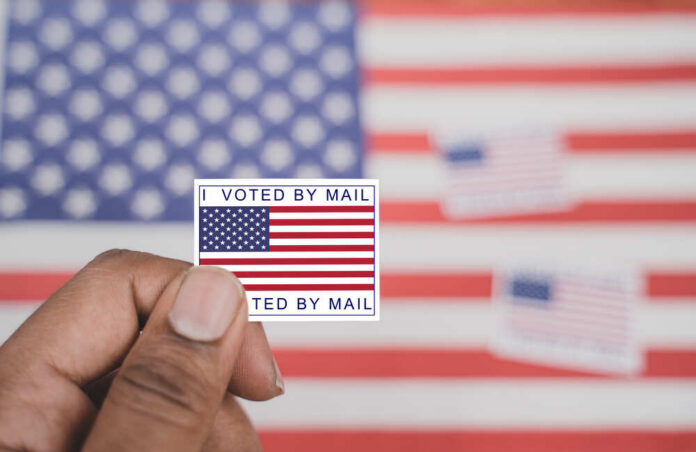
The Trump administration is asking the Supreme Court to let it flip the switch on a sweeping mail-in voting crackdown just months before Americans choose who controls Congress.
Story Snapshot
- President Trump’s 2026 executive order builds a national citizenship list and ties it to mail-in ballots.
- The order forces the Postal Service to limit mail ballots to people on federally approved voter lists.
- Lower courts have blocked the order in many states, but allowed parts of it to move forward elsewhere.
- The administration now wants the Supreme Court to lift those blocks before the midterm elections.
Trump’s election order that lit the fuse
On March 31, 2026, President Trump signed an executive order called “Ensuring Citizenship Verification and Integrity in Federal Elections.” The order does two big things.
First, it tells the Department of Homeland Security and the Social Security Administration to use federal data to build state-by-state lists of voting-age United States citizens. Second, it gives the United States Postal Service a gatekeeper role, tying who can vote by mail to those federal lists.
The Trump administration on Monday asked the Supreme Court to allow it to fully implement an executive order signed by President Donald Trump that seeks to impose additional restrictions on mail-in voting.https://t.co/ZKlX2ZorM5
— SCOTUSblog (@SCOTUSblog) July 27, 2026
Under the order, Homeland Security, United States Citizenship and Immigration Services, and the Social Security Administration must send each state a list of people confirmed as citizens and old enough to vote. States are supposed to match those lists against their own voter rolls.
The Postal Service is then told to send and process mail ballots only for voters on approved absentee lists drawn from that data. In plain terms, Washington would build the master list. States would have to line up with it.
How the order reshapes mail-in voting
The order reaches past simple data sharing. It tells the Postal Service to change how it handles ballots. Federal rules proposed under the order would allow the Postal Service to deliver mail ballots only to voters included on lists provided by states and cleared through federal databases.
In some versions of the plan, states must submit eligible mail-voter files well before Election Day or risk having ballots delayed or not sent at all. That is a direct lever on who can practically vote from home.
The order also pushes states to keep election records longer. Reporting shows it requires states to preserve election-related records for five years, which the administration frames as a way to audit and deter fraud. It instructs the Justice Department to focus investigations on officials who might issue ballots to ineligible voters.
Supporters argue this makes cheating harder and creates a paper trail. Critics see a federal thumb on the scale of how local election officials do their jobs.
The legal fight, state resistance, and appeals
The legal war began almost as soon as the ink dried. Nonpartisan voting rights groups and a coalition of states sued, saying the order tries to override state election laws and turns the Postal Service from a neutral carrier into an arbiter of who may cast a ballot by mail.
They also warned that Homeland Security’s “citizenship lists” would be incomplete, a fact the Justice Department’s own lawyers admitted in court. That raises a basic fear: eligible citizens could be left off the list and quietly lose their mail vote.
One federal judge let the order move ahead at first, agreeing with the administration that the challenge was premature because the agencies had not fully implemented it. That early win helped the White House claim the policy was on solid ground.
But other courts saw more danger. A Boston-based judge later blocked key parts of the order, especially those involving the Postal Service, and an appeals court upheld that block. As a result, the order operates in some places but is frozen in 23 states and the District of Columbia.
Why the Supreme Court showdown matters
Now the administration wants the Supreme Court to step in. It has asked the justices to lift the injunctions and allow full implementation of the order nationwide before the midterms. The legal question reaches beyond mail ballots. It asks how far a president can go in reshaping election machinery using executive power alone.
The order cites the constitutional duty to guarantee a “republican form of government,” but past rulings place most election authority with Congress and the states, not the president acting by himself.
The timing raises the stakes. If the Supreme Court clears the order, federal citizenship lists and Postal Service rules could change who receives mail ballots just weeks before voting starts. If the court keeps the blocks in place, it will reinforce a basic boundary: Washington can help run elections, but it cannot shove states aside without clear authority from Congress.
For many voters, the core test is simple. Does this order secure the vote by keeping non-citizens out, or does it risk shutting lawful citizens out of the mailbox along with them?
Sources:
abcnews.com, cnn.com, aclum.org, scotusblog.com, reuters.com, npr.org, washingtonpost.com, youtube.com, archive.org, whitehouse.gov