

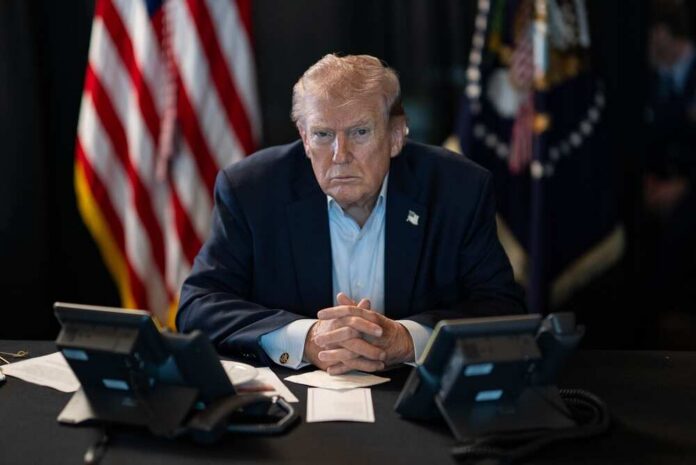
Trump’s “NICE” idea isn’t about immigration mechanics—it’s about who gets to name the heroes and villains in America’s most emotional debate.
Story Snapshot
- A social-media suggestion to rename ICE as “NICE” jumped from X to Truth Social when Trump posted, “GREAT IDEA!!! DO IT. President DJT.”
- The acronym pitch aims to force friendlier language—“NICE agents”—into everyday coverage, shifting the optics without changing operations.
- ICE’s brand has been politically radioactive for years, even as its core mission sits inside the post-9/11 DHS structure.
- A formal rename would likely require Congress, making this more of a signal than a statute—for now.
A meme becomes a presidential message, and the point is the headline
Alyssa Marie, a conservative influencer who describes herself as a MAGA journalist, tossed out a simple provocation on X: change Immigration and Customs Enforcement to “NICE,” so the media has to say “NICE agents” constantly.
Trump then shared the screenshot on Truth Social and endorsed it in his signature blunt style. Karoline Leavitt amplified the moment on X, and the “rename ICE” discussion instantly shifted from policy to branding.
That sequence matters because it shows the new chain of custody for political ideas: a viral post, a presidential megaphone, a press-cycle detour. No committee hearing required.
No agency reorganization memo. Just a phrase engineered to land in the part of the public brain that remembers slogans long after it forgets legislative text. Supporters see a clever counterpunch to hostile coverage; critics see trolling. Either way, people repeat the word.
Trump backs idea of changing ICE’s name to ‘NICE’https://t.co/jKJhZljJkv
— The Hill (@thehill) April 27, 2026
Why ICE’s three letters keep getting fought over
ICE was created in 2003 inside the Department of Homeland Security, built from the post-9/11 drive to merge security, immigration enforcement, and customs functions under a new umbrella.
Over time, the agency’s acronym turned into a stand-in for an entire worldview: border enforcement as sovereignty versus border enforcement as cruelty. When protests and slogans like “Abolish ICE” took off in prior years, the agency’s name stopped being a label and became a political trigger.
Trump’s allies know that triggers work both ways. If opponents can turn an acronym into a cultural villain, supporters can try to flip it into something ordinary, even upbeat.
“NICE” attempts that flip by reframing the same officers as “NICE agents” in the public ear. That matters in a media environment where language choices travel faster than facts, and where repeated phrasing can quietly change what sounds “normal” to say at dinner.
The legal reality: Congress controls the nameplate
The rebrand still runs into a stubborn obstacle: the federal government doesn’t rename an agency because a weekend post got traction. ICE sits in a legal and bureaucratic structure tied to statutes and appropriations.
Reports covering the idea underline the same practical point: Congress would likely have to act to change the agency’s formal name. That means hearings, drafts, votes, and the kind of sustained focus that Washington rarely gives to anything framed as a meme.
That doesn’t make the exercise pointless; it clarifies its real goal. The “NICE” push works as political signaling even if the name never changes on the letterhead.
Trump gets to show his base that he is fighting the culture war on terrain they recognize—media framing—while keeping attention on immigration enforcement as a priority. Critics get baited into repeating the new acronym while arguing about it, which is exactly how slogans spread.
Branding versus policy: what changes for agents and communities
A rename, if it ever happened, wouldn’t automatically rewrite enforcement priorities, detention capacity, or removal procedures. Immigrant communities would still measure ICE by actions on the ground, not by a new acronym.
Agents would still do the same difficult work under the same legal authorities. The most immediate “impact” would be rhetorical: anchors, headlines, and activists forced to decide whether to use the official term or signal dissent by resisting it.
Renaming can become a shell game if it’s used to dodge scrutiny. Yet branding isn’t trivial either: morale, recruitment, and public cooperation often track with whether an institution is treated as legitimate or demonized.
What to watch next: a stunt, a test balloon, or a lasting tactic
No formal proposal has emerged beyond the posts and the coverage they generated. That leaves three plausible paths. First, the idea fades after the news cycle, having served its purpose as a jab at media language.
Second, it becomes a recurring rallying cry whenever immigration enforcement returns to the headlines. Third, allies attempt to formalize it, forcing Congress to go on record—less about “NICE” itself than about who controls the narrative around enforcement.
The deeper takeaway is uncomfortable for anyone who wants politics to feel like civics class again: modern power often comes from naming rather than legislating.
Trump’s “NICE” endorsement shows how quickly a symbolic tweak can dominate the conversation, even while the underlying immigration debate stays unresolved.
Sources:
Trump backs renaming ICE as ‘NICE’ amid agency debate
Trump endorses the idea of changing ICE to NICE
Trump endorses changing ICE to ‘NICE’ in a Truth Social post
ICE agents: NICE rebrand new name Trump