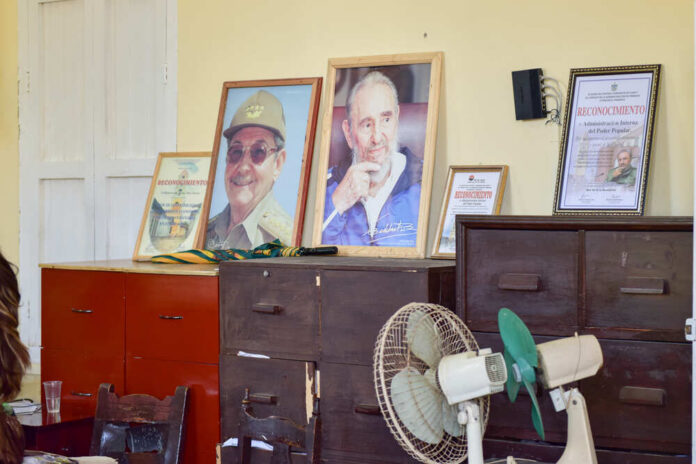
Three decades after Cuban jets blew two tiny civilian planes out of the sky, Washington is now weighing whether to put Raúl Castro himself in the dock—and the timing tells you as much about power politics as it does about justice.
Story Snapshot
- U.S. prosecutors are reportedly preparing criminal charges against former Cuban president Raúl Castro over a 1996 shootdown that killed four people. [1][2][5]
- The case targets the fatal downing of two Brothers to the Rescue aircraft in what a federal judge called “murder” in international airspace. [3]
- Fidel Castro once publicly accepted responsibility, but the legal focus is shifting toward Raúl’s alleged role as defense minister. [3]
- The move fits a broader Trump-era pressure campaign on Havana, raising hard questions about justice, deterrence, and political theater. [1][5][6]
From A Quiet Florida Morning To A Global Flashpoint
On February 24, 1996, two small Cessna planes flown by the Miami-based Brothers to the Rescue group were intercepted by Cuban fighter jets and blown apart over the Florida Straits. All four people aboard—Armando Alejandre, Mario de la Peña, Carlos Costa, and Pablo Morales—were killed. [3][5]
A federal judge later concluded the Cuban government had “murdered four human beings in international airspace,” not in Havana’s backyard but in skies where civilian aircraft should have been safe. [3]
Those deaths did not quietly disappear into the fog of the 1990s. The victims’ families sued the Cuban government and the Cuban Air Force in U.S. court and won a landmark $187 million wrongful-death judgment, later partially paid from frozen Cuban assets. [3]
The families secured the one thing courts could deliver without custody of Cuban officials: a formal finding that what happened was not a tragic misunderstanding, but deliberate, unlawful killing in defiance of basic human rights and international law. [3]
Fidel’s Admission, Raúl’s Shadow, And The Question Of Command
Months after the shootdown, Fidel Castro told a U.S. television network that he had ordered his military not to allow further Brothers to the Rescue flights and that the pilots “acted with full awareness” they were fulfilling that order; he then said, “I assume responsibility for that.” [3]
Later reporting added that both Fidel and Raúl Castro took responsibility for the decision to bring down the planes, though neither ever faced prosecution. [3] That unresolved gap—admitted responsibility without criminal process—has hung over the case for thirty years.
Today’s prosecutorial interest zeroes in on Raúl Castro’s role as Cuba’s defense minister at the time and later as its president. [1][2] U.S. officials say the Justice Department is taking steps toward an indictment accusing him of criminal responsibility for the attack. [1][2][5]
Yet the public record still lacks a smoking-gun order with his signature. Reports instead point to intelligence intercepts, cockpit recordings, and the chain of command as the connective tissue prosecutors hope will turn political responsibility into personal culpability. [1][3][5]
Why The Case Is Surfacing Now, And What That Signals
Washington’s sudden urgency comes wrapped in broader strategy. During the Trump administration, the United States cut off vital fuel supplies to Cuba, tightened sanctions, and froze any talk of normalization. [1][6]
Reports now describe the potential Raúl Castro indictment as part of that pressure toolkit, emerging just as Cuba faces fuel shortages and blackouts at home.
By JOSHUA GOODMAN, ALANNA DURKIN RICHER and ERIC TUCKER MIAMI (AP) — The Justice Department is preparing to seek an indictment against former Cuban President Raúl Castro, three people familiar with the matter told The Associated Press on Frid… https://t.co/VEJAMjmw8W
— Capital Gazette (@capgaznews) May 15, 2026
Critics argue that turning a 30‑year-old atrocity into a headline now risks looking like political theater. They note the reliance on unnamed sources, the absence of an unsealed indictment, and the reality that Havana will never voluntarily hand over its former head of state. [2][5][6]
Supporters counter that murder does not come with an expiration date, that three Americans and a U.S. resident died in international airspace, and that the United States has both the jurisdiction and the moral obligation to pursue those who ordered it. [1][3][5]
Justice, Deterrence, And The Limits Of Symbolic Prosecution
The legal case, if filed, will lean heavily on established facts: the shootdown itself, the civil judgment calling it murder, the known victims, and long‑public Cuban justifications that claim the planes violated Cuban airspace. [2][3][5]
The harder task will be pinning Raúl Castro personally to the decision under criminal standards—showing what he knew, what he ordered, and how directly he controlled the jets that fired. Existing reports concede that those details remain largely classified or undisclosed. [1][3][5][6]
Even a sealed indictment, however, would change the board. It would brand Raúl Castro as an accused criminal in the eyes of U.S. law, complicate his travel, and send a message to other strongmen that killing Americans abroad can follow them into retirement.
That message aligns squarely with priorities: defend citizens, punish state terror, refuse to shrug at “old” crimes because diplomacy finds them inconvenient.
Whether Havana ever surrenders Raúl may matter less than whether Washington is finally willing to name the crime and the man it believes ordered it. [1][3][5][6]
Sources:
[1] Web – DOJ Seeks Raúl Castro Indictment Over 1996 Brothers to the …
[2] Web – U.S. reportedly preparing criminal charges against Raúl Castro over …
[3] Web – Raúl Castro’s indictment expected to be unsealed in Miami
[5] Web – US Considers Indicting Former Cuban President Raúl Castro Over …
[6] Web – Shoot-Down of the Brothers to the Rescue Planes – House.gov