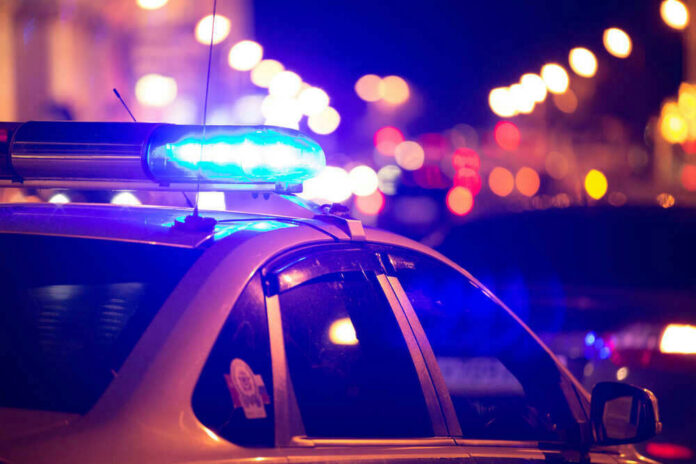
The most revealing detail in Tony Romo’s Milwaukee arrest is not the handcuffs, but the open container citation that followed him out of jail.
Story Snapshot
- Romo was stopped on Interstate 43 and arrested on suspicion of operating while intoxicated.
- Deputies reported poor field sobriety performance, alcohol odor, and bloodshot, glassy eyes.
- Court records say he later received a citation for refusing an intoxication test and for an open container.
- Wisconsin treats a first offense OWI as a traffic violation, but the paperwork still carries real consequences.
A roadside stop that turned into a custody case
Deputies from the Milwaukee County Sheriff’s Office stopped Tony Romo on southbound Interstate 43 near downtown Milwaukee on the evening of July 23. The arrest report and later video show him driving a Jeep south, just past the Marquette Interchange, before law enforcement pulled him over and began asking questions.
The affidavit says the vehicle crossed the center line and was weaving within the lane, which deputies flagged as unsafe lane use and passing on the right.
VIDEO: Newly released body camera video from the Milwaukee County Sheriff's Office shows former Dallas Cowboys quarterback Tony Romo taking a field sobriety test before his arrest.
Romo was arrested and charged with operating while intoxicated (OWI) on July 23 following a golf… pic.twitter.com/vXLyI6IsbG
— CBS News Texas (@CBSNewsTexas) July 29, 2026
Body camera footage shows Romo stepping out of the vehicle, talking with the deputy, and going through several roadside tests. Deputies had him follow a light with his eyes, walk heel-to-toe down an imaginary line, turn, and balance on one leg.
The arrest report says he performed poorly on these standardized field sobriety tests, and that he had trouble keeping his balance. That poor performance became the core reason deputies decided they were dealing with a driver who might be under the influence.
What deputies say they saw, smelled, and heard
The written reports and video add sensory detail that matters in any impairment case. Deputies wrote that Romo’s eyes were bloodshot and glassy and that he smelled of “intoxicants,” their term for an alcoholic drink. In the footage, he first tells the officer he has not been drinking, then later admits he had one Corona.
The affidavit notes balance issues while he stood and walked. None of this proves a specific blood alcohol level, but it does show why deputies felt they had probable cause to arrest him.
This is exactly what law enforcement is asked to do: respond when a driver appears impaired, document what they see, and act before someone gets hurt.
The fact that the report describes lane weaving, alcohol odor, glassy eyes, and failed tests lines up with what many officers across the country are trained to treat as red flags. The question is not whether deputies should have ignored those signs, but how the law then handles someone in Romo’s position.
From OWI suspicion to refusal and open container citation
After the field tests, deputies arrested Romo on suspicion of operating while intoxicated and took him to the Milwaukee County Jail, where booking records show he was processed and later released the same night.
Court records reported by national outlets and sports media add an important twist: he received a citation for refusing to submit to an intoxication test after arrest. That refusal matters in states with implied consent laws, which expect drivers to cooperate with testing as the price of using the road.
Coverage of those same records also notes a citation for an open container. Authorities have not publicly detailed every item in the vehicle, but the citation signals that officers linked the stop not just to driving behavior and smell, but to alcohol physically present where it should not be.
For many readers, that detail changes the picture. It shifts the story from “maybe the tests were wrong” to “why was there open alcohol in the mix at all,” which is harder to square with personal responsibility.
Wisconsin’s softer penalties and the public fallout
Wisconsin treats a first offense operating while intoxicated case as a traffic violation instead of a criminal charge. Reports say the usual outcome is a fine between about one hundred fifty and three hundred dollars, plus license limits and possible sobriety conditions.
A spokesperson for the Milwaukee County District Attorney’s office told one outlet that Romo’s matter falls into that category, not a criminal file. His court date was set for September 21, giving the legal system time to sort out penalties and any challenge he might raise.
That softer classification does not mean the underlying conduct is minor. A first offense law that treats impaired driving as a ticket rather than a crime can send a mixed message: “do not drink and drive, but if you do it once, we will mostly fine you.”
Many argue the law should match the risk, which is high every time someone mixes drinking and a highway. In Romo’s case, the combination of lane weaving, poor testing, refusal, and open container citation looks serious even if the state code uses gentle language.
Sources:
thegatewaypundit.com, nytimes.com, nbcnews.com, nypost.com, tmj4.com, cbsnews.com, wisn.com, foxnews.com, abcnews.com, okcfox.com, youtube.com