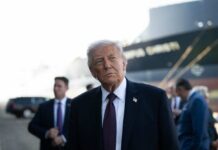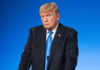
After capturing Nicolás Maduro in a surprise raid, President Trump has now canceled a second wave of strikes on Venezuela—while keeping U.S. warships in place and cutting a hard‑nosed oil deal he says will benefit American workers first.
Story Snapshot
- Trump halts a “second wave” of planned attacks on Venezuela after securing political prisoner releases and economic concessions.
- U.S. warships remain off Venezuela’s coast, preserving leverage as negotiations over oil, reconstruction, and trade deepen.
- Trump touts a “very profitable” rebuilding plan with Big Oil and insists Venezuela will buy only American‑made goods.
- A Senate war powers resolution seeks to rein in Trump’s authority, reviving constitutional battles over who controls war.
Trump Links Military De‑Escalation to Venezuela’s ‘Cooperation’
President Trump’s Truth Social announcement that he has canceled the “previously expected second Wave of Attacks” on Venezuela marks a sharp pivot from shock‑and‑awe to leverage‑and‑deal‑making, but not a retreat.
His decision comes after U.S. forces allegedly captured Nicolás Maduro and his wife in a night raid and after Venezuela began releasing “large numbers” of political prisoners and opening its collapsing oil sector to American investment. For conservatives, this looks less like endless war and more like hard bargaining from a position of strength.
Trump cancels second wave of attacks on Venezuela after cooperation https://t.co/rVprZyY3dt pic.twitter.com/vltRXQuflX
— New York Post (@nypost) January 9, 2026
Trump frames the shift as a reward for what he calls “cooperation,” not a softening of resolve. All deployed U.S. ships will “stay in place for safety and security purposes,” meaning the gun is still on the table even if it is not firing at the moment.
That posture speaks directly to voters tired of feckless diplomacy and regime‑change quagmires: use decisive force once, then make the other side pay in concessions, not American blood, while keeping military pressure in reserve.
Oil, Trade, and a ‘Very Profitable’ Rebuild for America
Behind the military headlines sits an energy and trade package that could reshape both Venezuela’s future and American energy security.
Trump says U.S. and Venezuelan officials are working “very well together” to rebuild the country’s oil and gas infrastructure “in a much bigger, better, and more modern form,” with Big Oil preparing “at least 100 billion dollars” in investment. The deal, as Trump describes it, would give U.S. companies long‑term access to the world’s largest proven oil reserves.
For an American middle class wiped out by Biden‑era energy restrictions, inflation, and globalist climate schemes, the implications are clear. Trump openly talks about the U.S. “taking oil” and “giving money to Venezuela” for years, expecting lower global prices and relief at the pump for U.S. families.
He also says Venezuela has agreed to spend its oil revenues on “only American made products,” from agriculture to medical equipment and grid hardware. That means more orders for U.S. factories instead of Beijing’s, tying foreign policy directly to American jobs and industrial revival.
War Powers Clash Revives Core Constitutional Fights
Even as many conservatives welcome tougher anti‑cartel and pro‑energy policy, Trump’s unilateral raid and subsequent strikes have reignited a battle as old as Vietnam: who decides when America goes to war.
After being surprised by the initial operation, the U.S. Senate advanced a war powers resolution to restrict Trump’s ability to conduct additional strikes on Venezuela without an explicit congressional green light.
A narrow majority, including a handful of Republicans, backed the measure, signaling rare bipartisan unease with open‑ended executive war powers.
Trump, echoing decades of presidential frustration, blasted the vote as harmful to “American Self Defense and National Security” and called the War Powers Act itself unconstitutional.
Vice President JD Vance argued that Republican defectors were hiding behind “legal technicalities” instead of honestly debating policy.
For constitutional conservatives, the moment is complicated: they want a commander in chief free to crush cartels and hostile regimes, but they also insist Congress own its solemn duty to declare war and prevent mission creep.
What Trump’s Venezuela Gamble Means for Conservatives
On the ground in Venezuela, the landscape remains fragile. Maduro is gone, replaced by interim leader Delcy Rodríguez, a former regime loyalist now operating under intense U.S. leverage through oil export controls and offshore firepower.
Political prisoners are being released, but the country’s long‑term direction—whether toward free markets and real elections or another managed oligarchy—is still unclear. Trump’s planned meeting with opposition figure María Corina Machado underscores that Washington is still shopping for a durable, pro‑Western partner.
For Trump’s base at home, this episode crystallizes both opportunity and risk. On the plus side, it shows an administration finally tying American force to concrete gains: dismantling a hostile socialist regime, striking at drug‑running networks, unlocking energy, and steering billions in contracts to U.S. workers instead of foreign bureaucrats.
Yet the brewing war powers confrontation is a reminder that constitutional guardrails cannot be ignored, even when “our guy” is in office. The challenge now is securing victory abroad while reaffirming that no president—Republican or Democrat—can wage war indefinitely without the people’s elected representatives on record.
Sources:
President Trump says the US will not attack Venezuela again due to cooperation
Venezuela live updates as Trump calls off ‘second wave of attacks’