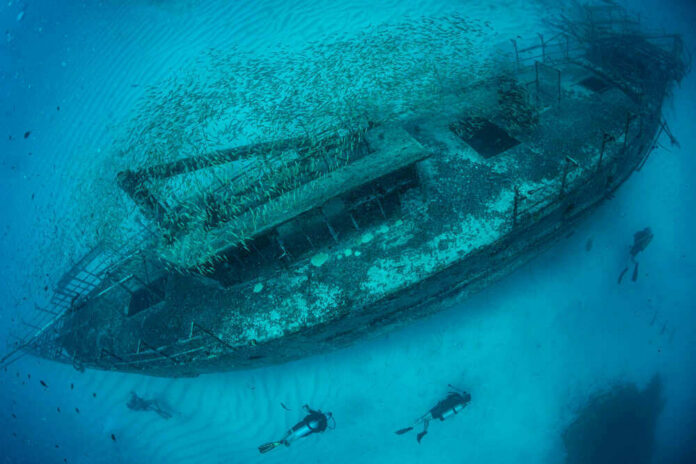
Modern 3D imaging is resurrecting the USS Monitor from 240 feet down—and reminding Americans what real innovation, sacrifice, and national purpose looked like long before today’s politics tried to rewrite our history.
Story Snapshot
- New high-resolution 3D models and photomosaics are giving researchers a clearer view of the USS Monitor wreck off Cape Hatteras, North Carolina.
- The USS Monitor sank in a storm on December 31, 1862; 16 of its 62 crew members died, and 46 survived.
- NOAA manages the site as the Monitor National Marine Sanctuary, the first U.S. national marine sanctuary, designated in 1975.
- The Monitor’s rotating gun turret and ironclad design helped end the era of wooden warships after its famed duel with CSS Virginia.
New 3D Mapping Reveals a Historic Wreck in Striking Detail
NOAA’s Monitor National Marine Sanctuary has produced high-resolution 3D imagery of the USS Monitor wreck site using modern underwater documentation methods, including photogrammetric modeling and photomosaics.
The wreck lies about 16 miles off Cape Hatteras in roughly 240 feet of water, deep enough to require specialized fieldwork and careful planning. Officials emphasize the work is non-invasive, focusing on visualization and site management rather than disturbance or rapid artifact removal.
The technology matters because it creates a usable digital record of a national landmark that can’t be casually visited, photographed, or measured as easily as a land-based historic site can.
The resulting models help document what remains intact, show how the site changes over time, and support education without turning the seafloor into a free-for-all. In practice, this is preservation through transparency—capturing detail while limiting physical interference.
Why the USS Monitor Still Matters to American Military History
The Monitor’s significance is not nostalgia; it is the story of American engineering answering a national emergency. Designed by inventor John Ericsson and built quickly in Brooklyn, the ship introduced a low-profile ironclad design and a revolving turret carrying two 11-inch Dahlgren guns.
That turret concept—protected firepower that could rotate independently—reshaped naval combat. The Monitor’s 1862 battle with CSS Virginia marked the first major ironclad duel and helped make wooden fleets obsolete.
Accounts of the Battle of Hampton Roads describe a tactical stalemate that nonetheless changed the strategic picture. The duel helped protect Union naval interests and demonstrated that armor and steam power had replaced the old assumptions of sail-era warfare.
Even sources that stress the “draw” also recognize the wider consequence: global navies learned that the future was iron and industry. In today’s terms, it was disruptive technology built for national defense—not bureaucracy.
The Last Voyage: A Storm, a Tow Line, and a Known Design Weakness
The same design that made the Monitor deadly in battle made it vulnerable in heavy seas. The ship’s low freeboard—often described as riding like a “raft”—left little margin when the weather turned dangerous.
After orders were sent, the vessel south toward Beaufort, North Carolina, the Monitor departed Hampton Roads under tow by USS Rhode Island. On December 31, 1862, a storm off Cape Hatteras overwhelmed the ship, and it sank with 16 crew members lost.
Survivor and historical accounts describe a chaotic nighttime emergency in rough water, with rescue efforts saving 46 men. The tragedy is not only the loss of life but the blunt reminder that wartime improvisation carries risk.
The Union needed a counter to the Confederate ironclad threat, and the nation got one—fast. But the Monitor’s seaworthiness limits were real, and history records that some officers openly criticized the design’s ability to endure open-ocean conditions.
Preservation, Public Memory, and What the Sanctuary Model Gets Right
The Monitor wreck was discovered in 1973 and became the first U.S. national marine sanctuary in 1975, later receiving National Register listing and National Historic Landmark status. That framework matters because it treats the site as protected national heritage rather than as a target for salvage speculation.
Whatever Americans argue about in modern politics, a constitutional republic still depends on a shared memory of service and sacrifice that isn’t filtered through ideological fads.
New 3D images show wreck of USS Monitor, iconic Civil War ship that sank in 1862 https://t.co/8XCCZbmDjY
— CBS Mornings (@CBSMornings) March 9, 2026
The new imagery also highlights an uncomfortable truth: much of our cultural conversation is consumed by the temporary, while monuments to national endurance sit quietly offshore.
NOAA’s ongoing surveys and data collection provide a fact-based window into the past—one that doesn’t require rewriting or “reframing” the story into fashionable narratives. The Monitor’s legacy is measurable: innovation, courage under fire, and the costs of war recorded in steel and saltwater.
Sources:
https://monitor.noaa.gov/shipwrecks/uss_monitor.html
https://en.wikipedia.org/wiki/USS_Monitor
https://www.dncr.nc.gov/blog/2016/12/31/uss-monitor-sank
https://suvcw.org/sinking-of-the-uss-monitor
https://www.marinersmuseum.org/learn/explore-topics/uss-monitor-story/
https://civilwartalk.com/threads/the-wreck-of-the-monitor.216742/