When five Italian divers died in a Maldivian cave that was not supposed to be on the itinerary, the most unsettling question was not how they died, but who knew where they were going in the first place.
Story Snapshot
- Five Italian scuba divers died inside a deep underwater cave off the Maldives, triggering dual homicide investigations.
- Maldives officials insist they never knew the expedition planned a cave dive or the exact site involved.[1]
- Italian prosecutors and safety experts are probing whether the tragedy reflects hidden negligence in “high-risk tourism.”[1][2]
- The clash between denial, suspicion, and missing paperwork exposes how modern adventure travel often runs on trust instead of traceable responsibility.[1][2]
Deadly Cave, Unclear Plan: What Actually Happened
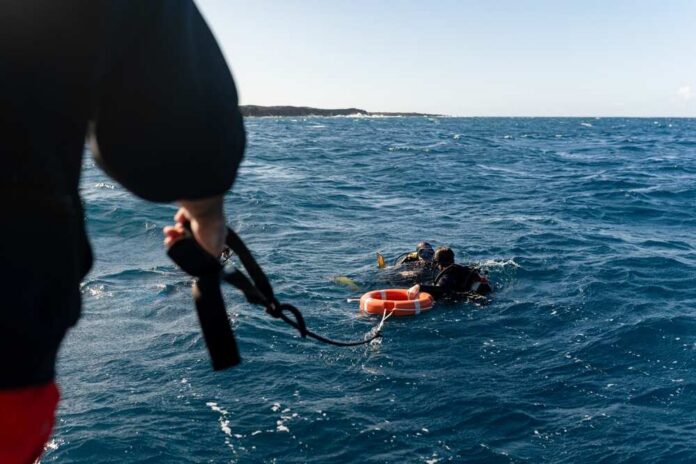
Authorities in the Maldives confirmed that five Italian divers died after entering an underwater cave system at around 50 to 55 meters depth near the resort island of Alimathaa, in what local and international outlets called the country’s worst diving disaster.[1]
The group reportedly went below the typical 30-meter recreational limit and into a confined cave environment, where something went catastrophically wrong. Italian and Maldivian teams later recovered bodies from inside the cave after a high-risk search that itself claimed a Maldivian military diver’s life.
Two investigations, including a culpable homicide probe, have been launched into the deep-water cave expedition in the Maldives that claimed the lives of five Italian scuba divers, according to officials in the Maldives and in Rome. https://t.co/hK5UnN9Ou4
— ABC News (@ABC) May 19, 2026
Maldives officials quickly announced an investigation focused on whether those running the expedition had taken “the correct precautions” and carried out adequate planning.[1]
Prosecutors in Rome simultaneously opened a culpable homicide probe, a step that signaled real concern that responsibility might extend beyond tragic misfortune.[1][2][3]
That dual scrutiny immediately raised the stakes for every public statement: any admission of prior awareness, shoddy permits, or lax enforcement could become Exhibit A in a courtroom thousands of miles away.
The Government Says, “We Did Not Know”
Mohamed Hussain Shareef, speaking for the Maldives president’s office, stated that the government was not informed the group would be exploring an underwater cave and did not know the exact location of the dive.[1]
He also said that two of the divers who died were not on the list of researchers submitted by organizers, implying both a paperwork gap and a possible last-minute expansion of the team.[1] That narrative anchors the government’s defense: regulators cannot manage risks they do not officially know about.
From this perspective, that denial matters. If an operator never told authorities, the primary responsibility rests on the professionals who took customers into a deep cave, not distant bureaucrats.
At the same time, the public has no access to manifests, radio logs, or permit applications that would either corroborate or challenge Shareef’s line.[1]
Without those records, citizens are effectively asked to trust a verbal assurance issued in the fog of crisis, at a moment when legal liability looms large for everyone involved.
Dive Operators, Liability, And The Blame Squeeze
The dive operator linked to the trip, Albatros Top Boat, has also denied authorizing or having prior knowledge of the fatal cave dive, according to leisure-industry reporting.
A legal representative quoted in that coverage framed the company’s position as ignorance of a specific cave plan rather than ownership of an organized technical cave expedition. That puts operators and officials on the same side of a very narrow claim: both insist the cave destination was not part of an approved script.
This mutually convenient ignorance creates a blame squeeze that seasoned travelers should recognize. When everything goes well, tourism boards market adventure, depth, thrill, and uniqueness.
When something goes wrong, the story often shifts to “unforeseen” choices by local guides or guests. Safety analysts examining the Maldives case have raised eight unanswered questions about who briefed whom, whether depth limits were knowingly exceeded, and how weather and warning information factored into the decision to enter the cave.[2] Those questions suggest a complex chain, not a single rogue decision.
Why Documentation, Not Drama, Should Decide Fault
Both the Side A claim (officials did not know) and the Side B suspicion (someone higher up should have known) stumble over the same obstacle: the public has seen almost no primary documentation.
The record accessible so far consists of press quotations, general descriptions of depth and cave conditions, and high-level references to homicide investigations.[1][2][3] None of that equals a signed itinerary, an emailed dive plan, or a permit listing maximum depth and approved sites.
Two bodies of missing Italians recovered from inside Maldives cave
The bodies of two Italians who drowned in a scuba diving accident in the Maldives last week have been brought to the surface, local officials have told the BBC.
"They were retrieved from the third chamber of the…
— Dave Ty (@DaveTy_x) May 19, 2026
Common sense—and basic fairness—say the verdict on responsibility should wait for hard evidence: boat manifests, communications between operator and authorities, dive-computer logs showing whether the group suddenly deviated from plan, and sworn statements from surviving crew.[1][2]
Until those emerge, the only truly safe conclusion is that the system allowed a group of divers to reach a 70-meter-class cave with no clear, traceable chain of accountability. For a country that sells itself as a high-end, high-safety paradise, that gap should be more alarming than any single spokesperson’s denial.
Sources:
[1] Web – Maldives officials say they didn’t know divers in fatal expedition …
[2] Web – Eight Questions About the Maldives Dive Accident – The Human Diver
[3] YouTube – Maldives Diving Expedition Ends in Tragedy, Five Italian Divers …