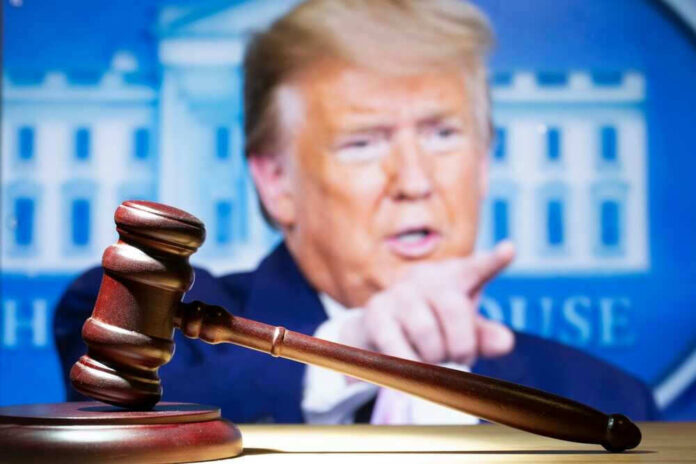
A federal judge delivered a constitutional victory for state sovereignty by blocking President Trump’s controversial attempt to federalize California’s National Guard against the state’s will for deployment to Portland during 2020’s civil unrest.
Story Highlights
- Federal court issues temporary injunction preventing Trump from commandeering California National Guard units.
- California Governor Newsom successfully challenges federal overreach in an unprecedented legal confrontation.
- The ruling reinforces constitutional limits on the president’s power over state-controlled military resources.
- The decision prevents the establishment of a dangerous precedent of using state troops against explicit state opposition.
Constitutional Crisis Averted Through Judicial Intervention
The federal court’s decision represents a critical check on executive overreach that could have fundamentally altered the balance between state and federal authority.
California Governor Gavin Newsom’s legal challenge successfully demonstrated that even during times of civil unrest, the federal government cannot simply commandeer state military resources without proper constitutional authority.
This ruling upholds the foundational principle that National Guard units serve under dual state-federal control, with governors maintaining primary command authority over their state’s forces except in narrowly defined circumstances.
Portland Protests Spark Unprecedented Federal-State Showdown
The legal confrontation emerged from Trump’s response to ongoing protests in Portland following George Floyd’s death in 2020. Federal agents had already been deployed to the city, drawing criticism for aggressive tactics including detaining protesters in unmarked vehicles.
Trump’s administration then sought to escalate the federal presence by utilizing National Guard units from various states, including California, without obtaining consent from state governors. This move crossed a constitutional red line that prompted immediate legal action from California officials.
The attempted federalization of state Guard units represented an extraordinary expansion of federal power that lacked historical precedent. Previous uses of the Insurrection Act, such as during the 1992 Los Angeles riots, occurred at the request of state governors rather than over their explicit objections.
Legal scholars from the Brennan Center for Justice noted the constitutional ambiguity surrounding such deployments when state authorities oppose federal intervention.
U.S. judge blocks Trump from sending California National Guard to Portland for now https://t.co/asEQKIb5TM
— CNBC Politics (@CNBCPolitics) October 6, 2025
State Sovereignty Principles Upheld Against Federal Overreach
California’s successful legal challenge reinforced critical constitutional boundaries that protect state authority from federal encroachment.
Governor Newsom’s statement that “California will not allow its National Guard to be used as a tool for political repression” reflected legitimate concerns about militarizing domestic law enforcement without a proper legal foundation.
The ruling prevented what could have become a dangerous precedent, allowing future presidents to bypass state governors and unilaterally deploy state military resources for federal purposes.
Military analysts from the RAND Corporation warned that federalizing Guard units against state wishes would create serious command structure problems and undermine military effectiveness.
The dual state-federal nature of the National Guard requires cooperation between state and federal authorities to function properly. Forcing deployment over state objection would have created unprecedented tensions within the Guard’s command structure and potentially compromised unit cohesion and morale.
Long-Term Implications for Executive Power and Federalism
This judicial intervention established important legal precedent limiting presidential authority over state military resources during domestic unrest. The ruling strengthens the constitutional framework protecting state sovereignty while maintaining appropriate federal authority for genuine national emergencies.
Civil liberties organizations, including the ACLU, correctly recognized this decision as a victory for both federalism and civil rights, preventing the inappropriate militarization of law enforcement responses to civil demonstrations.
The case highlights the essential role of federal courts in maintaining constitutional balance between state and federal power.
Without judicial oversight, executive branch claims of emergency authority could expand unchecked, undermining the federal system that protects individual liberty through distributed government power.
This decision reinforces that even during periods of civil unrest, constitutional limitations on government authority remain in effect and must be respected by all branches of government.