

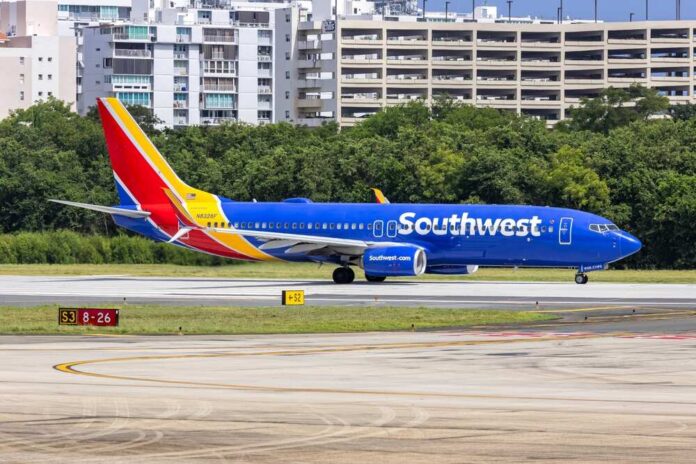
Southwest Airlines is abandoning two of America’s busiest airports this summer, leaving travelers in major metropolitan areas with fewer low-cost options and handing market dominance to legacy carriers on a silver platter.
Story Highlights
- Southwest Airlines will completely exit Chicago O’Hare and Washington Dulles on June 4, 2026, ending operations at two major hubs
- Affected passengers have just 14 days to rebook or claim refunds as summer travel plans face disruption
- The withdrawal eliminates budget carrier competition, potentially driving up fares as United and American consolidate control
- Southwest reallocates resources to 31 new leisure routes while introducing assigned seating and bag fees under “Southwest 2.0.”
Strategic Retreat from Major Hubs
Southwest Airlines announced it will completely cease operations at Chicago O’Hare International Airport and Washington Dulles International Airport effective June 4, 2026.
This marks a total withdrawal from two of the nation’s busiest aviation centers, affecting thousands of travelers who relied on Southwest’s traditionally lower fares.
The Dallas-based carrier served Dulles for 20 years and O’Hare for five years before making this abrupt exit. All flights booked after June 3 will be canceled, forcing passengers to scramble for alternatives during the peak summer travel season.
Southwest Airlines ending service at Chicago O'Hare, Washington Dulles airports https://t.co/RxlHbKpzE8 pic.twitter.com/y2YVUQRzGn
— New York Post (@nypost) March 15, 2026
Competition Eliminated in Key Markets
The decision hands United and American Airlines reduced competition at their primary fortress hubs, potentially eliminating downward pricing pressure that benefits consumers.
Southwest’s entry into O’Hare in 2021 was described as a bold attempt to compete directly with these legacy giants on their home turf. However, the airline now cites chronic congestion and new flight caps as challenges, making operations difficult.
This retreat raises questions about whether smaller carriers can effectively compete in major metropolitan markets dominated by entrenched legacy airlines with deep pockets and government connections.
Passengers Forced to Alternative Airports
Southwest claims service continuity through alternative airports, directing Chicago travelers to Midway and Washington passengers to Baltimore-Washington International or Reagan National.
Yet, these secondary airports often lack the connectivity and convenience of major hubs, particularly for business travelers. Affected passengers receive two options: full refunds through Southwest’s website or free rebooking to nearby airports within 14 days of their original travel date.
This 14-day window provides minimal flexibility for families and businesses with locked-in summer plans. The airline’s framing of this as “network optimization” ignores the reality that travelers lose meaningful choice in these markets.
Southwest 2.0 Transformation
This withdrawal coincides with Southwest’s controversial transformation into “Southwest 2.0,” introducing assigned seating and bag fees that abandon the carrier’s traditional business model.
The airline is simultaneously launching 31 new routes to leisure destinations, including Alaska and the Caribbean.
Southwest frames this as strategic repositioning toward higher-margin vacation travel rather than battling for business customers at congested major hubs.
The shift reflects broader industry consolidation trends where carriers exit challenging markets to focus on easier profits. Affected employees at both airports must bid for positions elsewhere in Southwest’s network, creating workforce disruption with uncertain outcomes.
Southwest Airlines to end flights at 2 major airports https://t.co/xrXLttF8MU
— FOX Business (@FoxBusiness) March 16, 2026
Market Consolidation Concerns
The long-term implications extend beyond inconvenienced travelers. O’Hare and Dulles become more dominated by legacy carriers, potentially reducing competitive pricing pressure that kept fares reasonable for working families. Chicago and Washington, D.C., metro areas lose a low-cost alternative precisely when inflation continues to strain household budgets.
Southwest’s pattern of market exits—previously pulling out of Bellingham, Syracuse, Houston-Bush, and Cozumel—suggests a carrier retreating from competitive challenges rather than fighting for customers.
This consolidation undermines free market competition that drives innovation and affordability, leaving travelers with fewer choices and potentially higher costs at America’s busiest aviation centers.
Sources:
Southwest Airlines to End Flights at Two Major US Airports This Summer
Southwest Is Officially Leaving Two Major US Airports