

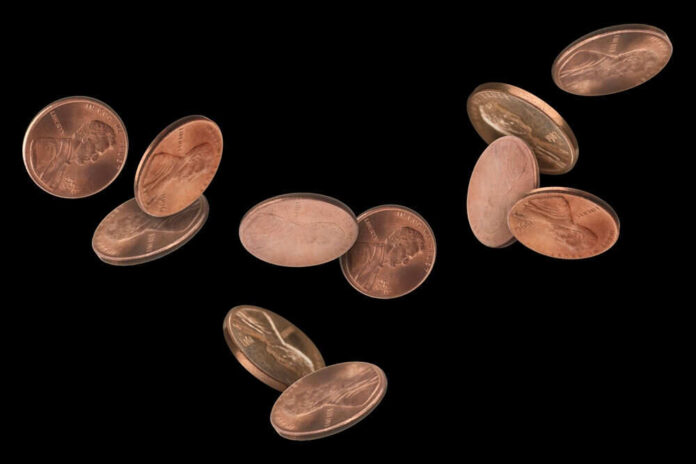
President Trump delivers on his promise to eliminate government waste by canceling the penny, saving taxpayers $56 million annually while ending decades of fiscal absurdity.
Story Highlights
- Trump orders final penny production on November 12, 2025, ending 232 years of minting.
- Each penny costs nearly 4 cents to produce, representing massive government inefficiency.
- Treasury Department expects to save $56 million per year by eliminating the wasteful program.
- Retailers scramble with transaction challenges due to the abrupt phase-out without federal guidance.
Trump Tackles Government Waste Head-On
President Trump’s decision to cancel penny production represents exactly the kind of common-sense fiscal reform Americans voted for. The U.S. Mint struck its final circulating penny on Wednesday, November 12, 2025, at the Philadelphia facility where these coins have been produced since 1793.
This bold move eliminates a program that literally burned taxpayer money, with each penny costing nearly four cents to manufacture while holding only one cent of value.
The U.S. will make the final circulating penny today at the Mint in Philadelphia. https://t.co/DJIV94Jq1I
— Richard Rubin (@RichardRubinDC) November 12, 2025
Decades of Bureaucratic Inefficiency Finally Addressed
The penny’s demise highlights the type of government waste that thrived under previous administrations. For over a century, approximately half of all coins produced at U.S. Mints in Philadelphia and Denver were pennies, creating billions of essentially worthless tokens cluttering American commerce.
Trump identified this absurdity early, posting in February 2025: “For far too long the United States has minted pennies which literally cost us more than 2 cents. This is so wasteful!” His administration took decisive action where others failed.
Economic Reality Meets Conservative Principles
The Treasury Department’s projected $56 million annual savings demonstrates how eliminating unnecessary government programs can benefit taxpayers. While the nickel costs nearly 14 cents to produce and quarters cost nearly 15 cents, these coins retain practical value in commerce.
The penny, however, became obsolete in the digital economy, existing primarily as drawer clutter and nostalgic tokens. This decision reflects core conservative values of fiscal responsibility and limited government waste.
Implementation Challenges Reveal Poor Planning
Despite the sound economic logic, the penny’s elimination faced implementation problems. Retailers complained about abrupt phase-out timing without federal guidance for handling customer transactions.
Some businesses rounded prices down to avoid shortchanging customers, while others requested exact change or offered creative solutions like trading drinks for penny collections.
Jeff Lenard of the National Association of Convenience Stores noted they supported penny abolition for thirty years but criticized the execution method.
Historic End to Inefficient Government Program
Treasury Secretary Scott Bessent and Treasurer Brandon Beach witnessed the final production run in Philadelphia, marking the end of a 232-year tradition that began with the 1792 Coinage Act. While some Americans feel nostalgic about losing the penny, practical economics demanded this change.
The decision represents Trump’s commitment to eliminating wasteful spending and streamlining government operations, delivering tangible savings to hardworking taxpayers who funded this inefficient program for far too long.