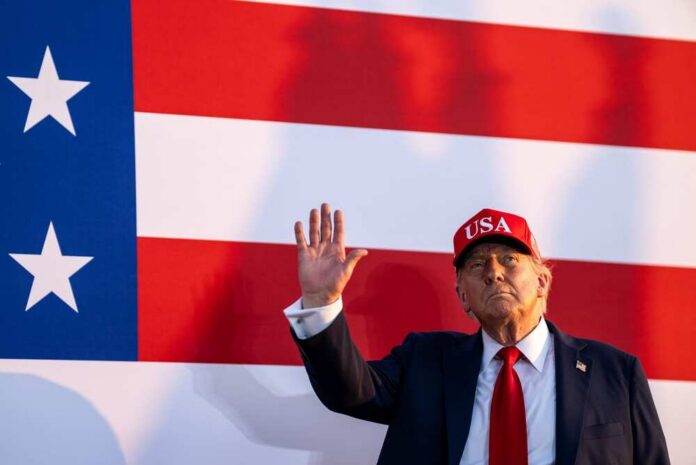
The sharpest part of this story is not just the alleged kill. It is the uneasy gap between a bold presidential claim and the proof needed to lock it in.
Quick Take
- President Donald Trump said a United States military strike killed Héctor Rusthenford Guerrero Flores, whom he identified as the leader of Tren de Aragua.[1][2][4]
- Trump also said the strike was coordinated closely with Venezuela, a detail repeated in contemporaneous coverage.[1][2][3]
- Several outlets reported the claim quickly, but the available record here does not show independent forensic confirmation of death.
- The case fits a familiar pattern: fast strike announcement first, full verification later, if it comes at all.
What Trump Said, and Why It Mattered
President Trump described the action as a “swift and lethal kinetic” strike and said it killed Guerrero Flores, also known as Niño Guerrero.[4] He framed the target as an “infamous leader” of Tren de Aragua, which the United States has labeled a terrorist organization.[4]
That wording matters because it turns a military event into a political message. It tells allies, enemies, and voters that the administration wants to look aggressive, precise, and in control.
"We will find these vicious murderers and drug lords anytime, anyplace, and send them to the depths of hell where they belong," President Trump declared as he announced that a U.S. military strike had killed alleged Tren de Aragua leader Niño Guerrero. pic.twitter.com/18mJLkSYMY
— Breitbart News (@BreitbartNews) June 13, 2026
The other striking claim was cooperation with Venezuela. Trump said the action was coordinated closely with Venezuelan officials, and at least one report echoed that line.[1][3]
If true, that would make this far more unusual than a one-sided hit. It would suggest a cross-border operation with some level of shared interest, or at least shared messaging. But the phrase “coordinated” can mean many things, and public statements do not explain the exact role each side played.
What the Public Record Still Leaves Open
The public record in the supplied materials does not include a body report, a DNA match, or another independent forensic confirmation. It mainly shows Trump’s statement and media coverage that repeated it.[1][2][4] That is enough to report the claim, but not enough to settle every factual question. In stories like this, the difference between “announced killed” and “confirmed dead” can matter a great deal.
That gap is not unusual. Military and counterdrug claims often move faster than the evidence that can later verify them. Leaders want speed. Newsrooms want immediacy. The public gets a first version before the dust clears. By then, the story already has a life of its own. That is why careful readers should separate the strike claim from the deeper question of proof.
Why the Story Fits a Larger Pattern
This episode fits a common modern script. A president makes a dramatic security claim. Official channels amplify it. Major outlets repeat the news within hours. Then the harder questions arrive.
Who was actually hit? Where was the strike? What evidence confirms identity? Was there cooperation, or only a political statement about cooperation? Those questions do not weaken the story. They define whether it is a finished fact or a still-unfolding claim.
From a common-sense view, the safest reading is simple: Trump publicly claimed a successful strike killed a major Tren de Aragua figure, and the administration presented it as a coordinated action with Venezuela.[1][2][3]
The claim is serious, but the current record still leans on official statements rather than independent proof. For readers, that means one thing: watch the follow-up, not just the headline. The real test will be whether later evidence matches the first dramatic announcement.
Sources:
[1] Web – Trump says US military strike killed leader of Tren de Aragua gang …
[2] YouTube – US releases video of strike that killed leader of Tren de Aragua gang
[3] YouTube – Venezuela says leader of Tren de Aragua gang killed in …
[4] Web – President Trump said that the US and Venezuela had collaborated …