

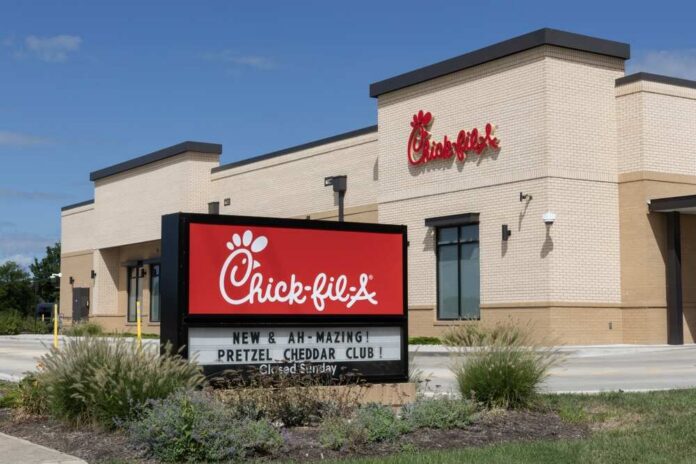
Chick-fil-A just opened a restaurant in Miami where you cannot walk in, sit down, or even order at the counter—and that tells you a lot about where your dinner is headed next.
Story Snapshot
- Chick-fil-A opened its first Florida delivery-only “ghost kitchen” in Miami’s Wynwood district, with no dine-in at all.[4][2]
- The kitchen sits inside a CloudKitchens facility and exists only to pump out app orders for delivery customers.[4][1]
- The company calls it its sixth delivery kitchen in the United States and says it will keep the same standards as its restaurants.[4][5]
- The model may boost convenience and lower costs, but it raises real questions about jobs, community, and long-term local impact.[5][1]
Chick-fil-A’s Miami ghost kitchen flips the normal restaurant script
Chick-fil-A Wynwood Delivery opened on June 2, 2026, at 1900 Northeast Miami Court in Miami’s artsy Wynwood neighborhood.[4][2] Guests cannot walk in, grab a table, or chat with a cashier.
The company built this unit inside the CloudKitchens network and designed it “to exclusively fulfill delivery orders across the city,” not to host diners.[4][1]
That means your chicken sandwich starts in a back-of-house space most customers will never see, then rides to you in the back seat of a stranger’s car.
Chick-fil-A has opened its first delivery-only "ghost kitchen" in Florida, launching the Chick-fil-A Wynwood Delivery location on June 2 within the CloudKitchens network in Miami's Wynwood neighborhood — the chain's sixth such facility in the country. https://t.co/uTdJurmA2A
— The Washington Times (@WashTimes) June 9, 2026
The chain defines this as its first delivery kitchen in Florida and “just the sixth restaurant of its kind in the United States,” a small but growing fleet of delivery-focused outposts.[4][1]
The Wynwood kitchen runs Monday through Saturday from 10:30 a.m. to midnight, matching Chick-fil-A’s no-Sunday norm while stretching deep into the night.[4][2]
Orders flow mainly through third-party delivery apps, though the company still insists these kitchens meet the “same high standards” as its traditional restaurants.[4]
How a ghost kitchen changes what “going out to eat” means
Ghost kitchens, also called dark or cloud kitchens, exist to cook food only for delivery apps like Uber Eats and Grubhub.[2] They do not offer a dining room, cashier line, or even a place to stand and eat.
Wynwood fits that mold: it prepares core Chick-fil-A favorites with a trimmed-down breakfast menu, but no walk-in service.[2][4]
Some guests may never know where their meal came from beyond a map on their phone. The “restaurant” is more of a logistics hub than a hangout spot, more of a warehouse than a neighborhood grill.
The pitch sounds simple: faster, more reliable delivery, plus added convenience for busy city customers.[4][5] Chick-fil-A’s local owner-operator, Thomas Overby, says the goal is to “meet the community where they are” while keeping the brand’s signature hospitality.[5][4]
That promise fits a broader trend, as app-based ordering has exploded. Brands chase dense urban demand by cutting the most expensive part of the old model—the dining room—and focusing on speed, volume, and coverage rather than tables, décor, and chit-chat with staff.[1][5]
Jobs, costs, and who really wins with delivery-only kitchens
Chick-fil-A says its delivery kitchens are run by local owner-operators, just like its regular restaurants, and presents that as a way to stay rooted in the community.[4][5]
The company does not, however, publish staffing numbers for Wynwood, so there is no hard proof that this site “creates jobs” in a meaningful way.
Corporate framing emphasizes convenience and service, but there is no public data on whether this format employs more, fewer, or simply different people than a dine-in Chick-fil-A in the same area.[4][5]
Industry coverage notes that ghost kitchens typically use less real estate and have lower staffing levels than traditional restaurants, which can “significantly reduce overhead expenses” while enabling brands to reach new delivery markets.[5]
That sounds good for corporate balance sheets. For workers, it may mean fewer front-of-house roles and more back-of-house and gig delivery slots.
From this lens, a business that cuts overhead to stay competitive is not a villain; that is how markets work. The open question is whether local communities gain enough lasting work and service to justify giving up a physical gathering place.[5][1]
Community impact and the quiet spread of invisible restaurants
The Miami opening fits a national pattern: companies tout ghost kitchens as innovations and speed, and the media repeat the talking points, while very little independent data exists to verify whether these sites truly deliver better service or stronger local economies.[1][3][4]
In Wynwood’s case, almost every specific claim—first in Florida, sixth nationwide, delivery-only, CloudKitchens partner—comes straight from Chick-fil-A’s own press material and is echoed by secondary outlets.[4][1][3] No one has yet produced a rival set of facts about jobs, operations, or performance.
This one-sided record should give thoughtful readers pause. A delivery-only model can be a smart tool when it respects workers, pays fair wages, and meets a real demand. It can also hollow out the public square if every “restaurant” turns into a back room and a trunk full of paper bags.
American values stress local ownership, work, and real community ties. Whether ghost kitchens like Wynwood strengthen those ties or quietly weaken them will depend less on the buzzword “innovation” and more on the numbers we have yet to see.[5][4]
Sources:
[1] Web – Chick-fil-A expands its ‘ghost kitchen’ model with new delivery-only …
[2] Web – Chick-fil-A opens ‘ghost kitchen’ for Florida deliveries. Here’s where
[3] Web – Chick-fil-A opens first Florida ghost kitchen for delivery-only orders
[4] Web – Chick-fil-A opens restaurant customers can’t eat in – TheStreet
[5] Web – Miami Welcomes First Chick-fil-A Delivery Kitchen Restaurant