
President Trump is deploying a second aircraft carrier to the Middle East in a massive show of force designed to compel Iran into nuclear negotiations, marking the most aggressive military posture against the Islamic regime since his first administration.
Story Snapshot
- USS Gerald R. Ford, the Navy’s most advanced carrier, redirected from Caribbean operations to join USS Abraham Lincoln in creating a dual-carrier strike force targeting Iran
- Trump warns Iran faces “very traumatic” consequences within a month if the nuclear deal curbing missiles and proxy support isn’t reached
- Deployment follows failed indirect talks and Iran’s brutal crackdown, killing thousands of protesters, plus continued nuclear program advances
- Move shifts overwhelming naval firepower to critical chokepoints likethe Strait of Hormuz, raising stakes for both nuclear diplomacy and potential conflict
Trump Mobilizes Overwhelming Naval Firepower
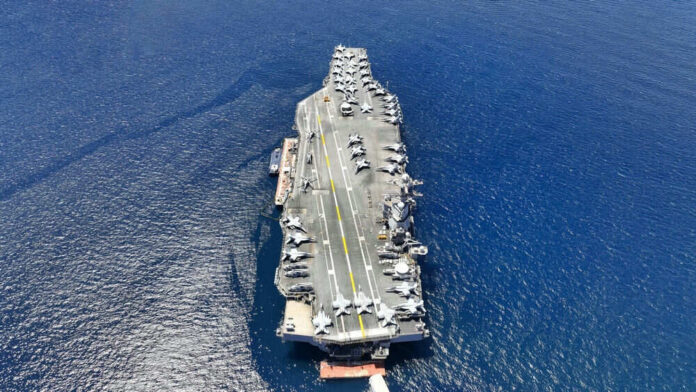
The USS Gerald R. Ford strike group, accompanied by three destroyers, departed the Caribbean on February 13, 2026, heading to the Middle East after crew notifications the previous day. The world’s largest and most technologically advanced aircraft carrier will join the USS Abraham Lincoln, which arrived in the Arabian Sea on January 26. This dual-carrier presence represents the kind of “massive armada” Trump referenced when discussing his approach to forcing Iran’s hand on nuclear negotiations. The Ford’s eight-month deployment will likely extend to ten months, with sailors not returning to Norfolk until late April or early May.
Additional military assets reinforce the buildup, including F-35 fighter jets repositioned across Europe and destroyers like the USS McFaul and Delbert D. Black stationed at critical maritime chokepoints. U.S. Central Command now controls unprecedented firepower across the Persian Gulf, Red Sea, and Strait of Hormuz. This concentration of naval strength echoes Trump’s first-term “maximum pressure” campaign but with significantly enhanced capabilities. The Ford represents generational advances over older carriers, providing Trump tactical options that previous administrations lacked when confronting Iranian aggression and nuclear ambitions.
Nuclear Standoff Reaches Critical Deadline
Trump issued stark warnings on February 12, declaring Iran has roughly one month to accept a comprehensive deal curbing its nuclear program, ballistic missiles, and proxy support for Hamas and Hezbollah, or face consequences he described as “very traumatic.” The ultimatum follows failed indirect negotiations through Oman and Qatar in early February, where Iranian officials dismissed American overtures. Trump’s willingness to “do something very tough like last time” references his June 2025 strikes on Iranian nuclear sites, a precedent that underscores his readiness to use military force when diplomacy stalls.
A second U.S. aircraft carrier is expected to deploy to the Middle East as the U.S. negotiates with Tehran about its nuclear program and potential strikes against Iran if those talks don't work out. NewsNation's @RobertShermanTV reports. More: https://t.co/AoCpQBuTZy pic.twitter.com/za1bAtPAJB
— NewsNation (@NewsNation) February 13, 2026
Iran’s Supreme Leader Ayatollah Ali Khamenei has warned the American buildup risks spiraling into regional war, while regime officials characterize the carrier deployments as provocative. Yet Iran faces mounting internal pressure from protests that erupted in late 2025, with the regime’s crackdown killing thousands of demonstrators. Economic sanctions compound this instability, leaving Tehran in a weakened negotiating position despite its asymmetric capabilities through proxy forces. Gulf Arab nations have privately warned both sides that miscalculation could trigger wider conflict, threatening critical energy infrastructure and global shipping lanes that transport significant percentages of world oil supplies.
Strategic Implications for American Interests
The deployment validates Trump’s doctrine of peace through strength, leveraging American military superiority to protect national security interests without immediate combat. This approach contrasts sharply with the Biden administration’s policy of appeasement that allowed Iran’s nuclear program to advance unchecked while funneling billions to the regime. By positioning two carrier strike groups within striking distance, Trump creates genuine deterrence that compels serious negotiations rather than the hollow diplomatic theater that characterized previous failed attempts at engagement with Tehran’s radical leadership.
However, extended carrier deployments strain Navy personnel and resources, with the Ford’s crew facing potential ten-month assignments far exceeding typical rotation schedules. Long-term implications remain uncertain: success could yield a verifiable agreement eliminating Iran’s path to nuclear weapons and ending its support for terrorist proxies threatening Israel and regional stability. Failure risks military confrontation that could disrupt global energy markets and require sustained American military engagement. Gulf states’ warnings about escalation reflect legitimate concerns, but Trump’s track record demonstrates his preference for decisive action over endless negotiations that empower America’s adversaries while endangering allies and constitutional principles of national sovereignty.
Sources:
2026 United States military buildup in the Middle East – Wikipedia
Aircraft carrier Gerald Ford heading to Middle East amid Iran tensions – CBS News
USS Gerald Ford aircraft carrier headed from Caribbean to Middle East – ABC News