

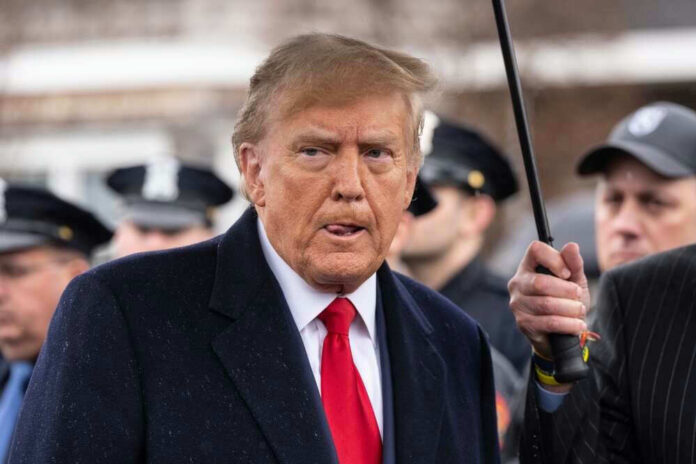
Federal funding now empowers over 900 local police departments to help ICE arrest and deport criminal illegal aliens, marking a dramatic shift in immigration enforcement.
Story Highlights
- Trump’s DHS secures agreements with more than 900 police departments, a 609% increase since January.
- New federal funding fully reimburses local agencies and incentivizes officer performance in immigration enforcement.
- Local-federal cooperation intensifies, prioritizing the rapid deportation of undocumented immigrants with criminal records.
Unprecedented DHS Expansion Transforms Local Immigration Enforcement
The Department of Homeland Security under President Trump has rapidly expanded partnerships with local police, enabling more than 900 departments nationwide to assist ICE in identifying, arresting, and detaining undocumented immigrants with criminal histories.
This expansion is unprecedented, representing a 609% increase in agency participation since the start of Trump’s second term.
The program’s scale reflects the administration’s view that local law enforcement is critical to meeting ambitious deportation targets and addressing perceived threats to national security and public safety.
Financial incentives, including full salary reimbursements and performance-based bonuses, have driven widespread adoption among local agencies, making immigration enforcement a central focus for law enforcement in 2025.
Section 287(g) of the Immigration and Nationality Act provides the legal basis for these agreements, allowing ICE to delegate enforcement powers to state and local police.
The Trump administration’s approach differs sharply from the previous administration, which curtailed such partnerships.
In 2025, Trump’s DHS revived and expanded 287(g) agreements, leveraging the “One Big Beautiful Bill Act” for new funding.
This act ensures local police are reimbursed for their immigration enforcement roles, helping agencies overcome budget constraints and boosting officer participation.
States like Indiana and Nebraska have entered special agreements to expand detention capacity, while federal control has been asserted over Washington, D.C.’s police to further support ICE operations.
Financial Incentives Drive Local Participation and Training Surge
Federal reimbursement for officer salaries and performance bonuses has proven a powerful motivator for local police departments.
DHS now covers the salaries of officers involved in immigration enforcement and rewards successful ICE operations with cash incentives. As a result, over 8,500 local officers have been trained for immigration duties, with more than 2,000 currently in training.
This influx of federal funding has helped agencies offset operational costs and prioritize immigration enforcement, but some police departments face new challenges in balancing these duties with community policing responsibilities.
The Trump administration’s decision to freeze most non-ICE federal law enforcement training in August reflects a strong commitment to ICE hiring and resource allocation, further elevating immigration enforcement as the top law enforcement priority in 2025.
Community groups and immigrant advocates have voiced concern about the impact of these policies, warning of potential erosion of civil rights and community trust. Past 287(g) agreements have faced criticism for racial profiling and strained relations between police and local communities.
While supporters argue that expanded cooperation is necessary for public safety and border security, critics highlight risks of over-policing, undermining local autonomy, and legal challenges related to constitutional rights and due process.
Impact on Communities, Law Enforcement, and Constitutional Concerns
The immediate effect of DHS’s expanded partnerships is a surge in ICE-led arrests and deportations targeting undocumented immigrants with criminal records. Law enforcement agencies benefit from federal funding and resources, but face operational and reputational challenges as community tensions rise.
Immigrant communities experience heightened fear and anxiety, and some localities report a chilling effect on cooperation with police, complicating broader public safety efforts.
Economically, local police budgets grow, but agencies may incur costs from legal challenges and strained community relations. Politically, these developments intensify the national debate over immigration, federalism, and the proper scope of government authority.
Legal scholars note that expanding federal control over local police for immigration purposes raises significant constitutional questions, particularly around federal commandeering of local resources and due process rights.
BREAKING: Trump’s DHS Secures Deals with More than 900 Police Departments to Help Arrest Criminal Illegal Aliens
Details: https://t.co/c9jpsoLZpt pic.twitter.com/SWx5WSJTpq
— YJA🇺🇸🥎 (@Yzo57) September 4, 2025
Expert opinion remains divided. Some law enforcement professionals support the expansion, citing improved national security and public safety. Others warn it could undermine trust between police and immigrant communities, complicating both enforcement and community relations.
Policy analysts emphasize that while the scale and ambition of Trump’s DHS initiative are unmatched, its effectiveness and constitutional viability will depend on ongoing scrutiny, legal review, and the ability of agencies to balance enforcement priorities with respect for civil liberties and local autonomy.
Sources:
DHS salary reimbursement and program details (Axios)
State partnerships and legal orders (AILA)
Federal training priorities and ICE hiring surge (GovExec)
287(g) agreements data and analysis (Migration Policy Institute)
Law enforcement perspectives and program mechanics (Police1)